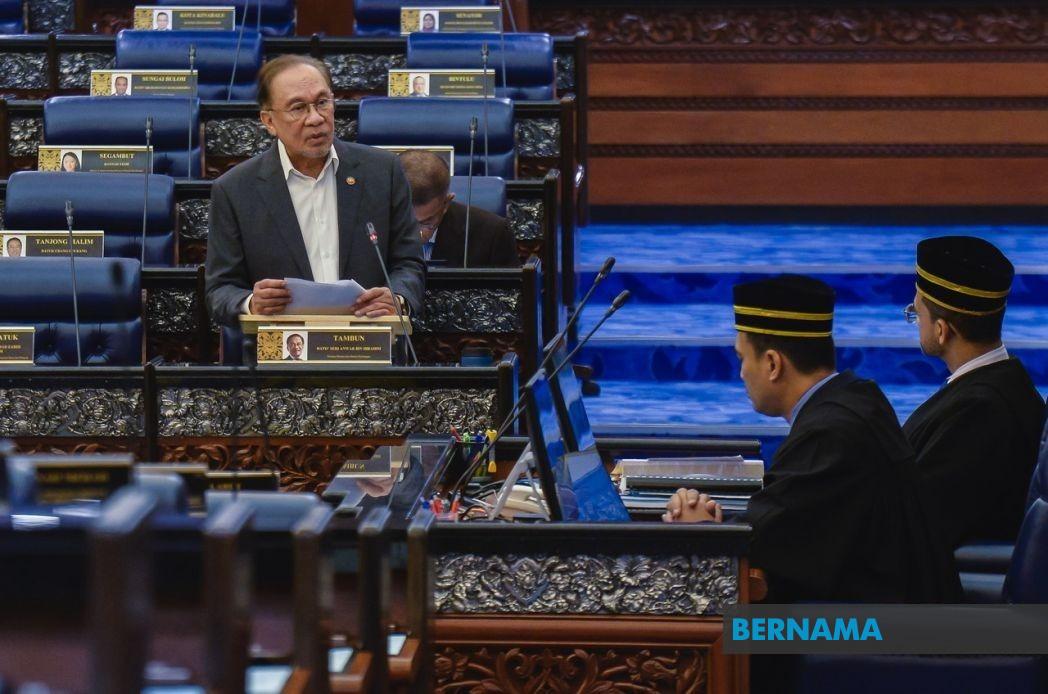
Prime Minister Datuk Seri Anwar Ibrahim has committed the government to investigating claims that petrol station operators sustained substantial financial losses during the implementation of Malaysia's revamped fuel subsidy framework. The Premier's assurance came during parliamentary questioning on July 7, when he acknowledged growing concerns about the operational impact of the subsidy transition on retail fuel distributors across the country.
The specific grievance centres on allegations that petrol station operators incurred losses ranging between RM40,000 and RM50,000 during the period when the government shifted towards its enhanced targeted subsidy mechanism for RON95 petrol and diesel. Ipoh Timur MP Howard Lee Chuan How brought the matter before parliament, prompting Anwar to commit to a more detailed examination of the situation. The concern reflects wider industry apprehension about how the transition affected retailers who operate at relatively thin profit margins and must absorb short-term costs during policy shifts.
Anwar indicated that he will task Second Finance Minister Datuk Seri Amir Hamzah Azizan with gathering comprehensive information and engaging directly with oil companies regarding these claimed losses. This delegation signals the government's intent to treat the matter seriously whilst distributing investigative responsibilities across the economic team. The involvement of the Second Finance Minister underscores the technical complexity of subsidy mechanisms and the need for detailed financial analysis to establish whether losses occurred and, if so, at what scale.
The Prime Minister's remarks reflected a broader acknowledgement of the petroleum industry's contributions to the subsidy programme's rollout. Anwar stressed that oil companies and petrol station operators have provided "full cooperation" in enabling the successful introduction of the targeted RON95 and diesel subsidy system. This diplomatic framing balances recognition of industry support against the need to address legitimate complaints, suggesting the government views the relationship as fundamentally collaborative despite emerging friction points.
Malaysia's targeted fuel subsidy approach represents a significant departure from blanket subsidies that previously benefited all consumers regardless of income. The system aims to restrict subsidised fuel access to eligible cardholders, thereby reducing fiscal burden whilst protecting lower-income households. However, transitioning to such mechanisms inevitably creates operational disruption for retail networks accustomed to different pricing and inventory management protocols. Petrol station operators must adjust purchasing patterns, reconfigure point-of-sale systems, and manage customer service challenges during implementation, all potentially generating temporary losses.
The investigation Anwar promised will likely examine several dimensions of the operators' claims. These include whether margin compression occurred during the transition, whether inventory write-downs resulted from price adjustments, and whether administrative costs for system upgrades contributed to reported losses. Understanding these mechanisms will be crucial for determining whether compensation is warranted or whether losses were inevitable adjustment costs inherent to any major subsidy reform.
The timing of these complaints, emerging after the subsidy system has been operational for some months, suggests operators have had sufficient time to quantify impacts and present documented evidence. This may facilitate more rigorous verification than if concerns had surfaced during the implementation phase itself. The government's willingness to investigate indicates openness to addressing legitimate grievances, though any compensation decisions would likely depend on the nature and extent of verified losses.
For Malaysian consumers and policymakers, the investigation carries implications beyond individual operators' finances. How the government handles this dispute will signal its willingness to accommodate stakeholder concerns whilst implementing structural economic reforms. Fair treatment of industry participants supports continued cooperation on future policy initiatives, whereas perceived dismissal of valid concerns could generate resistance to subsequent government programmes requiring private sector coordination.
The broader context involves Malaysia's ongoing effort to rationalise fuel expenditure whilst managing inflation and maintaining political stability. Targeted subsidies represent a fiscally sustainable approach compared to universal schemes, but their success depends on smooth implementation and stakeholder confidence. Petrol station operators represent a crucial link between government policy and consumer access; their operational continuity directly affects fuel availability and pricing stability across the country.
Anwar's commitment to dialogue through designated ministers also reflects governance principles emphasising systematic investigation over ad-hoc responses. By tasking the Second Finance Minister with coordination, the government establishes an institutional mechanism for addressing similar concerns systematically. This approach may establish precedent for how subsequent subsidy adjustments incorporate stakeholder feedback and manage transition costs.
The investigation's conclusions could inform future subsidy reform design. If losses genuinely resulted from transition mechanisms, future transitions might incorporate implementation support mechanisms or phased timelines reducing operator financial shock. Conversely, if investigation reveals losses stemmed from inefficient operations or external market factors, it would validate the government's transition approach and support continued programme implementation.
Ultimately, the willingness to investigate reflects recognition that sustainable policy requires not just technical soundness but also acceptance from implementation stakeholders. Petrol station operators, despite their small individual scale, collectively represent a significant economic constituency whose cooperation remains essential for policy success. The government's response to these claims will likely influence future industry willingness to participate in structural economic adjustments.

