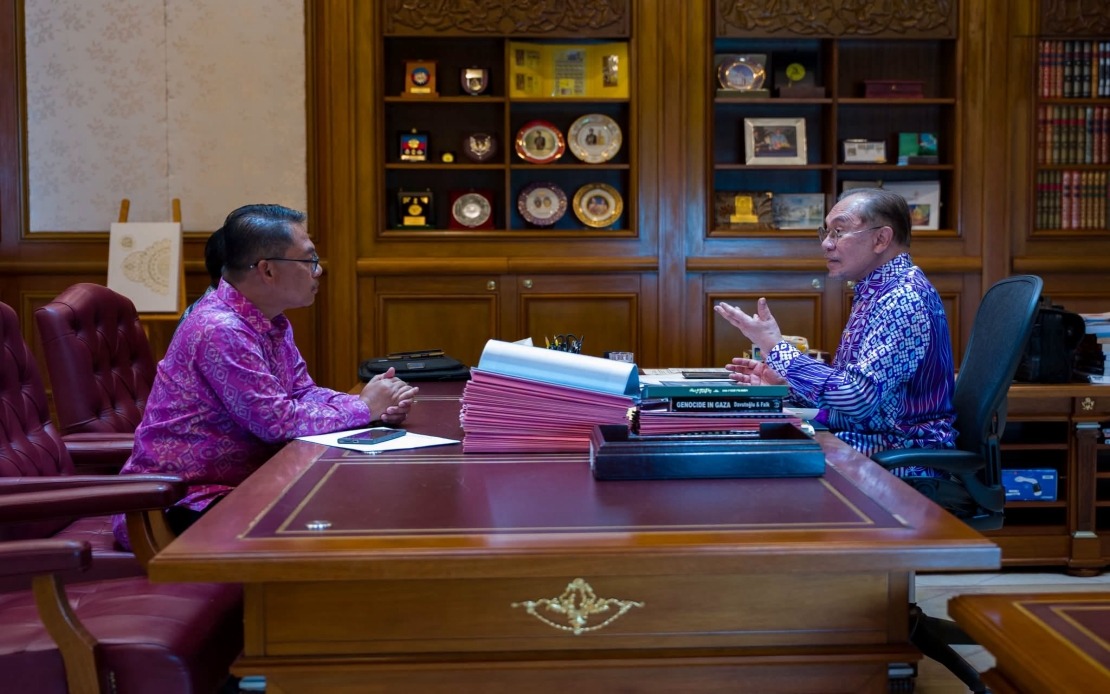
The federal government has committed to enhancing its approach to fuel subsidies across East Malaysia, with officials indicating that ongoing consultations with state authorities, federal agencies, and community representatives will shape how the initiative evolves. Datuk Mustapha Sakmud, who holds the ministerial portfolio overseeing Sabah and Sarawak matters within the Prime Minister's Department, outlined the administration's intention to recalibrate the scheme in response to concerns raised from the ground level, ensuring that the broader objective of protecting living standards remains on track.
The BUDI Diesel initiative, which commenced nationwide on July 1, represents a significant shift in how Malaysia approaches fuel price management. Rather than broad subsidies affecting all consumers indiscriminately, the programme targets diesel vehicle owners deemed eligible, with each qualifying driver entitled to draw 200 litres monthly at the controlled price of RM2.10 per litre. Owners of larger vehicles classified as sports utility vehicles and pickup trucks may petition for supplementary allocations of up to 100 additional litres each month, contingent upon satisfying specific verification requirements. This structure reflects policy-makers' attempt to balance fiscal sustainability with support for those reliant on diesel, from commercial operators to rural residents who depend on personal vehicles for mobility and livelihoods.
Rural communities in Sabah and Sarawak have emerged as a particular focus for government attention, reflecting sensitivities about how subsidy reforms affect peripheral populations with fewer transport alternatives. Mustapha emphasised that discussions between multiple governance layers would persist with the explicit purpose of preventing disruptions to quality of life in these regions. His public statements underscore an acknowledgment that East Malaysian states face distinct logistical and economic circumstances compared to peninsula Malaysia, warranting tailored implementation approaches rather than one-size-fits-all application.
Prime Minister Datuk Seri Anwar Ibrahim's personal involvement in hearing community concerns demonstrates the political weight attached to subsidy policy in these states. By personally engaging with grassroots perspectives on BUDI Diesel challenges specific to Sabah, the premier signalled that complaints and difficulties do not languish in bureaucratic channels but reach decision-making levels. Mustapha's invocation of this direct engagement serves multiple purposes: it validates public concerns, demonstrates executive accessibility, and establishes a narrative of responsive governance aligned with the MADANI administration's broader messaging around inclusive leadership.
The political calculus surrounding fuel subsidies in Sabah and Sarawak carries particular significance given these states' historical relationship with federal policy-making and their persistent demands for greater fiscal autonomy and recognition of local conditions. Fuel price management touches upon fundamental cost-of-living anxieties for residents and business operators alike. The government's willingness to refine implementation rather than defend the scheme as-is suggests recognition that initial rollout revealed friction points requiring adjustment. Whether these refinements address supply-chain issues, verification process complications, or adequacy of subsidy levels for particular user categories remains to be clarified through forthcoming announcements.
The BUDI Diesel framework itself reflects evolving international and domestic thinking about targeted rather than universal subsidies. By restricting benefits to registered eligible owners and implementing quota systems, the government aims to constrain fiscal exposure while concentrating support where deemed most necessary. However, implementation across geographically dispersed regions with varying infrastructure creates practical challenges. Distribution networks, verification systems, and quota management require coordination between petroleum retailers, vehicle registration authorities, and federal oversight bodies—coordination that operates across state and federal jurisdictions in Sabah and Sarawak.
Stakeholder engagement in the refinement process potentially encompasses vehicle owners, transportation associations, petroleum retailers, state authorities, and rural representatives. Each constituency holds different perspectives on optimal design. Commercial transport operators may advocate for higher quotas to maintain viability; retailers might emphasise administrative burden; rural representatives may stress accessibility and equity. Reconciling these perspectives demands deliberative processes that Mustapha's statements suggest are ongoing rather than concluded. The government's framing of this as continuous improvement rather than crisis response helps manage expectations about how quickly adjustments will materialise.
For Malaysian readers and policymakers, the BUDI Diesel experience in East Malaysia offers insights into implementation realities of subsidy targeting. While the conceptual case for targeted over universal subsidies is economically sound—reducing fiscal drain while concentrating support—practical execution requires attention to local conditions, verification mechanics, and stakeholder coordination. The government's flexibility in refining the approach demonstrates learning orientation, though sceptics might question whether initial design processes adequately anticipated implementation challenges now requiring correction.
The broader context of Malaysia's subsidy landscape also merits consideration. The country has long wrestled with balancing fuel price support against fiscal sustainability and avoiding distortionary effects on consumption. The BUDI Diesel programme represents one element of this ongoing recalibration. Success in Sabah and Sarawak could provide templates for potential adjustments to broader fuel pricing policy elsewhere. Conversely, significant difficulties could signal limits to targeting mechanisms or raise questions about whether current subsidy levels adequately serve intended beneficiaries without straining government finances excessively.
Moving forward, the refinement process will likely produce concrete adjustments to quota structures, verification procedures, or potentially the subsidy price point itself. The government's public commitment to incorporating grassroots feedback creates expectations that changes will be announced transparently and implemented within reasonable timeframes. Whether the final adjustments substantially address underlying concerns or represent marginal modifications will determine whether this exercise in consultative governance translates into genuine policy improvement or primarily serves public relations objectives. For East Malaysian communities depending on fuel subsidies for economic participation and daily mobility, the outcomes of these refinement discussions carry material significance beyond symbolic importance.

