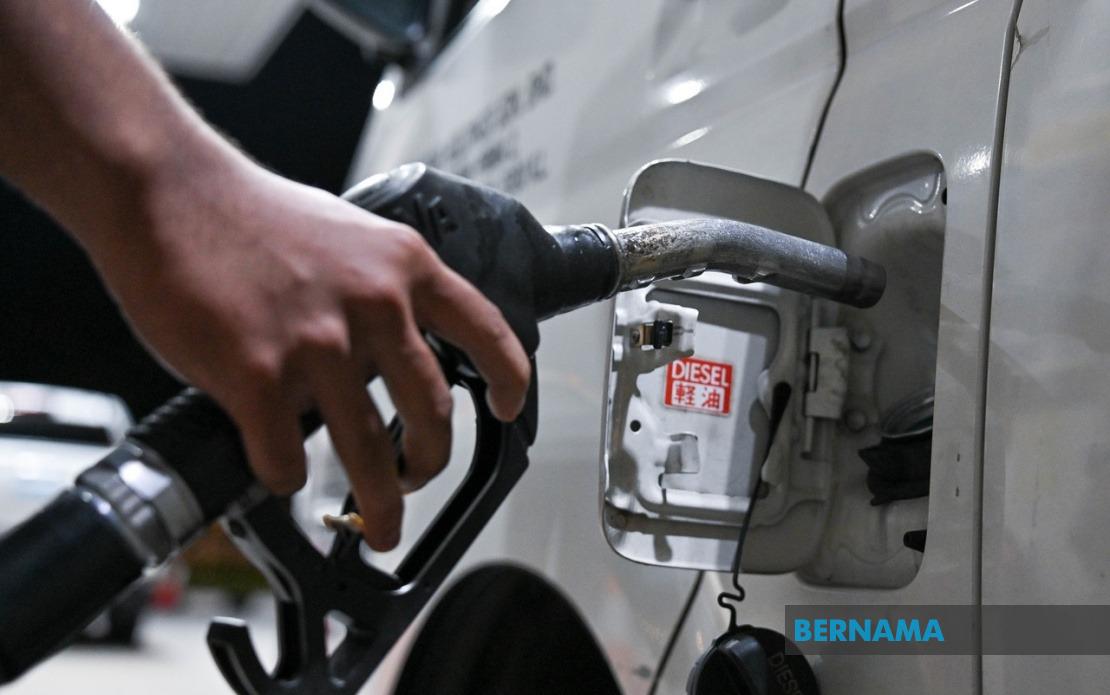
The Federal Government intends to maintain a flexible, evidence-based approach to managing the BUDI Diesel programme, according to Finance Minister II Datuk Seri Amir Hamzah Azizan, who outlined the administration's plans to refine the subsidy initiative in response to real-world usage patterns and stakeholder concerns. Speaking at a press conference in Kota Kinabalu on July 5, Amir Hamzah emphasised that policy adjustments would be guided by empirical data rather than predetermined schedules, signalling a pragmatic stance toward what has become one of the government's flagship fuel subsidy mechanisms.
Less than a week into the BUDI Diesel rollout across Sabah and Sarawak on July 1, the Finance Ministry is already collecting information on how consumers are utilizing the programme and where operational bottlenecks might emerge. The initial phase, Amir Hamzah explained, has prioritized system stability and ensuring that eligible motorists can access the benefit without technical disruptions. Encouraging early signs from petrol station operators suggest that the infrastructure has held up under the initial demand surge, with no major system failures reported across the participating fuel retailers.
The government's willingness to recalibrate quota structures demonstrates lessons learned from the earlier BUDI95 petrol subsidy scheme. Under that programme, authorities initially allocated 300 litres per month to eligible users before reducing the cap to 200 litres based on consumption analytics. This adjustment was not driven by budget cuts, Amir Hamzah stressed, but rather by empirical evidence showing that over 94 to 95 percent of participants consumed less than 300 litres monthly, while fewer than one percent consistently exceeded 200 litres. By resizing quotas to match actual behaviour, the government could theoretically redirect savings toward other policy objectives or broader beneficiary populations.
For the BUDI Diesel programme, a comprehensive reassessment of quota levels would require substantially more monitoring time, according to the Finance Ministry. The five-day implementation window has been insufficient for authorities to identify clear usage patterns or detect systemic issues that might warrant swift intervention. Instead, the government is adopting a staggered review cycle in which data accumulates over weeks, allowing policymakers to distinguish between teething problems and genuine structural imbalances. This measured approach contrasts with reactive policy-making and suggests confidence in the underlying system design, at least in its early stages.
However, specific grievances raised by users and industry stakeholders are being addressed on a more immediate basis. The government has fielded teams to engage with petrol station operators, vehicle owners, and service providers who have flagged concerns about eligibility criteria or implementation challenges. One particular issue involves vehicle ownership verification, which relates to how accurately the system identifies individuals entitled to claim the subsidy. Rather than waiting for comprehensive data analysis, ministry officials are investigating individual complaints and working toward targeted solutions that respect the scheme's integrity while accommodating genuine hardship cases.
The mechanism for delivering BUDI Diesel subsidies must maintain sufficient flexibility to accommodate diverse user circumstances, particularly in rural and remote areas where business models differ markedly from urban settings. While the programme relies on MyKad identification for individual motorists, the government is open to exploring alternative credential systems such as fleet cards for service providers, commercial operators, and logistics companies that serve geographically dispersed communities. This adaptability reflects recognition that a one-size-fits-all approach to subsidy administration can inadvertently exclude legitimate beneficiaries or create perverse incentives that undermine policy objectives.
Public understanding of BUDI Diesel eligibility and application procedures remains a critical concern for the Finance Ministry. To address information gaps, the government is collaborating with oil companies and petrol station networks to establish enquiry counters where consumers can verify their entitlement status. These facilities will be supported by quick-response code technology and online application portals, reducing friction in the verification process and enabling more Malaysians to assess their eligibility without prolonged uncertainty. Such initiatives acknowledge that even well-designed programmes can falter if beneficiaries lack clear pathways to access them.
The rollout experience in Sabah and Sarawak carries implications for any potential nationwide expansion of the BUDI Diesel initiative. These states serve as testing grounds where the government can observe consumer behaviour, identify operational vulnerabilities, and refine administrative procedures before committing the programme to the entire country. For Malaysian readers in other regions, the early performance of the Sabah-Sarawak phase will likely influence whether and when the benefit becomes available to them. The data gathered during this period will shape debates about programme affordability, fiscal sustainability, and the appropriate targeting mechanisms for fuel subsidies in a context of global energy price volatility.
From a broader policy perspective, the government's data-driven approach to BUDI Diesel reflects a shift toward evidence-informed governance in subsidy administration. Rather than locking in rigid quota structures or benefit levels at programme inception, authorities are reserving the right to adjust parameters based on ground realities. This flexibility could enhance the programme's effectiveness by ensuring that subsidies reach their intended beneficiaries without creating wasteful overconsumption or enabling affluent motorists to capture disproportionate benefits. Conversely, the approach requires robust data collection infrastructure and genuine political will to implement unpopular adjustments if evidence warrants them.
The engagement between government ministries and agencies coordinating the BUDI Diesel effort suggests an institutional learning process. Finance Ministry officials, petroleum sector regulators, and state authorities are collaborating to gather intelligence, identify problems, and devise solutions in real time. This inter-agency coordination represents a departure from siloed policy implementation and indicates recognition that large-scale subsidy schemes require sustained attention and adaptive management. For Malaysian readers concerned about government efficiency and fiscal stewardship, such collaborative governance mechanisms offer some reassurance that policymakers are taking the programme seriously and committing resources to its proper administration.
Looking ahead, Amir Hamzah's statements suggest the government will publish monitoring data and policy adjustments periodically, though no specific reporting schedule has been announced. This transparency could help build public confidence in the BUDI Diesel initiative and demonstrate that the administration is responding to evidence rather than political pressures or administrative inertia. However, meaningful transparency requires clear communication about data collection methodologies, quota revision criteria, and the rationale for any changes. As the programme matures, Malaysian consumers and policymakers will likely demand greater visibility into how government decisions shape their access to fuel subsidies and what evidence underpins those decisions.

