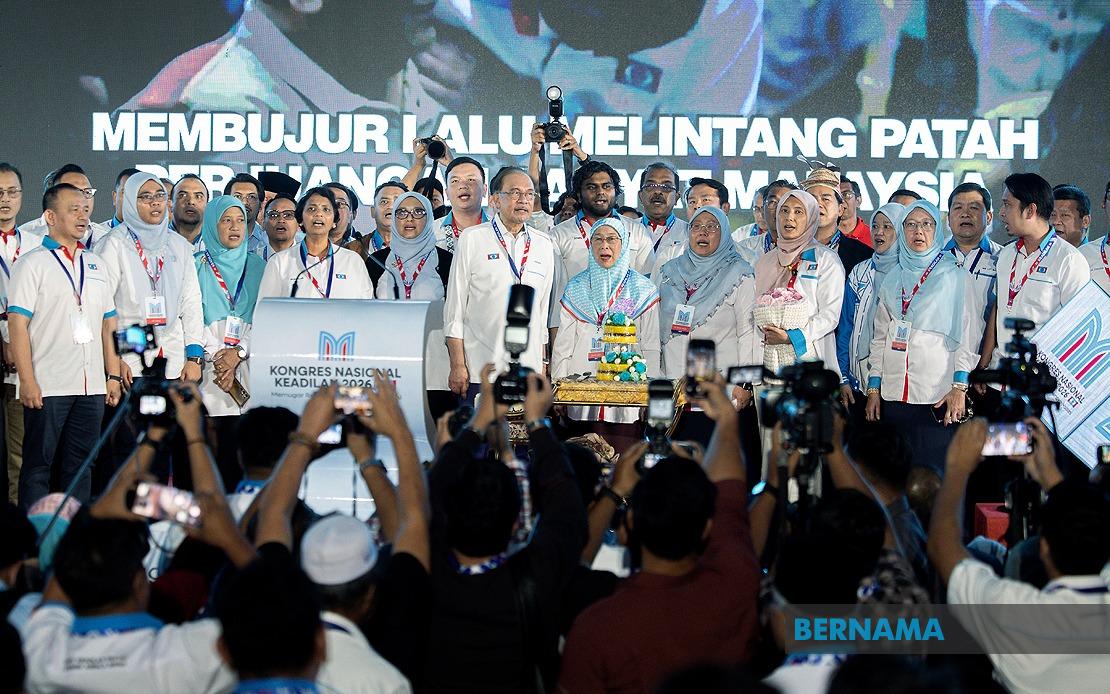
Prime Minister Datuk Seri Anwar Ibrahim has signalled the government's intention to amend the Tabung Haji Act 1995 as part of a sweeping institutional overhaul designed to restore public confidence in critical governance structures. Speaking in his capacity as both Finance Minister and leader of the MADANI administration, Anwar stressed that the proposed legislative change reflects the government's commitment to addressing systemic weaknesses that have undermined faith in Malaysia's key institutions.
The Tabung Haji initiative has long held particular significance for Malaysia's Muslim population, functioning as a dedicated savings and investment vehicle that combines financial management with religious obligation. The institution's reputation faced considerable strain in recent years due to governance concerns and investment losses, prompting questions about its operational transparency and asset management practices. Anwar's announcement suggests the government views legislative reform as essential to rebuilding stakeholder confidence and establishing clearer oversight mechanisms that can withstand future economic pressures.
Framing the amendment within a broader institutional strengthening agenda, Anwar indicated that governance enhancement represents a cornerstone of MADANI's policy framework. Beyond Tabung Haji, this encompasses a fundamental reassessment of how government entities operate and maintain accountability. The Prime Minister's emphasis on cleaning up institutions and addressing weaknesses head-on signals an administration willing to confront structural problems that previous governments may have tolerated or postponed.
Anwar also used the occasion to announce the complete repeal of the Universities and University Colleges Act 1971, emphasising that the replacement legislation should not perpetuate restrictions on student expression and engagement. This move reflects a philosophical shift toward greater institutional openness and the protection of civil liberties within educational spaces. The simultaneous announcement of both reforms indicates a cohesive strategy to modernise Malaysian governance across financial, educational, and administrative domains.
The PKR National Congress, which concluded the day Anwar made these announcements, provided the political platform for articulating this reform vision. As PKR president, Anwar framed the party's organisational identity around principles of justice, reform, and unwavering commitment to the broader Malaysian public rather than narrow factional interests. He cautioned party members against instrumentalising political power for personal enrichment or family advancement, instead positioning leadership as a public trust demanding ethical stewardship.
A significant dimension of Anwar's message addressed equitable governance across Malaysia's diverse political landscape. He stressed that the government's responsibility extends beyond territories controlled by ruling coalition partners, affirming that opposition-led states and their residents deserve comparable investment in public services and economic development. This rhetorical commitment to nationwide equity carries implications for how federal resources might be distributed and how federal-state relations could evolve under continued MADANI stewardship.
The broader context for these announcements involves Malaysia's ongoing navigation of economic challenges and institutional trust deficits accumulated over decades of governance inconsistencies. Public confidence in major institutions—particularly those managing citizen savings and educational systems—remains fragile. By signalling concrete legislative action on Tabung Haji and AUKU, the government attempts to demonstrate responsiveness to accumulated grievances while establishing a template for how institutional problems will be addressed going forward.
For Malaysian Muslims specifically, the Tabung Haji amendment carries material consequences tied to retirement security and hajj aspirations. Many depositors depend on accumulated savings for this significant religious milestone, making the institution's financial health and governance transparency matters of considerable personal importance. Legislative clarification of oversight responsibilities and asset protection mechanisms could materially affect investment strategies and risk management within the institution.
The repeal of AUKU restrictions on student activism similarly addresses longstanding complaints about academic freedom constraints. Malaysian universities have historically operated under legislation that limited student political organising and expression, a framework many educators and civil libertarians have criticised as incompatible with intellectual development. Removing these statutory constraints without replacing them suggests a philosophical commitment to expanding space for student engagement with political and social questions.
Anwar's articulation of PKR's organisational values—emphasising justice, cross-communal inclusivity, and principled governance—attempts to establish benchmarks against which his government's actual performance can be measured. By publicly committing the party to anti-corruption principles and equitable resource distribution, he creates accountability mechanisms whereby deviations from these stated values invite scrutiny. This rhetorical strategy acknowledges that governing coalitions require ongoing legitimacy reinforcement through demonstrated alignment between stated principles and concrete policy outcomes.
The institutional reform agenda reflects recognition that Malaysia's development aspirations depend on strengthened public institutions capable of inspiring confidence and delivering consistent service quality. Economic growth targets announced by the MADANI government cannot be realised without financial systems, educational institutions, and administrative structures that function effectively and transparently. By identifying specific legislative gaps and committing to amendment processes, the Prime Minister signals that institutional modernisation represents an immediate priority rather than a deferred aspiration.
Looking ahead, implementation of these announced reforms will require parliamentary time, technical legislative drafting, and careful stakeholder consultation. For Tabung Haji specifically, policymakers must balance enhanced oversight with operational flexibility that preserves institutional investment capacity. The student expression framework following AUKU repeal will similarly demand careful calibration to support academic freedom while maintaining institutional order. These amendments represent commitments that the government must now translate into functional legislation capable of achieving stated reform objectives.

