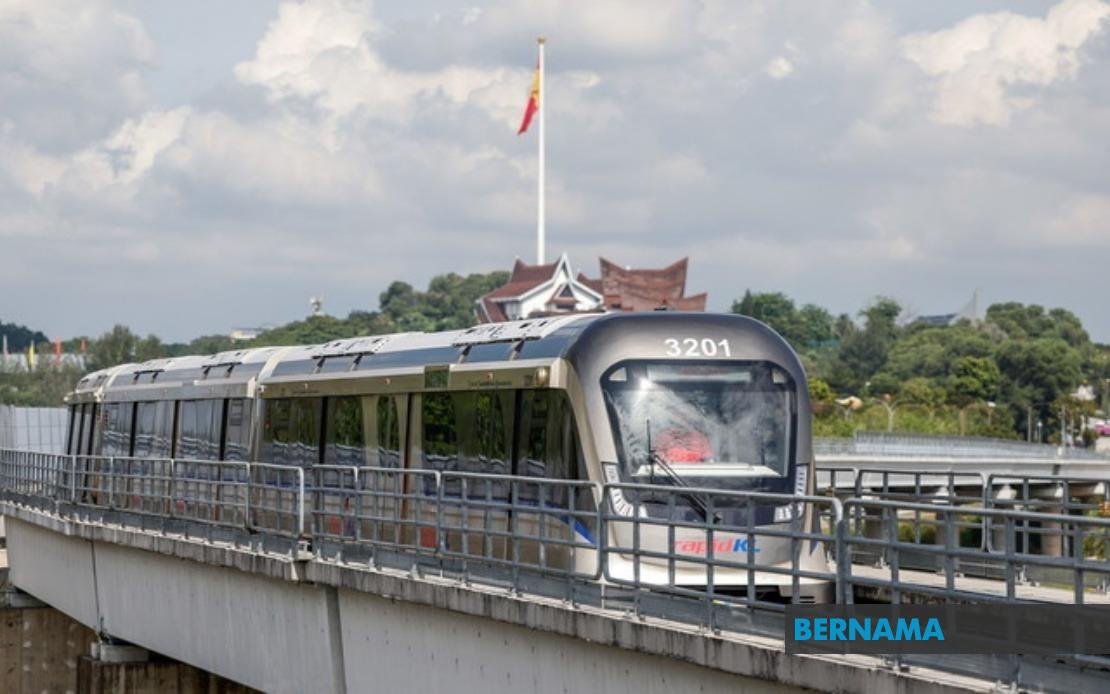
The federal government has committed to seeking a formal audience with Sultan Sharafuddin Idris Shah to address the Sultan of Selangor's mounting concerns about the troubled LRT3 Shah Alam Line project. Transport Minister Anthony Loke announced the planned engagement during a July 2 charity dinner in Kuala Lumpur, signalling the administration's willingness to directly address the royal household's reservations about the mass rapid transit initiative. The move comes shortly after the Ruler publicly articulated his dissatisfaction with how the project has been managed, including cost escalations and repeated construction delays that have tested public confidence in the government's infrastructure delivery capabilities.
The LRT3 project has endured a torrid implementation history that stretches across two distinct administrations. When the federal government changed hands in 2018, the project faced immediate disruption, entering a suspension period lasting more than 18 months while officials reassessed timelines and budgets. Compounding these earlier setbacks, the COVID-19 pandemic introduced an additional 19-month delay that pushed completion targets deep into 2021. These interruptions created a cascading effect on project specifications and scope. The Sultan pointedly noted that station sizes were systematically reduced during these review periods, the number of train carriages per unit was cut, and five planned stations along the proposed alignment were cancelled entirely, transforming the originally envisioned project into a considerably scaled-down initiative.
Sultan Sharafuddin's public intervention carries particular weight given his constitutional role as Selangor's Ruler and custodian of state interests. His emphasis that the LRT3 represents essential public infrastructure rather than a prestige-driven megaproject reflects frustration with the gradual erosion of the system's capacity to serve residents effectively. The cancellation of five stations effectively reduces the network's coverage in Selangor's bustling urban corridors, potentially limiting connectivity for commuters in underserved areas. By publicly articulating these concerns, the Sultan has provided a powerful endorsement of public expectations that infrastructure projects should maintain their original scope and ambition for citizen benefit, not be progressively diminished through bureaucratic circumspection.
Loke's commitment to seek clarification directly with the palace demonstrates recognition that managing high-profile infrastructure criticism requires engagement at the highest institutional levels. The Transport Minister's framing—that the government "accepts" the Ruler's remarks—signals deference to royal perspectives while positioning the upcoming audience as an opportunity to reframe the government's position on why modifications became necessary. However, the very need for such an audience underscores the challenges facing the MADANI administration in communicating infrastructure decisions to both the public and to state rulers whose populations bear the consequences of project changes.
The LRT3 Shah Alam Line holds significant importance for Selangor's transportation network, serving critical corridors in Malaysia's most economically productive state. The system's delayed rollout affects not only daily commuters but also the broader logistics and workforce mobility that underpins the region's manufacturing, services, and technology sectors. Businesses relying on efficient public transportation infrastructure to support their workforce have experienced prolonged uncertainty about service availability. The reduction in station numbers means certain residential and commercial areas will remain underserved even after the line eventually becomes operational, representing a permanent loss of connectivity that cannot be recovered through future expansion at equivalent cost.
Beyond the immediate LRT3 controversy, the episode illustrates broader tensions in Malaysian governance surrounding infrastructure accountability. State rulers, while constitutionally circumscribed in executive authority, retain significant moral and institutional authority to comment on major projects affecting their domains. When a Sultan publicly questions project implementation, it resonates powerfully with the public and can mobilize constituent pressure on the federal government. This dynamic becomes particularly acute when projects have been subject to multiple changes in scope and timeline, making it difficult for officials to maintain public credibility on completion prospects and value-for-money arguments.
The government's parallel initiative to increase public transport capacity for the July 11 Johor state election offers context on transport infrastructure priorities. By coordinating with Keretapi Tanah Melayu Berhad to expand Electric Train Service frequencies between Kuala Lumpur and Johor Bahru, the Transport Ministry demonstrated its capacity to rapidly mobilize resources when political imperatives align. The expansion allows outstation voters—particularly those returning from Singapore via the ETS network—to access services to Segamat, Labis, and other Johor destinations. The contrast between the government's swift action on electoral logistics and its inability to maintain the LRT3 project's original specifications is unlikely to escape public notice. The 16th Johor State Election on July 11, drawing 172 candidates across 56 state seats, represents a significant political test where transport accessibility directly influences voter participation and government performance assessments.
For Malaysian commuters and businesses monitoring infrastructure development, the LRT3 situation encapsulates persistent implementation challenges that have plagued major projects across Southeast Asia. Scope reductions, cost escalations, and timeline slippages have become almost routine in large-scale transport infrastructure, yet they carry genuine consequences for urban mobility and economic productivity. The Sultan's intervention reflects broader public exhaustion with infrastructure projects that begin with ambitious targets but gradually diminish in ambition and capacity as implementation proceeds. Restoring public confidence will require the government not merely to explain why changes became necessary, but to demonstrate how the modified LRT3 can still deliver meaningful mobility benefits to Selangor residents despite its reduced footprint.
The planned audience between Transport Minister Loke and Sultan Sharafuddin represents an opportunity for the government to recalibrate its communication strategy on infrastructure projects. Rather than positioning project modifications as inevitable technical adjustments, officials might benefit from engaging more transparently with state rulers, affected constituents, and business communities during planning and implementation phases. Such engagement could build understanding for necessary changes rather than allowing public perception to crystallize around perceptions of government underperformance. For Selangor and the broader Klang Valley region, the LRT3 remains a critical piece of the metropolitan transport puzzle, and its eventual performance—however modified from original plans—will significantly impact economic productivity and quality of life for millions of residents.

