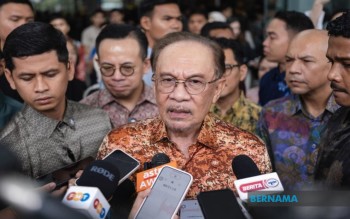
Prime Minister Datuk Seri Anwar Ibrahim has drawn a clear line on Malaysia's tax debate, definitively ruling out any return to the Goods and Services Tax while signalling flexibility on improving the current Sales and Service Tax regime. Speaking after opening the TikTok Shop Summit 2026 in Kuala Lumpur on August 20, Anwar stated unequivocally that the government would not embrace GST's core principle of imposing a broad-based levy across the entire population, regardless of income levels. This stance reflects the administration's stated commitment to protecting vulnerable citizens from additional fiscal pressure amid cost-of-living concerns that remain acute across Malaysian society.
The Prime Minister, who doubles as Finance Minister, distinguished between GST's fundamental architecture and specific tax mechanisms that might warrant examination. Anwar explained that whilst the government could potentially consider certain elements borrowed from a GST framework, the foundational principle of broad-based taxation remained off limits. His reasoning centred on an equity argument: any consumption tax that indiscriminately captures even the poorest segments of society contradicts the MADANI government's governing philosophy of progressive fiscal policy. This framing positions tax reform not as a technical economic question but as a values issue rooted in protecting the rakyat from regressive burden.
Context for this announcement lies in Malaysia's recent tax history. The country abandoned GST in 2018 after the previous administration's implementation sparked significant public backlash over perceived increases in the cost of living. That transition saw the replacement of GST with the dual-track SST system, which applies different tax rates to goods and services. Nearly a decade later, policymakers across the region and within Malaysia's own bureaucracy have quietly discussed whether a return to broader consumption taxation might improve fiscal sustainability and enable more ambitious government spending on infrastructure, defence, and social programmes.
Yet Anwar's comments suggest the government recognises political reality: reversing the 2018 decision would prove enormously unpopular and would undermine the MADANI coalition's legitimacy among voters who already struggle with inflation, property prices, and education costs. By explicitly rejecting GST, the administration insulates itself from criticism whilst simultaneously positioning itself as listening to public sentiment. This rhetorical move allows the government to appear firm on protecting the poor whilst leaving room for technocratic adjustments that could improve revenue without triggering the same political firestorm that greeted GST.
The government's openness to SST refinements suggests where genuine policy movement may occur. The dual-track system, whilst more politically palatable than GST, has created administrative complexity and potentially missed revenue opportunities. Various proposals circulating within policy circles include broadening the service tax base, adjusting rates on specific categories of goods, and implementing new mechanisms such as taxes on electronic payment transactions. The last idea, in particular, reflects growing government interest in capturing economic activity that occurs in the digital realm—a significant and rapidly expanding segment of Malaysian commerce that may currently escape effective taxation.
This push for greater efficiency in consumption tax collection reflects broader fiscal pressures confronting the government. Malaysia's public debt remains elevated, and competing demands for expenditure on healthcare, education, and infrastructure expansion limit policymakers' ability to simply cut their way to fiscal consolidation. Revenue enhancement therefore becomes a necessity, not a preference. By signalling willingness to tinker with SST implementation and explore new tax bases, Anwar indicates that the administration intends to pursue incremental improvements rather than wholesale transformation of the tax system.
Regional context adds another dimension to this debate. Several Southeast Asian neighbours maintain GST or value-added tax systems, and there is persistent academic and policy discussion about whether Malaysia's failure to adopt a broad-based consumption tax puts it at a competitive disadvantage in attracting investment or managing fiscal sustainability. Indonesia, Thailand, and Singapore all operate some form of GST or VAT, and their experiences—both positive and negative—inform Malaysian deliberations. However, these countries also face distinct political economies and have navigated consumer resistance to consumption taxes differently. Malaysia's particular sensitivity to tax increases reflects specific historical experiences and demographic realities that differentiate it from regional peers.
Anwar's emphasis on the MADANI government's anti-poverty focus reveals the lens through which his administration views fiscal policy. The government has made targeted cash transfers and subsidies core components of its social protection strategy, and broad-based taxation sits awkwardly with this approach. A GST would require either substantial compensatory transfers to low-income households—raising administrative costs and potentially reducing the tax's net revenue yield—or acceptance that the poorest Malaysians would face genuine increases in effective tax burden. Neither option aligns with the coalition's political messaging or stated economic philosophy.
Looking forward, expect the government to pursue a middle path: incremental SST adjustments, possible digital economy taxation, and perhaps selective broadening of the service tax base. These moves would generate additional revenue without the political toxicity of GST. They would also allow the administration to claim it is modernising the tax system and improving efficiency—claims that resonate in policy circles and with international observers without alienating voters who remain sceptical of anything resembling a return to GST. The forthcoming months will likely see technical discussions about these reforms, even as the government maintains its public commitment to protecting low-income Malaysians from increased tax burden. This balancing act—pursuing fiscal sustainability whilst shielding the vulnerable—will define Malaysia's tax policy trajectory for the foreseeable future.

