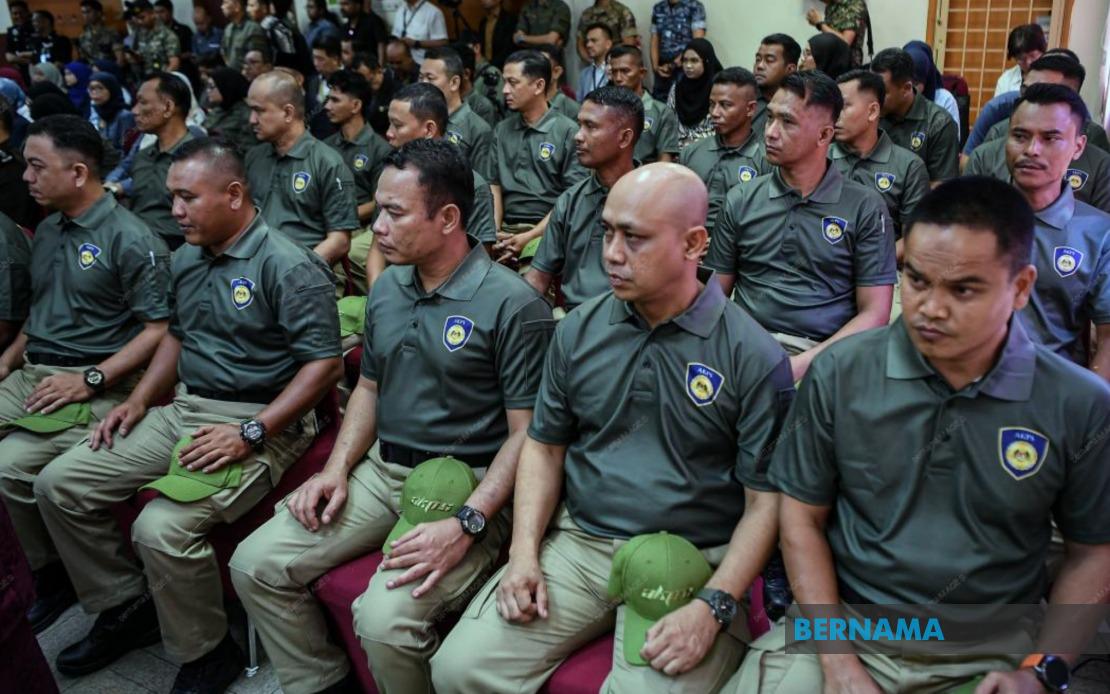
The Malaysian government has moved to reassure thousands of civil servants employed by the Border Control and Protection Agency (AKPS) that their employment rights and welfare provisions will remain intact as the agency shifts to a reformed service structure under the Public Service Department (PSD) from July 1. Deputy Home Minister Datuk Seri Dr Shamsul Anuar Nasarah delivered the assurance during parliamentary proceedings, seeking to quell concerns among enforcement personnel about potential disruptions to their careers and financial security during what represents a significant institutional reorganisation.
The AKPS itself represents a major consolidation of enforcement capacity, having been established through the merger of several agencies previously operating in isolation. The consolidated structure now serves a critical function in coordinating border control and goods monitoring across Malaysia's 122 entry points—a responsibility that has only intensified as trade volumes and passenger movements have recovered following the pandemic. With such a large operational footprint, any disruption to personnel stability could potentially compromise security and efficiency at these checkpoints.
Under the assurances provided, officers who opt to remain with their original service arrangements within their parent agencies will face no consequences regarding career advancement, length-of-service calculations, superannuation entitlements, or broader welfare benefits. This commitment addresses one of the primary anxieties that typically accompanies institutional restructuring in the civil service—that personnel caught in transitional arrangements might find themselves disadvantaged relative to peers who secure permanent placement elsewhere. By guaranteeing protection of seniority and retirement calculations, the government has attempted to remove a key source of uncertainty.
The transition mechanism itself incorporates flexibility for officers reluctant to accept formal transfer into AKPS's new service scheme. Those declining the permanent appointment offer will initially remain with AKPS in interim status, with longer-term placement to be determined through arrangements overseen by the PSD. Importantly, officers may subsequently be returned to their original parent departments—a safety valve that provides a pathway back to familiar institutional settings should the new arrangements prove incompatible with individual career preferences or personal circumstances.
Current staffing levels reveal both progress and challenges in consolidating the agency's workforce. As of mid-June, 6,824 of the 8,403 positions allocated to AKPS had been filled, leaving 1,579 vacancies that require attention. These gaps are being addressed through coordinated recruitment involving AKPS management, the Home Ministry, the PSD, and the contributing agencies, suggesting a systematic rather than ad-hoc approach to staffing. The vacancies nonetheless represent a notable proportion of the total establishment—approximately 19 percent—indicating that the consolidation process remains incomplete.
To attract and retain capable personnel in what are often demanding operational environments, the government has structured the AKPS appointments with financial incentives beyond standard civil service compensation. Officers appointed to AKPS receive an additional annual salary increment (KGT) coupled with a RM200 service incentive payment, measures designed to reflect the particular demands of border control work and ensure continuity of high-quality service delivery at critical entry and exit points. These incentives signal recognition that the work carries heightened responsibility and stress relative to some other civil service roles.
The parliamentary question that prompted these assurances, raised by Rushdan Rusmi from the Padang Besar constituency, reflected broader concerns about institutional stability and workforce welfare following AKPS's establishment. As a border constituency directly affected by cross-border movements and enforcement operations, Padang Besar's representative carried particular standing to raise such questions, suggesting these anxieties are not merely abstract bureaucratic concerns but grounded in tangible constituency experiences and feedback from constituents working in enforcement roles.
For Malaysia's broader civil service ecosystem, the AKPS transition illustrates both the necessity and complexity of organisational modernisation. Border control and security functions have grown increasingly sophisticated and resource-intensive, requiring integrated approaches that previous siloed structures could not effectively deliver. Yet restructuring on this scale inevitably creates temporary uncertainty among affected personnel, particularly given Malaysia's significant reliance on experienced civil servants who might otherwise be tempted to seek private-sector opportunities offering greater stability during transitional periods.
The assurances provided also carry implications for neighbouring Southeast Asian nations with comparable enforcement challenges. Malaysia's approach of guaranteeing that restructuring does not disadvantage affected personnel offers a model for other regional governments contemplating similar institutional consolidations. By prioritising workforce stability and transparent communication about transition arrangements, Malaysia's Home Ministry has attempted to position the AKPS changeover as a modernisation effort that benefits both operational capacity and employee welfare rather than presenting these as competing objectives.
Looking forward, the success of this transition will depend substantially on how smoothly the 1,579 remaining vacancies are filled and whether officers actually experience the promised continuity of career progression and benefits. The July 1 implementation date provides a fixed timeline against which progress can be measured, while the flexibility built into the arrangements offers escape valves should implementation prove more challenging than anticipated. For Malaysian civil servants monitoring this transition, the government's parliamentary assurances provide important documentation of commitments that can be referenced should disputes subsequently arise about benefit calculations or career advancement decisions.

