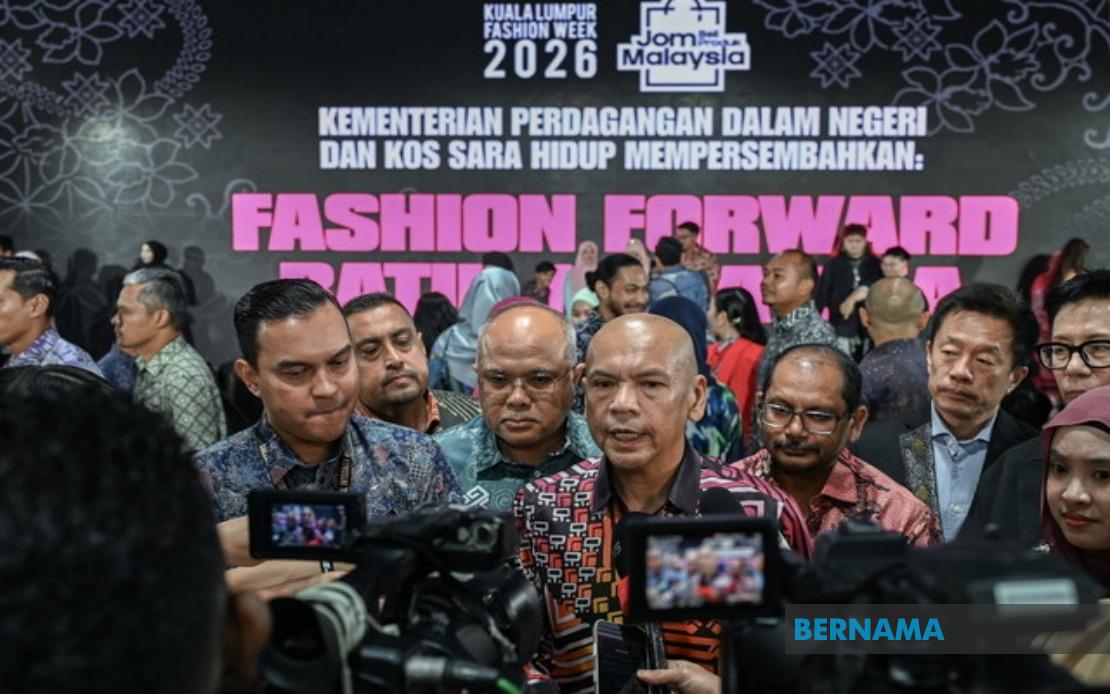
The Malaysian government is opening a formal channel for industry voices in shaping its approach to promoting domestic products, with Domestic Trade and Cost of Living (KPDN) Minister Datuk Armizan Mohd Ali announcing an invitation for comprehensive stakeholder feedback on policies aimed at boosting local manufacturing and commerce. This outreach represents a deliberate shift towards consultative policymaking, acknowledging that government initiatives must be grounded in the practical realities facing businesses and entrepreneurs across the country.
The KPDN has directed stakeholders to submit their proposals and observations through the ministry or relevant government agencies, with all inputs destined for review by a newly established Cabinet Committee tasked with empowering local product usage and procurement. This committee, chaired by Deputy Prime Minister Datuk Seri Fadillah Yusof and secretariat-led by KPDN, held its inaugural meeting shortly after being established in July and represents a structural attempt to address fragmentation in how government ministries approach the domestic product agenda. The involvement of multiple agencies—including the Ministries of Economy, Investment, Trade and Industry, Tourism, Arts and Culture, Entrepreneur Development and Cooperatives, Finance, and various supporting bodies—signals recognition that boosting local products requires coordinated action across traditionally siloed government functions.
Minister Armizan emphasised during remarks at the Kuala Lumpur Fashion Week 2026 that this collaborative framework aims to eliminate the inefficiencies and redundancies that have historically hampered implementation of buy-local initiatives. Rather than allowing different ministries to pursue overlapping or even contradictory objectives, the committee structure creates a mechanism for synthesising diverse policy approaches into a coherent national strategy. The minister noted explicitly that this coordination is essential for formulating cohesive direction, strategic frameworks, and operational methodologies that genuinely reflect input from commerce, manufacturing, retail, and entrepreneurial sectors.
The timing of this initiative reflects growing pressure on policymakers from local business communities concerned about market share erosion. Business operators have increasingly raised alarms about the influx of imported merchandise, particularly goods entering via digital commerce channels, which are perceived as undercutting domestic producers and retailers. This concern extends beyond traditional brick-and-mortar commerce into the rapidly expanding e-commerce space, where foreign sellers operate with competitive advantages including lower labour costs and established global supply chains. The government's willingness to formally solicit feedback signals acknowledgment that import substitution and local product promotion cannot succeed through top-down mandates alone but require buy-in and practical cooperation from the business ecosystem.
The broader context involves Malaysia's economic diversification imperatives. The cultural and creative industries alone contributed RM130.7 billion—representing 6.8 per cent of gross domestic product—according to the 2024 Cultural and Creative Satellite Account Report. This substantial contribution indicates significant untapped potential within these sectors, particularly as global demand for culturally authentic products continues expanding. The strategic collaboration between KPDN and the Kuala Lumpur Fashion Week exemplifies how major cultural platforms can serve dual purposes: celebrating Malaysian heritage while functioning as international marketing vehicles for domestic creators and manufacturers. The fashion week achieved media value exceeding USD32 million in the previous year, demonstrating that when positioned correctly, local cultural products can command international attention and generate economic returns.
Batik production and promotion represents a particularly strategic focus, combining cultural authenticity with commercial viability and international marketability. Traditional batik manufacturing has roots extending centuries into Malaysian and broader Southeast Asian heritage, yet modern batik producers face intense competition from mass-manufactured imitations produced in lower-cost jurisdictions. By positioning batik within international fashion discourse through events like KLFW, government agencies and industry partners create pathways for premium positioning that justifies higher prices and supports sustainable local employment. This approach differs fundamentally from protectionist trade barriers, instead leveraging cultural branding and quality differentiation as competitive mechanisms.
The Jom Beli Produk Malaysia (JOM MALAYSIA) movement serves as the operational framework for these efforts, explicitly designed to empower local products through collaborative engagement with commercial and creative sectors rather than regulatory coercion. This movement-based approach allows flexibility in implementation while maintaining consistent messaging around supporting domestic entrepreneurs and manufacturers. The strategic involvement of tourism and cultural ministries reflects understanding that international visitors represent significant purchasers of culturally distinctive products, and that tourism infrastructure can be mobilised to create retail opportunities for local artisans and small manufacturers.
For Malaysian entrepreneurs and small-to-medium enterprises, this formal invitation for feedback provides genuine opportunity to shape policy implementation at formative stages. Rather than regulations being imposed after policy development concludes, stakeholder input can influence the strategic frameworks and operational approaches from inception. This is particularly valuable for sectors facing structural disadvantages—whether due to capital constraints, limited international market access, or competition from established foreign brands—where government policy can be calibrated to address specific barriers. Entrepreneurs with direct experience of market dynamics, supply chain challenges, and consumer preferences possess insights invaluable for designing effective supportive policies.
The cross-ministerial coordination facilitated by the Cabinet Committee addresses a persistent weakness in Malaysian economic policy implementation: the tendency for different government agencies to pursue compatible but uncoordinated objectives. When the Ministry of Tourism promotes Malaysian cultural products internationally while the Ministry of Investment focuses on manufacturing competitiveness and KUSKOP emphasises cooperative development, without formal coordination mechanisms, these initiatives can work at cross-purposes or create duplicative administrative burdens for businesses. The new committee structure creates enforceable expectation of integration and prevents the siloed approach that has historically weakened implementation effectiveness.
For regional context, Malaysia's emphasis on promoting domestic products reflects patterns visible across Southeast Asia, where governments grapple with balancing integration into global value chains against desires to develop robust domestic industries and protect local entrepreneurs. Thailand, Indonesia, and Vietnam have each pursued variations of local product promotion, with mixed results depending on implementation consistency and policy coherence. Malaysia's structured approach to stakeholder consultation and multi-agency coordination potentially positions it to avoid implementation failures that undermined some earlier regional initiatives.
The invitation for stakeholder feedback also signals openness to evidence-based policymaking. Rather than relying on predetermined assumptions about local product promotion, the government is explicitly requesting information about industry needs, market conditions, and practical implementation obstacles. This receptiveness to input creates opportunity for stakeholders to advocate for policies aligned with commercial reality rather than ideological assumptions. Entrepreneurs can articulate which specific government support mechanisms would prove most beneficial—whether capital assistance, regulatory streamlining, international market access facilitation, or supply chain coordination—allowing resources to be directed toward interventions with highest probability of success.
As submissions flow into KPDN and relevant agencies over coming weeks, the quality and specificity of stakeholder feedback will significantly influence whether the Cabinet Committee's initiatives translate into meaningful support for local products or remain symbolic gestures without commercial impact. The government's demonstrated willingness to solicit input suggests genuine commitment to collaborative policymaking, though ultimate success depends on whether feedback genuinely shapes implementation or merely creates appearance of consultation. For Malaysian businesses and entrepreneurial communities, this window represents valuable opportunity to influence policy direction during its formative stages.

