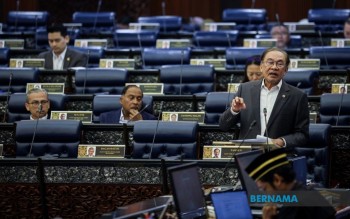
Prime Minister Datuk Seri Anwar Ibrahim announced a new e-Invoice Voluntary Declaration Programme extending through December 31, 2027, designed to alleviate the administrative and financial pressures facing Malaysia's business community, particularly in the micro, small and medium enterprise segment. Speaking during Minister's Question Time in Parliament today, Anwar, who concurrently holds the Finance Ministry portfolio, framed the initiative as an extraordinary departure from conventional tax administration practice, signalling the government's intent to balance revenue objectives with economic pragmatism.
The centrepiece of this programme permits businesses to voluntarily update, review and amend their e-Invoice submissions without triggering punitive measures from the Inland Revenue Board of Malaysia. This flexibility represents a substantive recognition that the transition to digital tax compliance has imposed genuine burdens on smaller operators who often lack sophisticated accounting infrastructure and dedicated tax personnel. By removing the threat of financial penalties during the correction window, the government creates space for enterprises to progressively achieve compliance rather than face retroactive enforcement action that could cripple already-stretched cash flows.
Acknowledging that such penalty waivers remain unusual within Malaysia's income tax framework, Anwar's statement underscores how policymakers are responding to documented challenges facing the MSME segment. These businesses collectively represent a critical pillar of Malaysia's economic resilience, contributing substantially to employment and gross domestic product. The voluntary declaration mechanism thus serves a dual purpose: it genuinely assists struggling proprietors whilst simultaneously encouraging higher voluntary compliance rates, which ultimately strengthens the tax base through expanded filing participation rather than enforcement intensity.
Complementing the penalty waiver, the government has simultaneously introduced accelerated capital allowance provisions permitting eligible businesses to claim full capital cost deductions within a single fiscal year for expenses directly incurred in implementing e-Invoice systems and infrastructure. This tax incentive reduces the effective financial burden of digital transformation, making technological adoption more economically rational for businesses already operating on thin margins. Rather than spreading deductions across multiple years, compressed claim periods improve immediate cash flow positions, a critical consideration for MSMEs operating without access to capital markets.
The programme responds directly to parliamentary questioning from Lee Chuan How, representing the Pakatan Harapan coalition in Ipoh Timor, who raised constituent concerns regarding MSME resilience in an uncertain global economic environment. His inquiry prompted the government to articulate its broader support architecture, demonstrating parliamentary accountability whilst simultaneously using the Question Time mechanism to communicate policy direction to affected businesses monitoring legislative proceedings.
Contextualising the current initiative requires reference to December 2025 threshold adjustments that the government previously implemented, raising the income ceiling for e-Invoice exemption from RM500,000 to RM1 million annually. This modification alone extended relief to over one million taxpayers, substantially reducing the compliance universe requiring full digital tax filing. The cumulative effect of successive threshold increases and the new voluntary declaration programme suggests a calibrated approach to digital tax transformation—one that maintains administrative modernisation objectives whilst providing graduated implementation pathways rather than abrupt mandates.
For the Malaysian MSME ecosystem, these measures carry particular significance given intensifying global economic headwinds and regional competitive pressures. Southeast Asian economies increasingly compete for foreign direct investment and supply chain participation; Malaysian small businesses must simultaneously navigate international competitive requirements whilst managing escalating domestic regulatory complexity. Compliance cost reduction directly enhances international competitiveness by freeing limited management attention and financial resources for productive business activities rather than regulatory navigation.
The voluntary declaration programme also reflects sophisticated policy design recognising that tax compliance exists on a spectrum rather than as a binary outcome. Businesses operating at compliance margins benefit from amnesty provisions that encourage full disclosure without retroactive penalties, building institutional tax-paying habits that persist beyond the programme period. This psychological dimension often proves more effective than enforcement intensity in establishing durable compliance cultures, particularly among first-generation and family business operators lacking inherited tax expertise.
Moreover, the initiative acknowledges that e-Invoice implementation requires not merely software adoption but organisational capability development across finance functions. Training requirements, system integration challenges and procedural recalibration consume management bandwidth that smaller enterprises can ill afford to divert from core operations. By extending compliance timelines and removing penalty risks, the government recognises that capability development requires realistic timeframes rather than compressed implementation cycles that overwhelm management capacity.
Regionally, Malaysia's approach invites comparison with other Southeast Asian nations managing digital tax transformation. The balance between revenue administration modernisation and taxpayer support distinguishes Malaysia's trajectory and may influence broader regional policies regarding digital economy taxation. ASEAN economies collectively grapple with similar challenges as governments pursue digitalisation objectives whilst maintaining diverse business ecosystem viability.
The programme's 2027 endpoint establishes clear expectations for full compliance achievement, providing businesses with defined planning horizons. This temporal boundary balances flexibility with accountability, preventing indefinite postponement whilst acknowledging that multiyear transition periods suit complex organisational change processes. Businesses must view the extended timeline as opportunity rather than respite, using available years to progressively enhance digital capabilities and tax administration practices.
Stakeholders including professional associations representing MSMEs, accounting bodies and tax practitioners will play critical roles in translating policy intent into practical implementation. Disseminating detailed guidance regarding programme mechanics, eligible adjustments and claiming procedures ensures that relief provisions reach intended beneficiaries rather than remaining technically available but practically inaccessible due to information asymmetries.

