The Malaysian government is channelling RM10 million into the Special Fishermen Housing Project (PKPN) during 2024, signalling a renewed commitment to addressing housing deficits within the nation's fishing communities. The Fisheries Development Authority of Malaysia (LKIM), which oversees the initiative, has structured the investment to tackle two complementary needs: rehabilitating deteriorating homes and constructing new residential units for eligible fishermen families. This dual approach recognises that housing insecurity remains a persistent challenge in fishing-dependent regions, where income volatility and limited access to traditional financing often leave families vulnerable.
The bulk of the allocated funds—more than RM6.8 million—targets the repair component, addressing structural issues in 344 fishing households across Malaysia. This repair programme has already advanced to approximately 80 per cent completion, with LKIM officials projecting finalisation by late August or September. The scale of these repairs reflects the deteriorated condition of many fishermen's homes, particularly in states like Kelantan where coastal communities have historically faced underinvestment in basic infrastructure. Each repair job receives up to RM20,000 in government support, enabling essential work such as roof restoration, wall reinforcement, and basic amenity upgrades that improve both safety and dignity for residents.
Construction of fresh housing units represents the second pillar of PKPN, with RM3.1 million earmarked to build 36 new homes. However, this component is progressing more slowly than anticipated, primarily due to complications surrounding land ownership. Many intended beneficiaries possess inherited properties or unclear title deeds, a common issue in communities with limited formal documentation. These bureaucratic barriers underscore a deeper problem in Malaysian rural development: the gap between policy intent and ground-level implementation when property rights remain ambiguous. Despite these delays, LKIM remains committed to completing all new construction this calendar year, though success will depend on resolving tenure questions with state land authorities.
The government's per-unit allocation reflects regional economic differences. Peninsular Malaysia receives RM84,000 per new house, while Sabah and Sarawak receive higher allocations of RM95,000, recognising the elevated construction costs in eastern Malaysian states due to remote locations and limited material availability. Kelantan, home to significant fishing populations, received RM388,000 from this year's allocation, demonstrating the concentration of benefits in maritime-dependent regions. These figures indicate a proportionate response to cost realities, though questions remain about whether allocations adequately address underlying poverty within fishing households or merely address symptoms.
Beyond immediate housing relief, LKIM leadership has articulated a broader strategic vision for the fishing sector that extends far beyond construction and repairs. Officials acknowledge that conventional fishing faces existential pressures from multiple directions. Fish stocks throughout Malaysian waters have deteriorated due to decades of intensive harvesting and environmental degradation, making traditional catch-dependent livelihoods increasingly precarious. Simultaneously, operational expenses—particularly fuel costs—have climbed steadily, squeezing profit margins despite continued government fuel subsidies. These structural headwinds are creating space for policy innovation, prompting state planners to actively encourage diversification into aquaculture as a means of securing fishing families' long-term economic security.
The strategic pivot toward aquaculture reflects both pragmatism and ambition. The government has established a concrete target: 40 per cent of national fish production should derive from aquaculture by 2030, up from current levels dominated by wild capture. This represents a fundamental reorganisation of Malaysia's seafood sector from extraction to cultivation. Aquaculture offers several advantages that appeal to policymakers: it can be scaled on smaller land parcels, remains less vulnerable to natural resource depletion, generates more consistent yields, and allows for value-added production of premium species. For individual fishermen, the transition promises income stabilisation and reduced weather-dependent volatility, though it simultaneously demands capital investment, technical training, and acceptance of a fundamentally different production model.
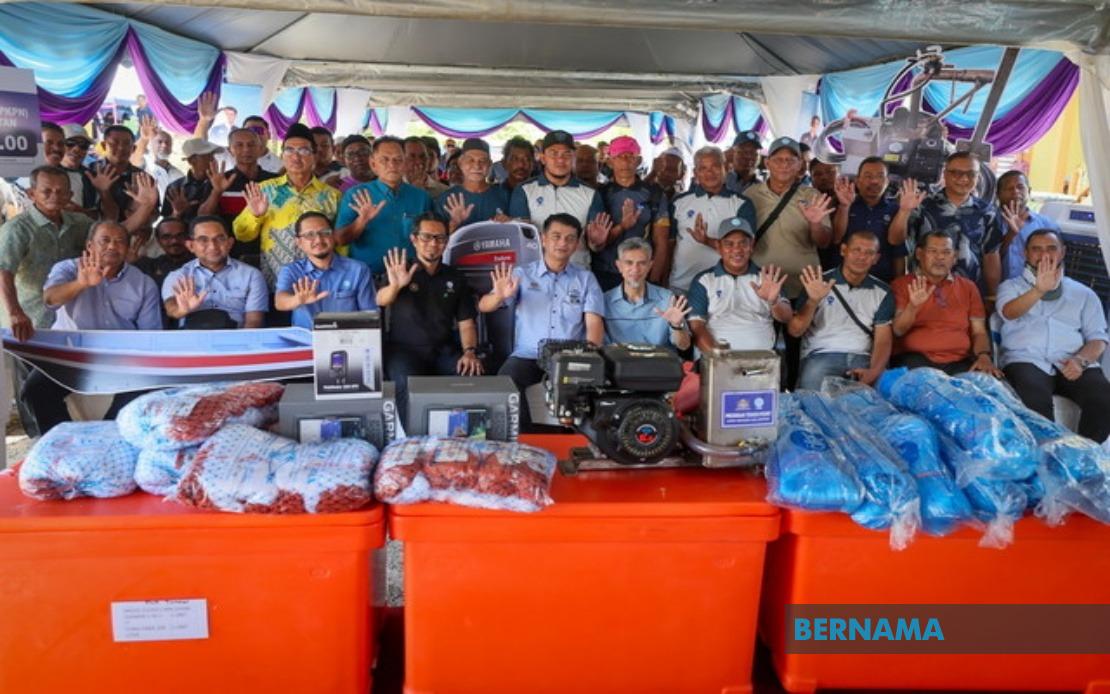
To catalyse this transition, LKIM has begun deploying targeted investments in aquaculture infrastructure at the community level. Kelantan's fishing associations received RM400,000 specifically to establish tank-based prawn farming operations, a relatively contained and manageable entry point for fishermen new to cultivation. Tank-based systems offer several pedagogical advantages: they require smaller initial investments than open-water cage systems, permit tighter environmental control, and allow operators to experiment with techniques before committing to larger infrastructure. These demonstration projects serve simultaneously as livelihood initiatives and as learning laboratories, generating local expertise that can diffuse outward to other interested fishermen.
The aquaculture expansion agenda carries implications extending beyond individual household economics into broader Southeast Asian food security architecture. Malaysia imports significant quantities of seafood despite possessing extensive maritime territory, indicating both market demand and production shortfalls. By shifting domestic production toward aquaculture, Malaysia can reduce import dependency, create additional rural employment, and establish food security buffers against regional supply disruptions. Neighbouring countries including Vietnam, Thailand, and Indonesia have already substantially developed aquaculture sectors, demonstrating proven models that Malaysian policymakers can study and adapt. Regional cooperation in technology transfer and market integration could amplify benefits for all parties.
Yet the transition from traditional fishing to aquaculture presents genuine challenges that policy allocation alone cannot overcome. Cultural attachments to maritime livelihoods run deep in fishing communities, and not all fishermen possess the temperament or capability for the disciplined, science-based approach that successful cultivation demands. Market access for farmed seafood remains uncertain in some regions, with buyers sometimes preferring wild-caught products despite higher prices. Training programmes must be sufficiently robust to impart not merely operational techniques but also financial management and market navigation skills. The success of initiatives like the Kelantan prawn farming project will depend heavily on sustained support beyond initial funding, including ongoing extension services and market linkage assistance.
The housing initiative and aquaculture push together reflect a holistic approach to fishing community development that acknowledges interconnected challenges. Stable housing reduces financial stress and frees household resources for productive investment, while income diversification reduces vulnerability to external shocks. Fishermen living in secure homes with predictable incomes represent a fundamentally different demographic from those struggling with housing insecurity and declining catches. For Malaysian policymakers, the calculus is straightforward: investments in physical infrastructure and livelihood transition today constitute preventive spending against future poverty, rural-urban migration pressures, and social instability.
The rollout to other states represents the natural next phase for the aquaculture programme. Success in Kelantan will generate local champions, proven methodologies, and demand from neighbouring fishing communities. LKIM's institutional capacity to manage expansion across multiple states will prove critical—inadequate support systems could result in failed pilot projects that discourage future participation. State-level fisheries departments must coordinate with national LKIM structures to customise approaches for local conditions while maintaining programme coherence. The investment represents Malaysia's recognition that fishing communities deserve deliberate policy attention and material support as the nation undergoes economic transformation.
For Malaysian readers, these developments carry significance beyond coastal regions. Food security, rural development, and sustainable management of natural resources affect the entire population through food prices, employment opportunities, and environmental health. The decision to invest substantially in fishing communities while simultaneously promoting sectoral transformation reflects an understanding that development cannot be one-size-fits-all. Different communities require tailored solutions reflecting their unique assets, challenges, and aspirations. By combining immediate relief through housing provision with forward-looking support for economic transition, Malaysian policymakers are attempting to maintain both social cohesion and economic dynamism in a historically marginalised sector.

