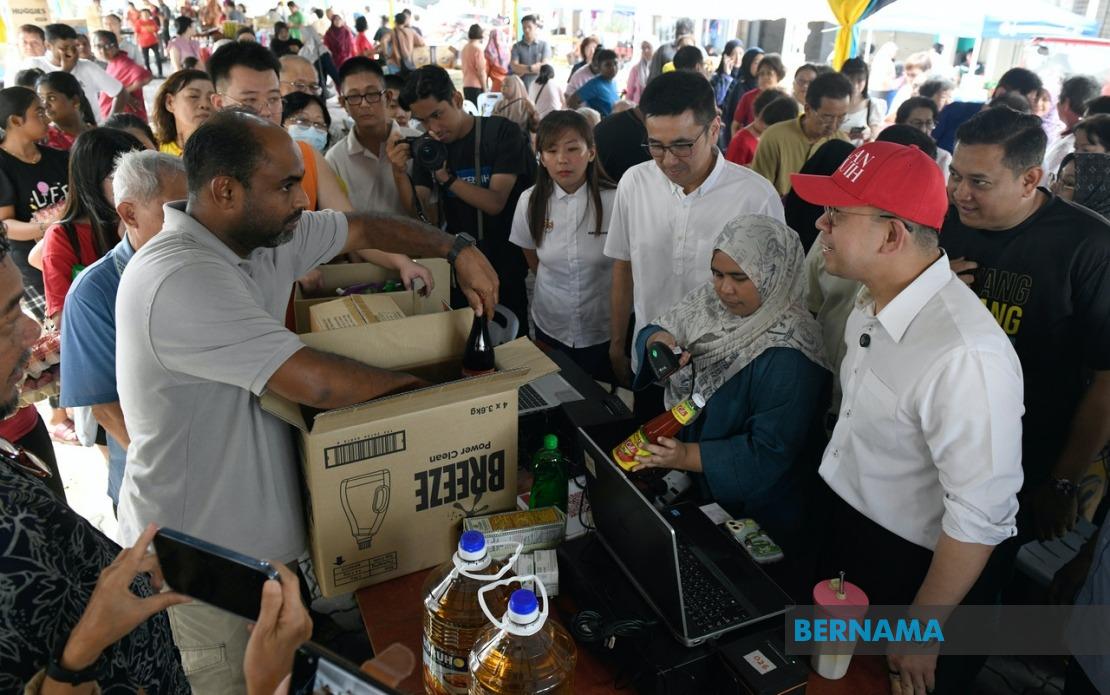
The Malaysian government is doubling down on its commitment to empower micro, small and medium enterprises (MSMEs) and cooperatives through targeted initiatives designed to unlock opportunities in the nation's robust wholesale and retail trade sector. Minister Steven Sim Chee Keong, who leads the Ministry of Entrepreneur and Cooperatives Development (KUSKOP), outlined this strategy during the launch of the Jualan MADANI KUSKOP programme in the Jawi state constituency, signalling a renewed push to ensure that grassroots entrepreneurs benefit directly from the sector's expanding growth trajectory.
The timing of these interventions is significant, as official data reveals that Malaysia's wholesale and retail trade sector continues its upward momentum with considerable vigour. Statistics from the Department of Statistics Malaysia (DOSM) indicate that the sector achieved a sales value approaching RM175 billion in April 2026, representing a year-on-year increase of 15.3 per cent. This sustained expansion underscores the resilience of Malaysia's domestic consumption patterns and signals that consumer appetite remains strong despite broader economic headwinds affecting the region and world.
Sim attributed this sectoral success to a confluence of favourable factors, including coordinated action between government and private sector stakeholders in reducing living costs for ordinary Malaysians, stabilising commodity prices, and supporting wage growth across the workforce. These efforts have created an environment where domestic demand remains buoyant, allowing retailers and wholesalers to expand their operations and explore new market segments. The minister framed this as a tangible outcome of policy work aimed at improving the purchasing power of Malaysian households, a cornerstone of the government's broader economic agenda.
The launch of targeted KUSKOP programmes reflects official recognition that while the overall sector is flourishing, not all participants are positioned equally to capitalise on this expansion. Local entrepreneurs, particularly those operating at the micro and small scale, often lack access to capital, sophisticated supply chain infrastructure, or market intelligence networks that larger competitors take for granted. By channelling government support directly to MSMEs and cooperatives, KUSKOP aims to level the playing field and democratise access to the sector's growth opportunities.
Sim, who also represents Bukit Mertajam as a Member of Parliament, acknowledged the volatile external environment in which Malaysia operates. Tariff disputes between major trading powers, escalating trade tensions, and geopolitical instability create unpredictability for open economies like Malaysia that depend heavily on international commerce. Yet despite these headwinds, the domestic retail and wholesale sector has demonstrated remarkable resilience, suggesting that local consumption patterns and internal trade flows provide a stabilising counterweight to external shocks.
The government's approach emphasises systemic resilience rather than merely reactive crisis management. By strengthening the foundations of local business participation in wholesale and retail trade, KUSKOP's initiatives aim to insulate the broader economy from external disruptions while simultaneously creating pathways for wealth generation and entrepreneurial growth at the grassroots level. This philosophy aligns with longer-term objectives of building a more inclusive and distributed economic structure where benefits accrue across different segments of Malaysian society.
For regional observers, Malaysia's strategic focus on MSME empowerment offers instructive lessons about sustaining growth during uncertain times. Many Southeast Asian neighbours grapple with similar challenges of managing global volatility while ensuring that domestic economic expansion reaches smaller enterprises and less-connected communities. Malaysia's willingness to invest deliberately in grassroots entrepreneurship suggests confidence in the underlying fundamentals of local demand and a recognition that inclusive growth strategies can enhance both economic resilience and social cohesion.
The expansion of customer bases and the strengthening of participation in local economic chains—objectives explicitly identified by Sim—represent crucial mechanisms through which MSME-focused policies translate into measurable outcomes. When small retailers and wholesalers can access new markets and secure their positions in supply networks, employment multipliers activate throughout their communities. Employees gain more secure livelihoods, suppliers find additional outlets for their goods, and the circulation of income within local economies accelerates.
Looking forward, the sustainability of this growth trajectory will depend on continued execution of KUSKOP's ground-level initiatives and the government's ability to maintain macroeconomic stability while managing external pressures. The sector's 15.3 per cent year-on-year expansion is impressive, but maintaining that momentum requires not just supportive rhetoric but consistent allocation of resources, effective programme implementation, and responsive policy adjustment as circumstances evolve. The government's framing of local entrepreneurs as essential drivers of national economic progress reflects an understanding that inclusive growth and sectoral dynamism are mutually reinforcing rather than competing objectives.

