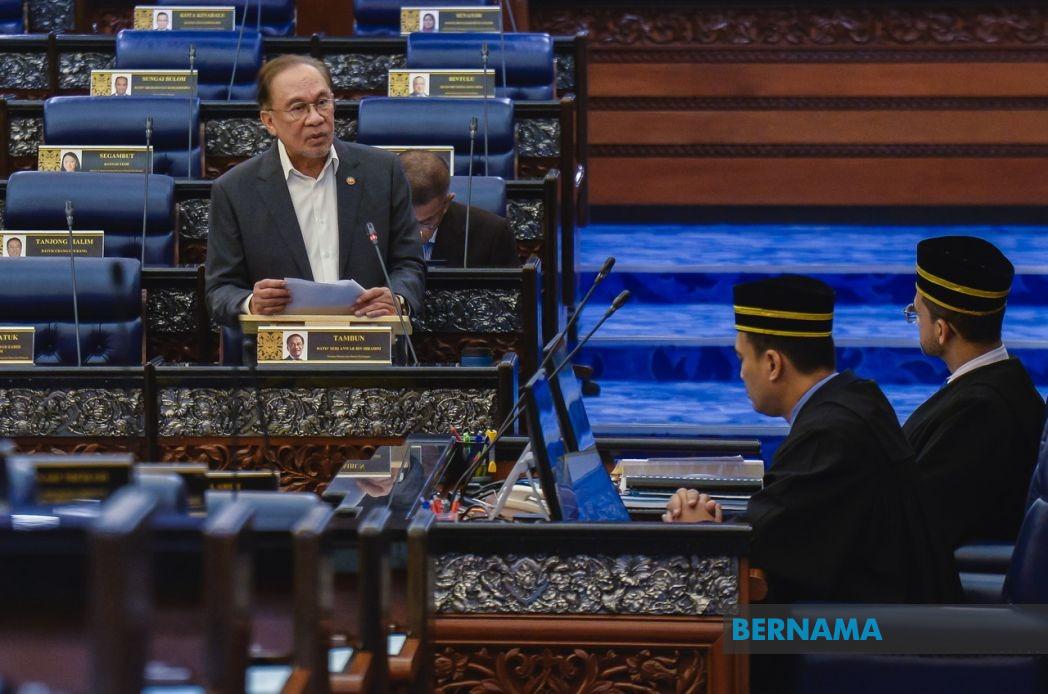
Prime Minister Datuk Seri Anwar Ibrahim moved to dispel concerns about government restrictions on activities in Federal Land Development Authority settlements on June 30, emphasizing during parliamentary question time that no blanket prohibition exists against organising events in these communities. His remarks came in response to queries about the controversial cancellation of the FELDA Settlers' Day programme originally scheduled for Kluang, Johor, on June 20 and 21, a matter that had drawn scrutiny from opposition lawmakers questioning whether executive overreach had limited grassroots engagement in rural areas.
The distinction Anwar articulated centred on a critical legal boundary: while state governments and other entities retain freedom to conduct activities within FELDA settlements, electoral legislation strictly prohibits conscripting government apparatus—including FELDA's own institutional resources and machinery—toward political campaigning objectives. This nuance proved essential to understanding the government's position, as it acknowledged the legitimate interests of elected state representatives in engaging communities while maintaining the firewall that election laws establish between administrative capacity and partisan advancement. The Prime Minister directly addressed potential confusion among state administrators, explicitly noting that state leaders face no impediment to entering FELDA areas or organising independent programmes under their own initiative and funding.
Anwar specifically rejected suggestions that his administration had issued directives cancelling the Settlers' Day gathering, an assertion that carried particular weight given longstanding sensitivities around federal intervention in rural development matters. By denying personal involvement in blocking the event, he attempted to reframe the narrative around institutional safeguards rather than executive suppression. His response to Datuk Seri Hamzah Zainudin, the Perikatan Nasional representative for Larut, reflected an effort to separate questions about programme cancellation from broader governance philosophy toward FELDA communities.
Understanding the electoral law constraints proves crucial for Malaysian observers tracking governance during election-sensitive periods. Federal legislation establishing these restrictions exists precisely to prevent governing parties from deploying state infrastructure as campaign weaponry—a concern that transcends party affiliation and touches fundamental principles of administrative neutrality. When Anwar emphasised that state governments remain free to issue land titles and organise events provided they comply with electoral regulations, he positioned the boundary as one of means rather than ends, distinguishing between legitimate governance activities and prohibited campaign operations.
The MADANI government has simultaneously signalled commitment to reversing what it characterises as historical neglect of FELDA communities under previous administrations. Anwar highlighted infrastructure investments including the establishment of dialysis centres within settlements and expanded development initiatives coordinated through federal agencies, framing these as correctives to what he termed inadequate attention and lagging rural development. This investment narrative serves a dual purpose: it addresses genuine grievances within these communities while demonstrating active government engagement distinct from campaign activity. The involvement of Deputy Prime Minister Datuk Seri Dr Ahmad Zahid Hamidi in spearheading these initiatives further underscores the administration's stated priority on FELDA welfare.
For FELDA residents and state officials operating in these areas, the clarification establishes practical parameters governing future activity. State menteri besar and other elected representatives can proceed with community engagement programmes without seeking federal clearance, provided they fund and organise such activities independently rather than commandeering government machinery. This permission reflects constitutional arrangements whereby state governments retain authority over many local matters, though electoral law remains uniform across jurisdictions. The boundary between permissible governance and prohibited campaigning thus becomes the operational question facing administrators planning community activities during electorally sensitive periods.
The controversy surrounding the Settlers' Day programme cancellation had potential to escalate into broader accusations of federal overreach suppressing regional political participation. By explicitly denying he issued cancellation orders, Anwar distanced himself personally while implicitly acknowledging that the event did not proceed as originally planned. This defensive posture suggested the administration recognised the political cost of appearing to constrain legitimate community gathering spaces, even if underlying electoral law compliance concerns may have contributed to the programme's postponement. The parliamentary clarification thus functioned partly as damage control, reassuring constituencies and state leaders that the government's approach does not entail arbitrary restrictions on regional political engagement.
For Southeast Asian observers monitoring Malaysia's democratic resilience, these exchanges highlight the ongoing tension between electoral integrity mechanisms and democratic participation. The government's insistence on maintaining boundaries between administrative function and campaign activity reflects international best practice in separating state institutions from partisan purposes. Simultaneously, questions about how such boundaries operate in practice—particularly regarding programme cancellations and resource allocation in rural areas—remain legitimate subjects of legislative scrutiny. The Prime Minister's parliamentary response represents one moment in continuous negotiation between executive administration and oversight, a process essential to democratic accountability.
Moving forward, the clarity provided during question time should enable FELDA state administrators to plan community programmes with greater confidence, understanding that federal authorities will not preemptively block activities organised at state level and funded through state resources. The crucial caveat remains that such programmes must not exploit federal administrative machinery or FELDA institutional capacity for electoral advantage. For the MADANI government, the investment commitments announced—dialysis centres, development facility expansion, and renewed attention to settlement infrastructure—represent the affirmative face of FELDA policy, positioning improved services as the primary channel through which the administration intends to enhance community welfare and engagement beyond electoral cycles.

