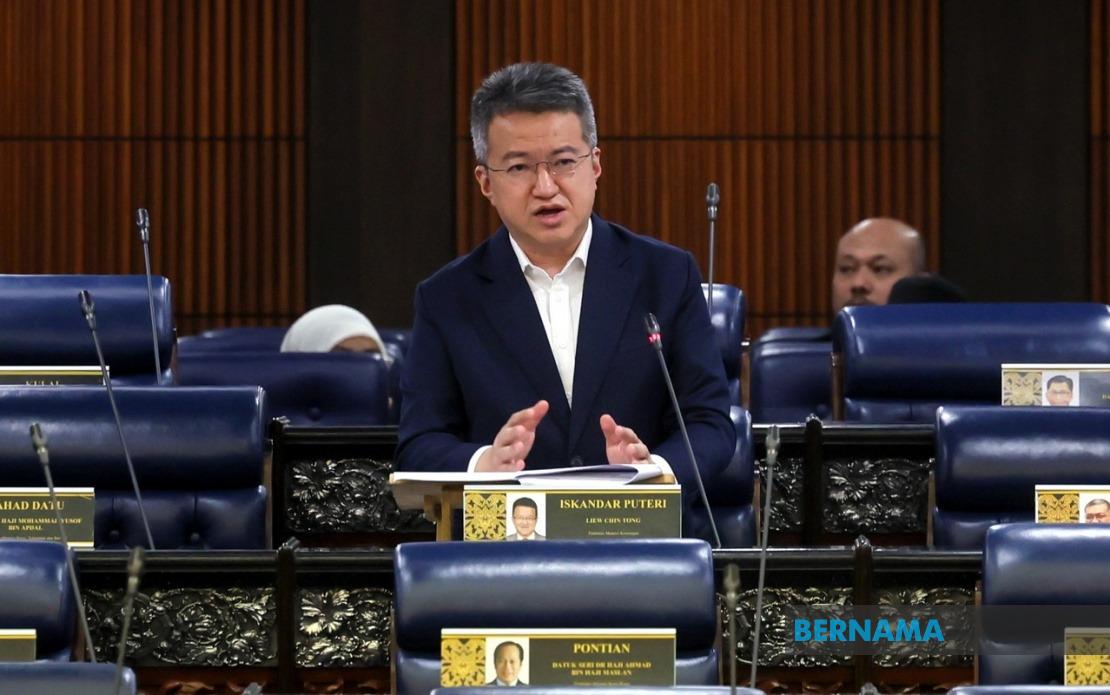
Malaysia's Ministry of Finance has approved a RM15.77 million grant to the Malaysian Human Rights Commission (SUHAKAM) for 2025, marking a substantial funding increase as the country strengthens its institutional commitment to human rights oversight and worker protections across multiple sectors of the economy.
Deputy Finance Minister Liew Chin Tong announced the allocation during parliamentary proceedings, confirming that the 2025 funding represents a RM2.2 million uplift from the RM13.55 million provided in 2024. The grant encompasses operational support not only for SUHAKAM itself but also extends to the Office of the Children's Commissioner (OCC), reflecting the government's widened accountability framework for protecting vulnerable populations, particularly young citizens whose rights require dedicated institutional oversight.
The expanded budget allocation underscores growing recognition that human rights institutions require robust financial footing to execute their mandates effectively. Within SUHAKAM's operational purview fall the fixed allowances and emoluments for commissioners, essential overheads including rental and utilities costs, and critically, the implementation of the organisation's annual programmatic agenda. This structured funding model ensures that investigative capacity, public engagement initiatives, and institutional independence are not compromised by budgetary constraints that could otherwise limit the commission's ability to respond to complaints, conduct inquiries, or issue findings on matters of systemic rights violations.
Liew emphasised that Malaysia has maintained uninterrupted financial support for SUHAKAM since its establishment, positioning the institution as a consistently resourced pillar of the country's governance architecture. This continuity holds significance given that institutional credibility often hinges upon demonstrable independence and stable operational capacity. For regional observers assessing Malaysia's democratic credentials and commitment to the International Convention on Human Rights, sustained funding for such bodies represents tangible evidence of systemic commitment rather than rhetorical positioning.
Parallel to the SUHAKAM funding announcement, the government disclosed expanding provisions for workers operating outside formal employment structures, a demographic increasingly critical to Southeast Asia's evolving labour landscape. The i-Saraan programme, continuing through Budget 2026, targets informal sector workers by incentivising voluntary contributions to the Employees Provident Fund (EPF) through government matching grants equivalent to twenty percent of individual contributions, capped at RM500 annually or RM5,000 across a worker's lifetime.
The introduction of the i-Saraan Plus initiative represents a targeted response to the proliferation of platform-based employment models. Specifically designed for ride-hailing and courier service workers—categories that have expanded dramatically across urban Malaysia and constitute substantial portions of the workforce—this programme offers enhanced matching incentives reaching RM600 annually or RM6,000 lifetime, substantially exceeding standard informal sector provisions. This differentiation reflects governmental recognition that gig economy participation patterns differ fundamentally from traditional informal work, with unique vulnerabilities regarding income volatility and absence of employer-provided protections.
The policy architecture emerging from these initiatives addresses a structural challenge confronting Malaysia's social safety net: the vast majority of informal and gig workers operate without mandatory employer contributions or collective bargaining protections. As urbanisation accelerates and platform-based service delivery expands, workers who previously might have accessed retirement security through manufacturing or construction employment now face radically different circumstances. Without proactive government intervention, an entire generation risks reaching retirement age with inadequate savings, thereby increasing future burdens on public assistance systems and potentially exacerbating elderly poverty.
Liew indicated that the EPF, working in coordination with the Finance Ministry, is simultaneously investigating complementary mechanisms to broaden contribution coverage across informal and gig economy populations. This exploratory posture suggests the government recognises current programmes, while valuable, may not capture the full universe of workers requiring social protection. Potential future adjustments might include simplified registration protocols, mobile-first contribution platforms, or employer incentive schemes that encourage platform companies to subsidise worker contributions—approaches increasingly utilised across regional comparators.
The announcement arrives amid broader Asian policy discussions regarding the adequacy of social protection for non-traditional workers. Countries including the Philippines, Indonesia, and Thailand confront analogous challenges as digital platform employment grows exponentially. Malaysia's systematic expansion of matching grant schemes and dedicated programmes for gig workers positions the country as comparatively proactive on this policy frontier, potentially yielding lessons applicable across the Association of Southeast Asian Nations (ASEAN) region as peer economies grapple with similar structural shifts in labour market composition.
For Malaysian workers, the practical implications centre on retirement income security and the availability of government-backed incentive structures previously unavailable to those outside formal employment. A platform worker in Kuala Lumpur or Penang contributing RM100 monthly can now anticipate government matching contributions, substantially accelerating savings accumulation compared to unsubsidised alternatives. Over a thirty-year working career, the compounding effect of matching contributions combined with investment returns could constitute the difference between inadequate and adequate retirement resources.
The parliamentary questions prompting these policy clarifications came from members representing constituencies with substantial informal and gig worker populations, reflecting grassroots awareness that traditional social protection mechanisms inadequately serve constituents operating in non-standard employment arrangements. The government's detailed responses, articulating specific matching rates, lifetime caps, and implementation timelines, demonstrate that informal sector social protection has transitioned from peripheral concern to mainstream fiscal policy consideration warranting systematic parliamentary scrutiny.
Moving forward, the effectiveness of these initiatives will depend upon implementation fidelity, worker awareness, and the actual design of platform-based contribution systems. If administrative barriers to participation remain high or workers encounter complexity in claiming matching incentives, even generous government contributions may yield suboptimal uptake. Conversely, if the government and EPF successfully streamline the application process and ensure transparent communication regarding benefits, these programmes could substantially mitigate retirement income insecurity for Malaysia's rapidly expanding non-traditional workforce, setting a regional precedent for systematic, incentive-based inclusion of gig and informal workers within formal retirement systems.

