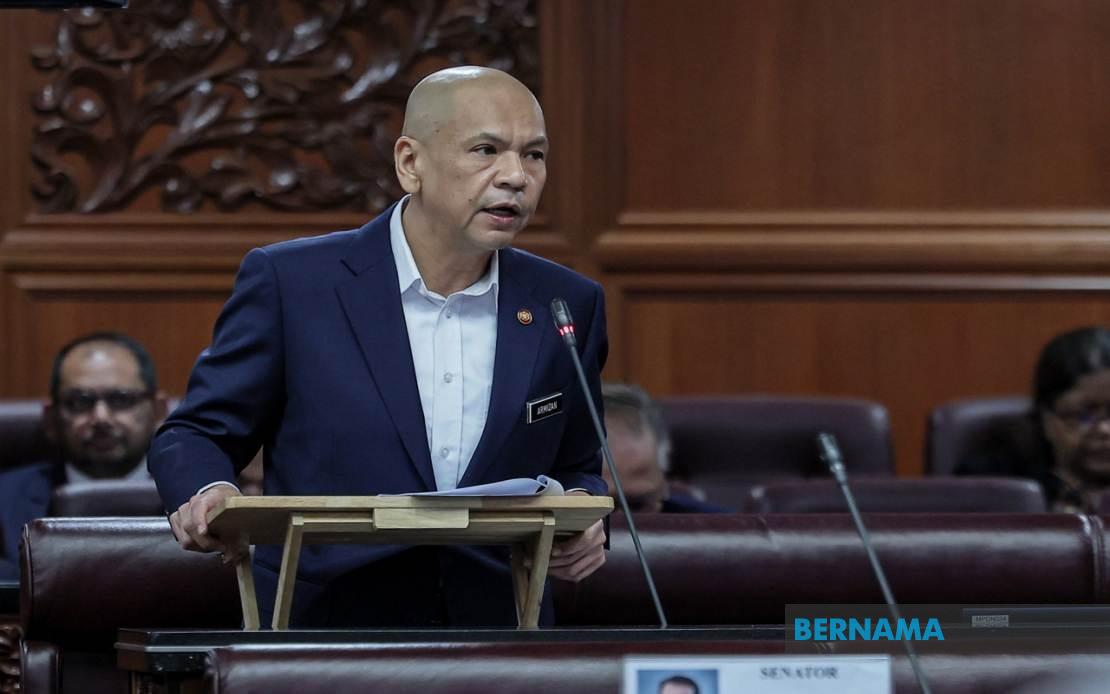
Malaysia's domestic trade ministry has substantially accelerated its subsidised shopping initiative, conducting 15,881 Rahmah MADANI Sales Programme events across the nation during the first half of this year. Domestic Trade and Cost of Living Minister Datuk Armizan Mohd Ali disclosed this milestone during parliamentary proceedings on June 30, emphasising that the government remains committed to expanding the scheme's reach and frequency as part of its broader cost-of-living relief strategy.
The programme has achieved comprehensive geographic penetration, extending into all 600 state constituencies nationwide and covering all 40 Federal Territory zones across Putrajaya, Kuala Lumpur, and Labuan. This universal coverage represents a deliberate policy objective to ensure that subsidised goods reach both urban and peripheral communities, addressing equity concerns around consumer access to affordable essentials. The expansion reflects a recognition that cost-of-living pressures affect Malaysians across diverse socioeconomic landscapes, from metropolitan centres to rural communities.
The scale of growth becomes apparent when examining the programme's trajectory over consecutive years. In 2023, the ministry organised 6,870 sales sessions. This nearly doubled to 12,419 sessions in 2024, demonstrating accelerating momentum. By 2025, the figure has surged to 25,708 sessions, representing a threefold increase within two years. This exponential growth trajectory indicates a major policy shift in how the government approaches consumer price stabilisation through direct intervention rather than relying solely on macroeconomic measures.
Initially, the government set a target of 23,040 sales sessions for 2025. However, in May, Prime Minister Datuk Seri Anwar Ibrahim announced an upward revision to 30,000 annual events, signalling heightened urgency around cost management. Officials characterised this escalation as a deliberate response to external economic pressures, specifically the energy and supply disruptions stemming from the West Asian conflict. The geopolitical instability has created commodity price volatility affecting Malaysia's import costs and domestic inflation, prompting the administration to strengthen its price-relief mechanisms.
Minister Armizan outlined five strategic pillars underpinning the programme's institutional development. The foundational approach involved budgetary institutionalisation, establishing Rahmah MADANI as a permanent fixture within annual government expenditure rather than treating it as an episodic initiative. Beginning in 2024, the programme received dedicated activity codes and allocated funding streams, ensuring predictable resource availability and accountability mechanisms absent from earlier, ad hoc bargain sales conducted by previous administrations.
The second strategic component established systematic scheduling across constituencies and zones, replacing the irregular implementation patterns characteristic of traditional government promotional sales. By implementing annual targets and predetermined frequency schedules for each locality, the ministry transformed a sporadic intervention into a structured, predictable public service. This approach allows residents in specific constituencies to anticipate event timing and plan household shopping accordingly, increasing participation and effectiveness.
Private-sector mobilisation constitutes the third pillar, reflecting recognition that government resources alone cannot sustain the programme's expanded scope. The ministry has cultivated partnerships with 2,695 retail entities, comprising companies, businesses, and cooperatives operating within Malaysia's retail ecosystem. This collaborative framework leverages existing commercial distribution networks and retail expertise to extend government subsidies efficiently, reducing administrative burden on public agencies while creating commercial opportunities for participating businesses.
The fourth strategic element emphasises delivery diversification and audience segmentation. Rather than relying exclusively on conventional in-store sales, the programme now operates through open-air markets and mobile units, ensuring rural and remote populations access subsidised goods. Furthermore, event scheduling aligns with seasonal factors and consumer behaviour patterns—festive periods, monthly paydays, and academic calendars—enabling the ministry to synchronise assistance with moments when household purchasing power peaks or expenditure obligations arise.
Perhaps most significantly, the ministry introduced a published calendar system commencing in 2025, providing residents with advance notice of event dates, times, and locations for their respective constituencies and zones. This transparency contrasts sharply with previous governmental promotional approaches, which often maintained limited public awareness. By enabling households to access location-specific scheduling information, the ministry removes informational barriers preventing lower-income families from accessing these subsidised shopping opportunities, fundamentally democratising access to cost-of-living relief.
For Malaysian consumers, this expansion carries immediate practical implications. Households relying on fixed incomes or facing wage stagnation can now plan budgets with greater certainty regarding recurring opportunities to purchase essential commodities at discounted rates. The programme's emphasis on covering diverse geographic areas and utilising varied delivery mechanisms means even residents in underserved localities gain reliable access, addressing urban-rural equity concerns that typically characterise government distribution programmes.
From a policy perspective, the Rahmah MADANI programme represents a significant departure from market-oriented economic approaches traditionally favoured by Malaysian policymakers. Rather than allowing price mechanisms alone to equilibrate supply and demand, the government is directly intervening through subsidised bulk purchasing, leveraging public expenditure to dampen inflation's impact on household purchasing power. This intervention-oriented posture reflects both immediate political imperatives and longer-term recognition that structural cost-of-living pressures require sustained governmental engagement.
The programme's expansion also signals confidence that Malaysia possesses sufficient administrative and logistical capacity to manage complex, geographically dispersed retail operations. Coordinating 30,000 annual events across 640 distinct constituencies and zones represents a substantial bureaucratic undertaking, requiring coordination among federal agencies, state authorities, local governments, and private retail partners. Successful execution would demonstrate governmental competence in implementation, enhancing institutional legitimacy among populations experiencing economic stress.
Looking ahead, the sustainability of this expanded programme depends partly on external factors beyond Malaysia's immediate control—geopolitical stability in strategic petroleum regions, global supply chain functionality, and international commodity prices. However, the government's commitment to increasing event frequency suggests long-term institutionalisation rather than temporary cyclical intervention, positioning cost-of-living relief as a permanent feature of public policy rather than an emergency measure.

