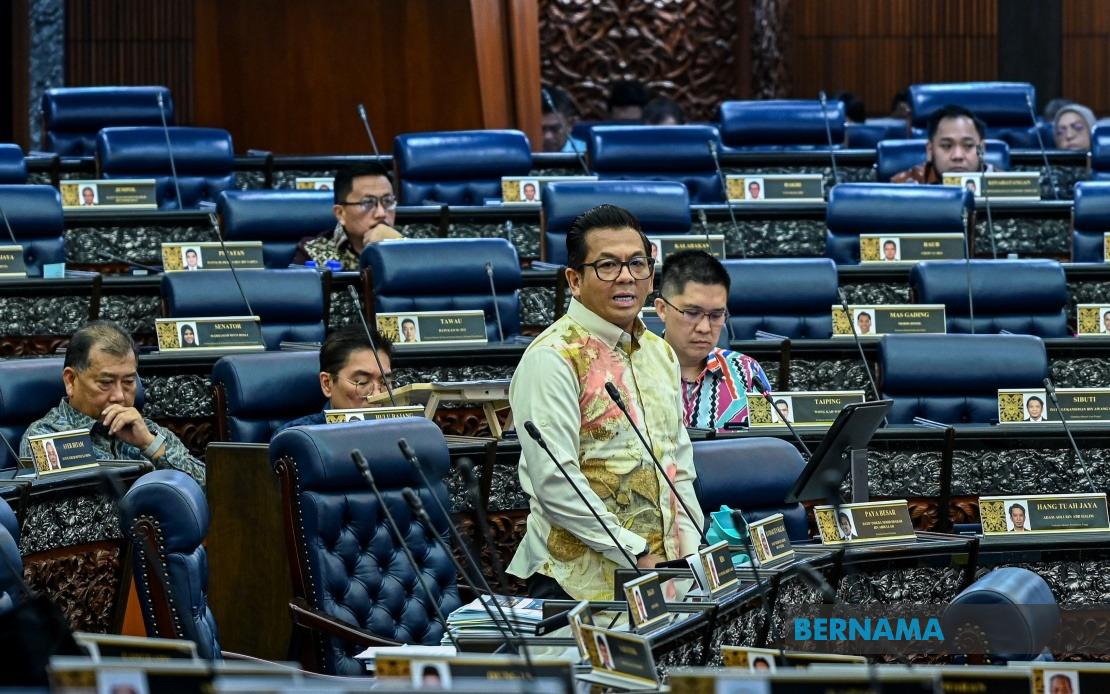
The Malaysian government is turning to empirical data to confront one of the country's most persistent economic challenges: the yawning disparity in household expenses between booming urban centres and slower-growing rural communities. Deputy Economy Minister Datuk Mohd Shahar Abdullah revealed in Parliament that policymakers are increasingly relying on the Basic Living Expenditure framework, known locally as PAKW, to design interventions calibrated to the genuine needs of Malaysians across different regions. This signals a shift towards evidence-based policy in tackling inflation and cost pressures that have become a lightning rod for public concern.
The PAKW system, developed by the Department of Statistics Malaysia, represents an attempt to move beyond one-size-fits-all approaches to welfare and economic support. Rather than applying uniform benchmarks across the country, the framework acknowledges that a family's actual living costs depend heavily on geography, local market conditions, and the availability of goods and services. By mapping these variations, the government aims to calibrate assistance programmes and wage interventions to reflect real-world spending patterns in each community. This methodological foundation has become increasingly important as Malaysia grapples with inflationary pressures that have disproportionately affected lower-income households in both urban and rural settings.
The disparities documented through PAKW data are substantial enough to warrant serious policy attention. Taking Kuala Lumpur as a baseline, the government calculates the basic living expenditure at RM5,639 monthly—a figure that accounts for housing costs, food, transport, utilities, and essential services in the capital. By contrast, the equivalent threshold in Kelantan stands at RM4,254, whilst Sabah registers RM4,511. These variations reflect not merely differences in consumer preferences but fundamental structural inequalities in economic opportunity and infrastructure. Urban areas command higher costs because of competitive rental markets, concentrated services, and the premium placed on location, whereas rural regions may face different pressures such as limited access to affordable goods and greater transportation burdens.
The availability of the myPAKW calculator at myPAKW.dosm.gov.my marks an attempt to democratise this data and empower ordinary Malaysians to understand their own financial circumstances. By allowing citizens to input their household spending patterns and compare them against regional and national benchmarks, the tool shifts conversations about living costs from abstract statistics to personal financial reality. This transparency can serve multiple purposes: it helps individuals better understand where their money goes, provides advocates with concrete evidence for policy discussions, and gives government agencies direct feedback on whether their interventions are achieving intended outcomes.
The question posed by Wan Hassan Mohd Ramli, the Dungun representative, touched on a 2023-2025 study undertaken by economists to develop concrete solutions for persistent inflation. The focus on bridging the urban-rural divide reflects recognition that no single inflation-fighting strategy will work equally well across Malaysia's diverse economic landscape. Urban workers may benefit from public transport improvements and rental controls, whilst rural communities might require different interventions such as agricultural support, improved supply chain logistics, or targeted retail development. The government's willingness to commission such research and reference it publicly suggests awareness that cookie-cutter approaches have failed to contain cost pressures.
Beyond short-term price controls or subsidies, the government has emphasised a longer-term strategy centred on income growth. Datuk Mohd Shahar outlined how training programmes aimed at lifting both the income floor—for the poorest workers—and the income ceiling—for middle-income earners—form the backbone of the administration's approach. This two-pronged strategy recognises that sustainable solutions to high living costs require not just cheaper goods but higher wages and improved earning capacity. By embedding this approach into each Five-Year Malaysia Plan and updating it twice per planning cycle, the government is signalling commitment to sustained, iterative progress rather than ad-hoc measures.
The evolution of the Poverty Line Income offers concrete evidence of this incremental improvement. Rising from RM980 in 2016 to RM2,705 in 2024, the PLI has more than doubled, reflecting both wage growth and the acknowledged rise in actual living costs. Whilst this increase demonstrates that the government's framework for measuring poverty has become more realistic, it also underscores the scale of the challenge. The fact that the PLI must be revised so dramatically suggests that previous thresholds were inadequately calibrated to real household needs, and that continuous recalibration will remain necessary as economic conditions evolve.
For Malaysian households already struggling with grocery bills and rental payments, the PAKW framework may feel like bureaucratic abstraction rather than relief. However, the framework provides essential infrastructure for identifying which communities face the greatest pressures and which interventions might actually work. Without accurate data disaggregated by region and income level, government spending risks being misdirected, reaching those who need help least whilst missing vulnerable populations. The PAKW approach, in theory, reduces this waste and targets resources more efficiently.
The regional variations documented through PAKW also have implications for Malaysia's broader development strategy. The fact that Kelantan's basic living costs run substantially below Kuala Lumpur's might seem like an advantage, yet it masks deeper economic disparities. Lower costs may reflect lower incomes, limited job opportunities, and underdeveloped infrastructure rather than genuine affordability. Truly addressing the urban-rural divide requires not just accepting cost differences but actively investing in rural economies to generate better-paying employment and reduce the gap in economic opportunity that drives migration to cities.
For Southeast Asian observers, Malaysia's approach offers a potential model for how middle-income countries might tackle inflation and inequality simultaneously. Rather than choosing between controlling prices (which often backfires) or accepting high costs, the PAKW framework suggests a third path: understanding the actual consumption patterns of different communities and designing interventions calibrated to those realities. As inflation pressures spread across the region and inequality deepens, such evidence-based frameworks may become increasingly valuable.
Looking forward, the effectiveness of Malaysia's approach will depend on execution. Having good data is necessary but insufficient; policymakers must actually use PAKW insights to redesign programmes, adjust wage policies, and target infrastructure investment. The government's willingness to discuss the framework publicly and reference it in parliamentary debates suggests genuine commitment, but sustained political will remains essential. As Malaysians continue to feel inflation's bite, whether PAKW translates from statistical framework into tangible improvements in living standards will ultimately determine its success.

