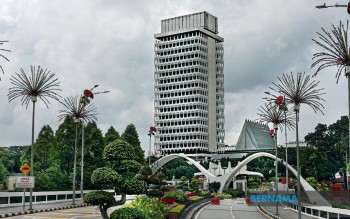
The Malaysian Ministry of Finance has issued a firm defence of its handling of the Asset Recovery Trust Account, explicitly stating that all disbursements from the fund adhere strictly to the governance framework established under the current Trust Directive. In a written parliamentary response, the ministry addressed allegations concerning the potential misuse of recovered assets, clarifying that the funds are being deployed exclusively for authorised purposes sanctioned within the directive's scope and conditions.
Among the principal uses of the Asset Recovery Trust Account are meeting the operational expenses associated with asset recovery efforts and servicing the substantial debts accumulated by two significant state-linked entities: 1Malaysia Development Bhd and SRC International Sdn Bhd. The ministry's statement suggests that these debt repayments represent a core function of the recovered asset deployment strategy, rather than an ancillary or discretionary use of funds. This clarification carries particular weight given the historical scrutiny surrounding both organisations and their financial obligations to the government.
The ministry further explained that the fund is also being utilised to repay shareholder advances that were provided by the Minister of Finance (Incorporated) specifically to enable the two companies to discharge their financial liabilities. These advances represent a mechanism through which the government had previously extended financial support to address the mounting obligations of 1MDB and SRC, and the Asset Recovery Trust Account is now being used to retire this intermediary debt arrangement. This layered repayment structure illustrates the interconnected nature of Malaysia's efforts to resolve the legacy financial challenges created by these entities.
The response came in reaction to a parliamentary question from Datuk Mohd Isam Mohd Isa, the Tampin member of parliament from the Barisan Nasional coalition, who specifically sought clarification on the veracity of misuse allegations. Mohd Isam's inquiry appeared motivated by concern that the Asset Recovery Trust Account—established with the express purpose of addressing the financial obligations stemming from 1MDB and SRC's debts and commitments—might be diverted toward unintended purposes. The ministry's categorical denial that such diversions have occurred underscores the government's position that fund deployment remains tightly constrained within the original mandate.
Beyond the asset recovery question, the parliamentary response touched on Malaysia's broader fiscal picture for 2026. The government projects total revenue of RM343.1 billion for the calendar year, a substantial fiscal envelope reflective of Malaysia's economic ambitions. This total comprises RM270.4 billion drawn from tax sources—encompassing both direct taxes such as income and corporate levies, and indirect levies including excise duties and sales taxes—alongside RM72.7 billion in non-tax revenue streams. The ratio of tax to non-tax revenue demonstrates the government's continuing reliance on traditional tax instruments while seeking to diversify income sources.
Non-tax revenue represents an increasingly important contributor to government finances, particularly as Malaysia explores mechanisms to enhance fiscal sustainability without escalating tax burdens. For the first quarter of 2026, non-tax receipts reached RM18.8 billion, representing a robust 22.9 percent increase compared to the equivalent quarter in 2025, when non-tax revenue stood at RM15.3 billion. This year-on-year growth suggests that Malaysia's non-tax revenue generation is accelerating, potentially offsetting constraints in other fiscal areas and providing additional fiscal flexibility for government spending priorities.
The composition of non-tax revenue illustrates the diversified nature of government income beyond taxation. Licensing and permit fees, registration charges, and service levies collectively contribute significant volumes to this revenue stream. However, Malaysia's non-tax revenue also benefits substantially from state-owned enterprise dividends, particularly the periodic distributions paid by Petronas, the national petroleum corporation. These dividends fluctuate according to global energy market conditions and Petronas' operational performance, introducing an element of volatility into non-tax revenue projections. Similarly, dividends remitted by Bank Negara Malaysia, the central bank, constitute another major component, reflecting the profitability of monetary policy operations and the bank's asset management activities.
The inclusion of additional non-tax revenue sources—fines and penalties, interest income, rent collection, and proceeds from asset sales—provides the government with supplementary but meaningful revenue channels. Fines and penalties, in particular, have become increasingly significant as regulatory enforcement efforts expand across multiple sectors. Interest earned on government financial assets and loans extended through development agencies adds to the revenue base, whilst rental income from government-owned property and land contributes recurring, relatively predictable revenue. These smaller revenue streams, when aggregated across the entire fiscal year, produce material contributions to the government's non-tax revenue envelope.
The 22.9 percent growth in first-quarter non-tax revenue compared to the prior year represents a notable acceleration and suggests that either volume increases across multiple revenue streams or elevated commodity prices—particularly crude oil prices affecting Petronas dividends—have boosted collections substantially. For Malaysian observers, this growth trajectory carries implications for the government's fiscal stance throughout 2026, potentially enabling greater flexibility in expenditure planning or providing space for deficit reduction. The ministry's detailed breakdown of revenue composition demonstrates its commitment to transparent fiscal reporting and accountability to parliament.
From a regional perspective, Malaysia's experience in managing recovered assets and deploying them toward debt reduction resonates with other Southeast Asian economies grappling with corruption legacies and state-owned enterprise liabilities. The Asset Recovery Trust Account mechanism represents a structured response to managing illicit assets once recovered and ensuring their deployment toward legitimate national purposes. The strict governance framework the ministry emphasises reflects international standards for asset recovery and underscores Malaysia's alignment with global best practices in financial accountability and institutional integrity.

