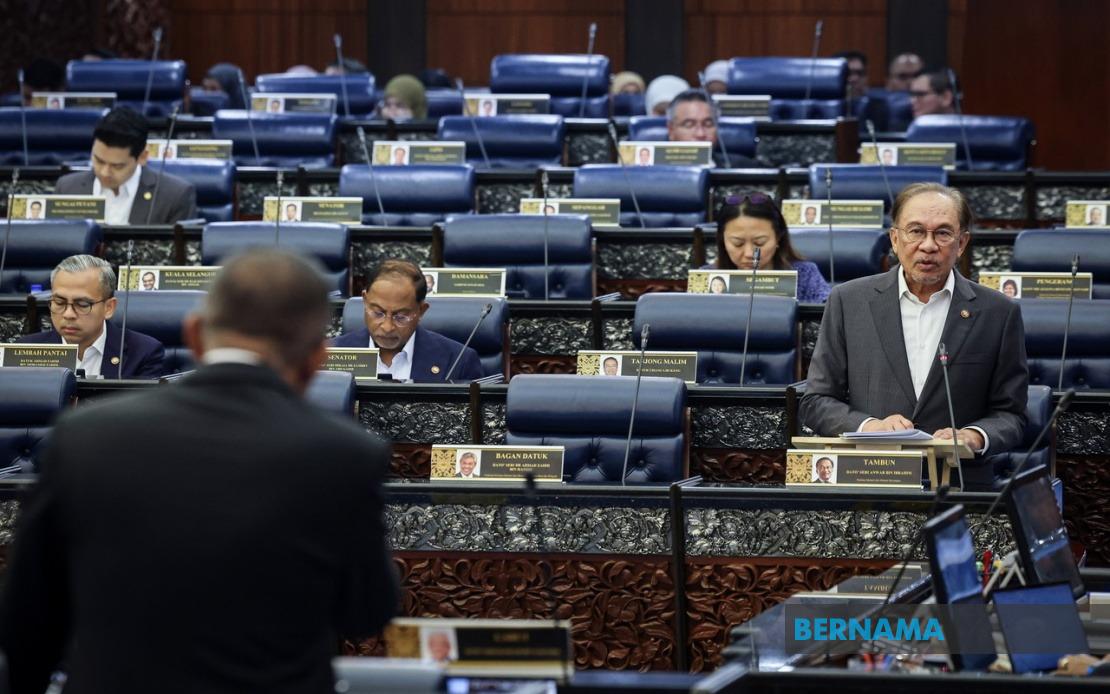
Prime Minister Datuk Seri Anwar Ibrahim revealed during parliamentary question time this week that the government's financing arm, Syarikat Jaminan Pembiayaan Perniagaan (SJPP), has greenlit RM4.9 billion in loans and credit facilities for over 6,000 micro, small and medium enterprises throughout the opening half of 2026. The announcement comes as the administration continues to prioritise support for the country's entrepreneurial backbone during an uncertain global economic climate.
SJPP, which operates as a wholly owned subsidiary of the Ministry of Finance, functions as Malaysia's primary guarantee provider for business financing. The company's track record of channelling capital to smaller enterprises has positioned it as a crucial instrument within the broader MADANI economic framework. By expanding its approval portfolio, the entity directly addresses one of the most persistent grievances from Malaysia's business community: restricted access to affordable credit and banking facilities that smaller operators have historically encountered.
Anwar, who holds the concurrent portfolio of Finance Minister, explained that these approvals constitute part of the federal government's deliberate strategy to widen financing pathways for entrepreneurs while simultaneously lowering operational costs. The measure targets sustainability across the small business sector, recognising that cash flow constraints and capital accessibility remain primary obstacles preventing many promising ventures from scaling operations or weathering economic downturns. This multifaceted approach reflects policymakers' understanding that MSMEs require more than single-point interventions to thrive.
The Prime Minister disclosed that the government has mobilised cumulative financing and loan guarantees totalling more than RM15 billion specifically designed to underpin working capital requirements for the MSME segment. This represents a substantial commitment of public resources directed toward bolstering business continuity and operational resilience among Malaysia's entrepreneurial base. The scale of this intervention demonstrates the administration's recognition of the sector's economic weight and employment generation capacity across urban and rural communities nationwide.
Within this broader RM15 billion allocation framework, policymakers have ringfenced RM5 billion explicitly for Bumiputera-owned enterprises. This targeted carving out acknowledges both historical disparities in capital access and the government's commitment to fostering inclusive economic participation. For Bumiputera entrepreneurs, who collectively represent a significant segment of Malaysia's small business population, this dedicated funding channel removes certain barriers that disproportionately affected their access to conventional banking facilities and broader credit markets.
The announcement emerged during Minister's Question Time in the Dewan Rakyat, where opposition legislator Lee Chuan How (PH-Ipoh Timor) posed inquiries regarding government awareness of contemporary challenges confronting the business sector amid global headwinds. The question reflected broader parliamentary and public concern about whether policymakers fully grasp the operational pressures experienced by entrepreneurs managing enterprises during periods of heightened international economic uncertainty and shifting consumer demand patterns.
The government's response through these SJPP approvals and broader financing architecture addresses several interconnected challenges simultaneously. Beyond merely providing capital access, the financing guarantee mechanisms reduce default risks that conventional lenders perceive, thereby encouraging financial institutions to extend credit to applicants who might otherwise face rejection under stricter underwriting standards. This intermediate role proves particularly valuable for less-established operators lacking extensive collateral or extensive financial track records.
SEA's economic landscape has witnessed significant volatility stemming from geopolitical tensions, supply chain reconfiguration, and shifting trade patterns. Malaysian MSMEs, despite their economic importance, remain particularly vulnerable to external shocks given their typically limited resources for hedging risk and adapting business models. The government's proactive financing measures thus take on heightened significance within this regional context, offering businesses tangible tools for maintaining operational stability while navigating uncertain conditions.
The timing of these announcements, released during parliamentary proceedings, underscores the MADANI administration's emphasis on transparency regarding economic support mechanisms. Legislators and constituents can now assess the magnitude and reach of government interventions intended to bolster economic activity among smaller enterprises. This parliamentary accountability dimension distinguishes contemporary approaches from previous periods when such programme details remained less accessible to public scrutiny.
Moving forward, the sustainability of MSME financing will likely depend upon the effectiveness with which SJPP and partnering financial institutions process applications, disburse funds timeably, and maintain reasonable interest rate regimes. Entrepreneurs surveyed consistently identify application complexity and extended approval timelines as critical friction points deterring loan applications despite genuine capital needs. Whether the current expansion of approved financing translates into proportional increases in actual fund disbursements to businesses remains a key performance indicator for assessing programme efficacy.
The financing approvals also reflect broader ecosystem considerations extending beyond capital provision alone. MSMEs simultaneously require mentorship, market linkages, technology adoption support, and regulatory compliance assistance. Holistic development frameworks integrating financing with these complementary services generate superior outcomes compared to isolated capital injection approaches. The government's parallel emphasis on business cost reduction and operational support mechanisms suggests recognition of these multidimensional requirements.
For Malaysian readers, particularly those operating or contemplating MSME ventures, these developments signal tangible government backing for business sustainability across the economic spectrum. The differentiated support for Bumiputera enterprises additionally reflects policy acknowledgement of equity considerations within Malaysia's diverse entrepreneurial landscape. Accessing these financing channels requires awareness of application procedures, eligibility criteria, and SJPP's partnership arrangements with conventional financial institutions serving as disbursement intermediaries.

