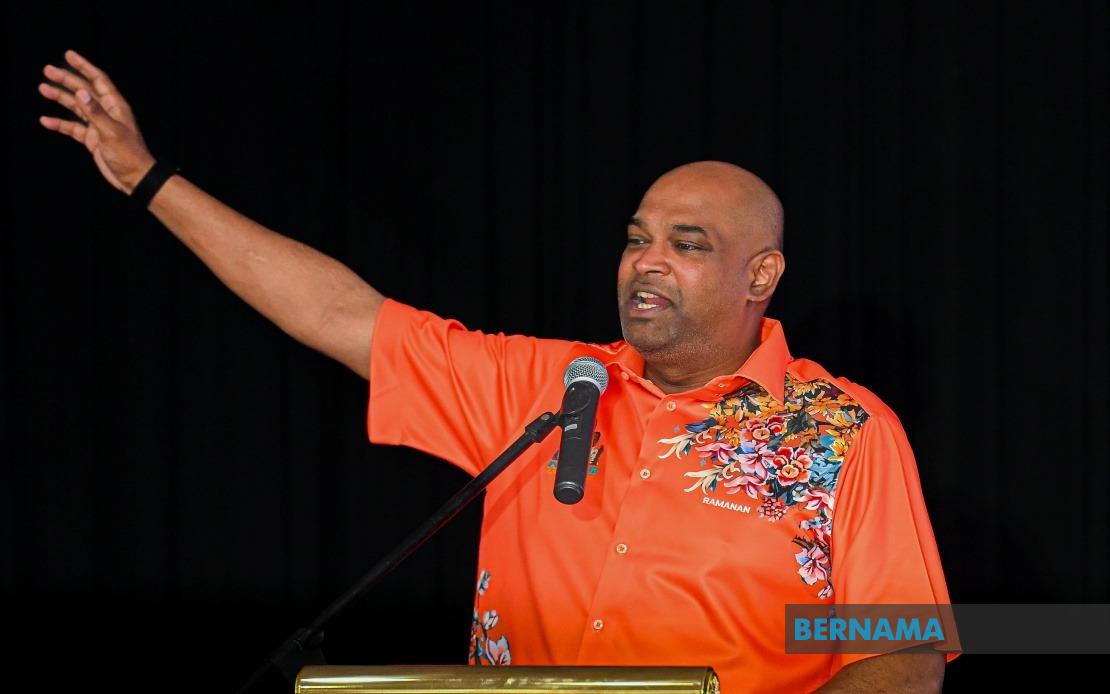
The government has committed over RM12 million in fresh funding to advance social and economic programmes serving Malaysia's Indian community, marking a significant expansion of its community empowerment agenda under the MADANI framework. Human Resources Minister Datuk Seri R.Ramanan announced the disbursement at a ceremony in Seremban on July 7, where he outlined two complementary schemes designed to strengthen institutional capacity and expand educational access among vulnerable households.
The Early Education Subsidy Assistance Programme, branded as Celik MADANI 2026, has received RM8.87 million in approved funding. The scheme targets 162 kindergartens operating across Malaysia, extending financial support to 3,612 Indian children drawn from B40 households—those earning below RM4,000 monthly. By reducing barriers to early childhood education, the initiative seeks to improve school readiness and learning outcomes among economically disadvantaged pupils, a critical intervention given the documented impact of quality early education on long-term academic performance and social mobility.
Parallel to education efforts, the government has allocated RM3.36 million through the Third Series of the Dharma MADANI Programme, directed toward 168 Hindu temples nationwide. Each temple receives RM20,000, with funds designated for community-focused activities extending beyond religious observance. This approach acknowledges that Hindu places of worship function as anchors for social cohesion, cultural transmission, and community welfare initiatives—roles increasingly important as Malaysian society grapples with rapid urbanisation and changing family structures.
The Dharma MADANI Programme has now completed three disbursement cycles, accumulating total approvals of RM12.54 million across 627 temples. This escalating commitment reflects strategic thinking about institution-building; by channelling resources through established religious institutions with deep community trust, the government leverages existing networks to deliver social benefits efficiently. The RM20,000 per temple allocation, while modest, provides meaningful flexibility for programming—whether educational classes, health screenings, food assistance or skill-training workshops that serve the broader Indian community.
The South Zone programme ceremony distributed funds totalling nearly RM3 million to 48 temples and 45 kindergartens across Melaka, Negeri Sembilan and Johor. This regional breakdown demonstrates that the initiative extends beyond urban centres, attempting to address disparities in service availability across peninsular Malaysia. State-level distribution patterns will be crucial to monitor; uneven allocation could perpetuate existing geographic inequalities within the Indian diaspora.
Minister Ramanan emphasised that MITRA—the Malaysian Indian Community Transformation Unit—will oversee transparent, effective deployment of resources. This institutional commitment to accountability is noteworthy given longstanding concerns about leakage and inefficiency in government assistance programmes. Independent oversight and regular impact reporting would strengthen public confidence that funds translate into tangible community benefits rather than remaining trapped in bureaucratic channels.
The initiative aligns with broader MADANI governance principles emphasising inclusive development and equitable resource distribution. For Malaysia's Indian community—constituting roughly 1.8 million people with notably higher poverty incidence than national averages—targeted programmes addressing education access and institutional capacity-building represent strategic investments in human capital. Early intervention through subsidised kindergarten attendance addresses a critical life stage when cognitive development accelerates and educational trajectories increasingly diverge by socioeconomic status.
Temple-centred community programming offers distinct advantages in Southeast Asian contexts where religious institutions maintain significant social influence and membership participation rates. Unlike government agencies sometimes perceived as distant or bureaucratic, temples operate through voluntary association and cultural affinity, facilitating uptake of programmes. However, effectiveness ultimately depends on temple leadership capacity, volunteer engagement levels, and sustained government coordination rather than one-time fund transfers.
The RM12 million commitment, while substantial, requires contextualisation. Malaysia's total annual budget exceeds RM300 billion, making this allocation approximately 0.004 percent of government spending. For the Indian community specifically—roughly 1.8 million people—this represents approximately RM6.67 per capita annually, suggesting that supplementary funding streams and private sector engagement remain essential for transformative impact. Scaling initiatives to cover all B40 Indian families seeking early education support would require significantly larger allocations.
Transport Minister Anthony Loke's presence at the Seremban ceremony underscores cross-ministerial attention to community-based programming, potentially signalling broader cabinet commitment to targeted support schemes. Such high-level engagement can accelerate implementation and elevate programme visibility, though sustained political priority across election cycles ultimately determines durability. For Malaysian Indian communities, the challenge involves converting political commitments into entrenched institutional arrangements and adequate resource flows.
The MADANI framework's emphasis on community transformation implies longer-term vision extending beyond one-off allocations. Successful outcomes would likely involve programme expansion, enhanced coordination with private educational providers and NGOs, and integration with broader national policies addressing poverty, education quality and social cohesion. Tracking beneficiary outcomes—kindergarten progression rates, academic achievement trajectories, community satisfaction—will determine whether current investments represent genuine transformation or temporary relief measures.
Moving forward, programme sustainability requires clarifying funding mechanisms beyond annual budget cycles, establishing measurable performance indicators, and creating feedback mechanisms enabling community input into programme design. The Indian community's diversity—encompassing recent migrants, long-established settlements, diverse religious traditions, and varied socioeconomic circumstances—necessitates flexible, context-sensitive implementation approaches rather than one-size-fits-all models. Successfully navigating these implementation challenges will test MITRA's institutional capacity and the government's commitment to inclusive development rhetoric.

