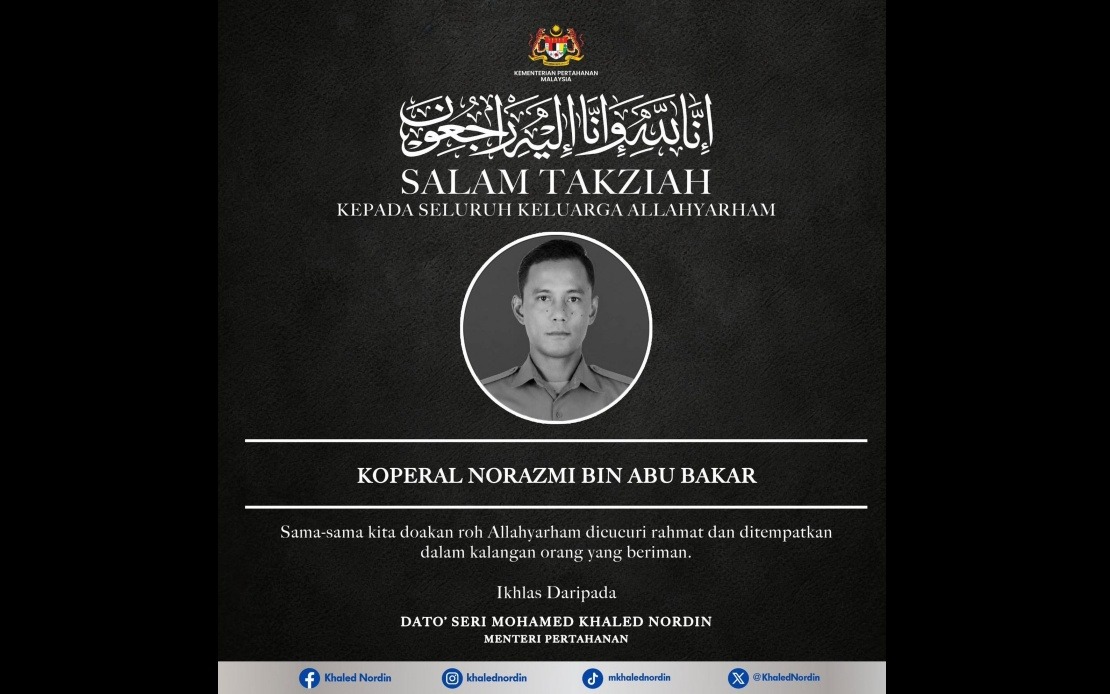
The Malaysian government and Ministry of Defence have conveyed their deepest sympathies to the families of Corporal Norazmi Abu Bakar and Private Siti Khadijah Sungip, who lost their lives in a tragic explosion during a grenade-throwing training exercise. Defence Minister Datuk Seri Mohamed Khaled Nordin released a statement expressing the nation's grief and pledging support for the bereaved families as they navigate this devastating loss.
The incident occurred at approximately 10.57 am at Hobart Camp firing range near Gurun in Kedah, where the two servicemen were participating in routine training operations. Both personnel sustained severe injuries in the blast and were immediately transported to Sultan Abdul Halim Hospital in Sungai Petani, but tragically succumbed to their wounds during the journey. The deaths mark a sobering reminder of the inherent risks associated with military training exercises involving explosive materials and live ammunition.
Corporal Norazmi served with the 6th Battalion of the Royal Malay Regiment, while Private Siti Khadijah was attached to the 1st Squadron of the Royal Army Engineers Regiment. The identification and confirmation of both victims came through official Malaysian Army channels, which also provided initial details regarding the circumstances surrounding the fatal accident. Siti Khadijah's participation in military service represents the continued integration of women into frontline defence roles within the Malaysian Armed Forces.
In his statement released via social media, Defence Minister Mohamed Khaled Nordin articulated the government's condolences, stating that both the ministry and the nation are in prayer for the souls of the deceased. He specifically invoked Islamic prayers for divine mercy upon Corporal Norazmi and Private Siti Khadijah, asking forgiveness for their sins and their admission into paradise. Such expressions reflect the deep spiritual dimensions that often accompany official mourning in Malaysia's Muslim-majority context.
The Defence Minister emphasised the need for the victims' families to be granted emotional fortitude during this extraordinarily difficult period. The statement underscored the government's recognition of the personal sacrifices made by military personnel and their families, who bear the emotional and psychological weight of service in the armed forces. This acknowledgement carries particular significance given that such training accidents, while statistically uncommon, represent a constant latent danger within military operations.
Army Chief General Tan Sri Azhan Md Othman has initiated a comprehensive investigation into the circumstances that led to the fatal explosion. This inquiry will seek to identify any procedural lapses, equipment malfunctions, or other contributing factors that may have precipitated the tragedy. Such investigations are standard protocol following military incidents and serve both to document the incident comprehensively and to identify any systemic improvements needed to enhance safety protocols during future exercises.
Grenade-throwing exercises represent a fundamental component of infantry training, designed to ensure personnel can effectively deploy these weapons in operational contexts. However, the inherent risks associated with handling live explosives necessitate rigorous safety protocols, comprehensive pre-exercise briefings, and strict adherence to established procedures. The incident at Hobart Camp underscores the critical importance of maintaining the highest standards of training discipline and safety oversight, even during routine exercises that have been conducted hundreds of times previously.
For Malaysia's military community, such tragic incidents provoke broader conversations about training safety, equipment maintenance, and the adequacy of medical response capabilities at remote training facilities. The fact that both personnel died en route to hospital raises questions about response times and the proximity of advanced medical facilities to active training ranges. These considerations become particularly pertinent as the Malaysian Armed Forces continue to modernise their training infrastructure and protocols.
The loss of these two service members resonates beyond their immediate military units and families, affecting the broader defence establishment and civilian population. Public expressions of condolence from senior government figures, including the Defence Minister, serve to honour their service and acknowledge the genuine hazards that military personnel confront daily. The incident also prompts reflection on the recruitment, training, and welfare systems that support those who choose military service as a career.
Moving forward, the results of the official investigation will likely inform policy adjustments and procedural refinements aimed at preventing similar tragedies. The Malaysian Army, as an institution with a distinguished history and ongoing operational commitments both domestically and internationally, maintains rigorous standards despite the occasional breakdown that results in loss of life. The commitment to investigate thoroughly and transparently demonstrates institutional accountability to the families affected and to the public trust.