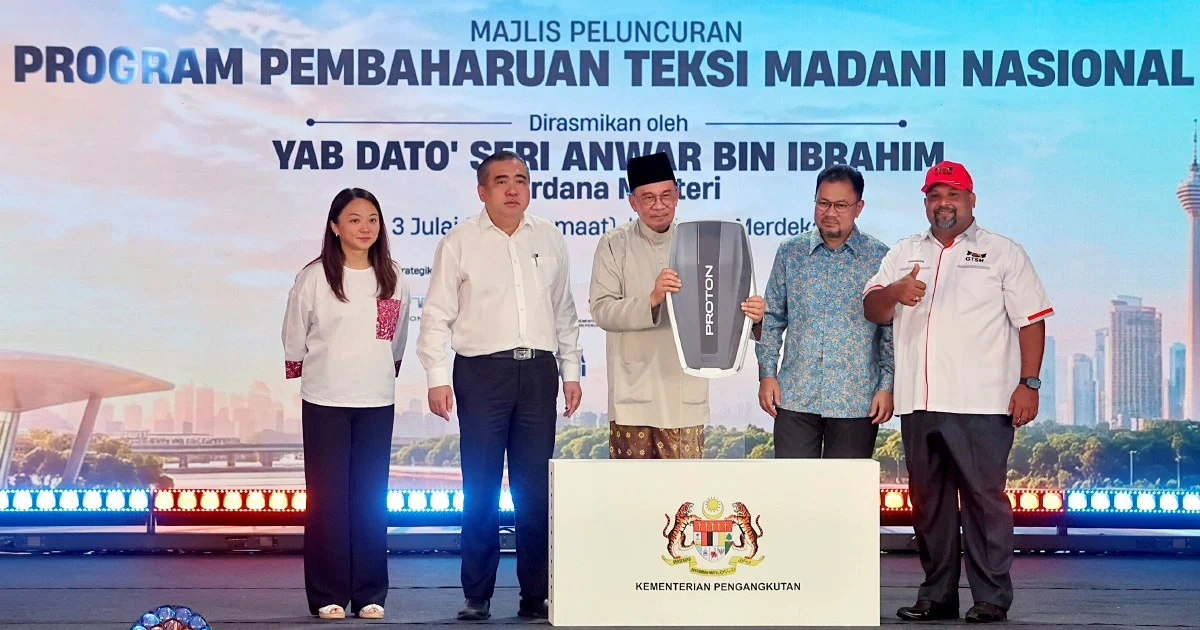
Malaysia's government has committed a further RM10 million towards accelerating the replacement of ageing taxis through a matching grant initiative, Prime Minister Datuk Seri Anwar Ibrahim revealed. The supplementary funding injection underscores the administration's commitment to modernising the nation's taxi fleet while addressing longstanding concerns about vehicle age, driver safety, and service quality across the transportation sector.
The matching grant structure represents a collaborative approach between government and private operators, where public funds work alongside contributions from taxi owners themselves. This mechanism aims to reduce the financial burden on individual drivers and small taxi companies that frequently struggle with capital expenditure for vehicle replacement. By sharing the cost, the initiative seeks to make fleet renewal economically viable for operators who might otherwise defer maintenance or continued use of vehicles beyond their operational peak.
The taxi industry has long grappled with fleet ageing issues, particularly among independent operators and smaller companies. Many vehicles operating on Malaysian roads exceed 15 years of service, leading to elevated maintenance costs, reduced reliability, and environmental concerns through higher emissions. Younger fleets typically offer improved fuel efficiency, enhanced safety features, and lower operational expenses, presenting both immediate benefits for drivers and broader economic advantages for the transportation ecosystem.
By injecting additional capital specifically for this purpose, the government acknowledges the sector's vulnerability to external shocks and the industry's structural challenges. The taxi sector remains critical infrastructure for urban mobility, particularly serving commuters in Kuala Lumpur and other major cities where ride-hailing services have not entirely displaced traditional licensed taxis. Supporting fleet modernisation protects livelihoods for thousands of drivers while maintaining service accessibility for price-conscious consumers.
The timing of the announcement reflects growing policy attention to transport sustainability and economic productivity. Newer vehicles with contemporary safety systems reduce accident risks for drivers and passengers alike, potentially lowering insurance claims and healthcare costs. Enhanced vehicle technology also supports the government's broader environmental commitments by reducing greenhouse gas emissions and improving fuel consumption patterns across the transportation network.
The matching grant mechanism requires eligible operators to contribute their own capital, ensuring commitment from beneficiaries and promoting responsible fleet investment decisions. This risk-sharing arrangement has proven effective in other jurisdictions where government-supported vehicle replacement programmes combine public funding with private investment. The approach encourages operators to select appropriate vehicles suited to market demand rather than defaulting to government-subsidised choices that may not align with operational requirements.
Implementation of such schemes typically involves establishing clear criteria for vehicle eligibility, operator qualifications, and grant disbursement procedures. Participating taxi companies must demonstrate valid operations licences, compliance with safety standards, and financial capacity to meet matching obligations. These safeguards protect public investment while ensuring funds reach legitimate industry participants committed to long-term operations rather than speculators or marginal players.
The initiative addresses a persistent tension within Malaysia's transportation policy framework. While private ride-hailing platforms have captured significant market share in recent years, the traditional taxi sector remains essential for serving less profitable routes and supporting driver communities lacking capital for rapid technological adaptation. Government support acknowledges this reality while promoting competitive modernisation that enables taxis to remain relevant in evolving mobility markets.
Regional observers note that vehicle replacement programmes serve multiple policy objectives simultaneously. Enhanced fleet quality improves customer service reliability, supporting demand stability in competitive transport markets. Reduced operational costs through improved fuel efficiency strengthen driver incomes, potentially moderating pressure for fare increases. Environmental improvements align with commitments under international climate frameworks and regional sustainability initiatives.
The RM10 million allocation represents meaningful but modest investment relative to the scale of Malaysia's taxi fleet, which encompasses thousands of vehicles across multiple jurisdictions. Administrators will need to establish transparent processes for application, assessment, and fund distribution to ensure equitable access and prevent concentration of benefits among larger operators. Clear communication about programme eligibility and timeline will determine uptake levels and ultimate impact on fleet modernisation trajectories.
Stakeholder groups including taxi associations and industry representatives will play important roles in programme refinement and implementation. Their input regarding realistic grant levels, matching requirements, and administrative procedures will shape scheme effectiveness. Sustained dialogue between government, operators, and advocacy organisations remains essential for addressing implementation challenges and optimising outcomes across diverse operational contexts.
Looking forward, the government's willingness to allocate additional resources for taxi fleet modernisation signals recognition of the sector's importance within Malaysia's transport infrastructure. Complementary policy measures—including driver training support, technological adoption assistance, and regulatory frameworks promoting safety standards—could amplify the impact of capital investment alone. Integrated approaches combining financial support with capacity building and regulatory enforcement typically generate more comprehensive improvements than standalone funding schemes.
The announcement positions Malaysia within a regional context where several Southeast Asian countries are advancing transport modernisation agendas. Comparable initiatives in neighbouring markets demonstrate both opportunities and implementation challenges when combining government support with private sector participation. Malaysia's experience with this matching grant approach could yield valuable lessons for transport policy across the region, particularly regarding sustainable mechanisms for supporting traditional sectors navigating technological change and market competition.

