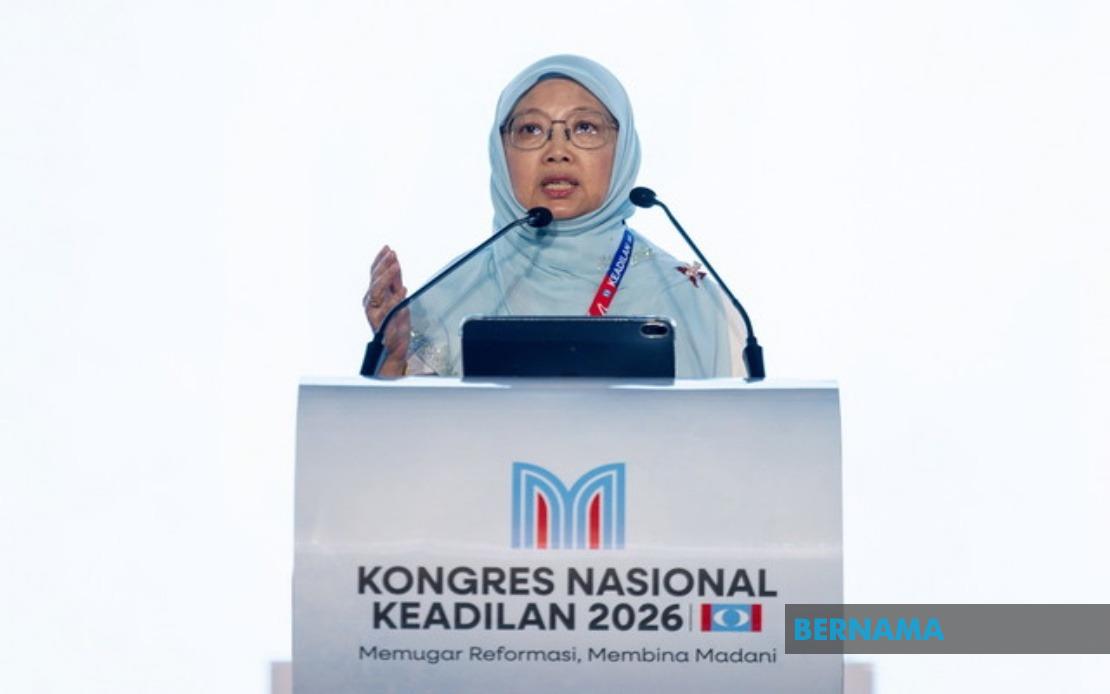
The Parti Keadilan Rakyat's struggle for reform has fundamentally shifted from opposition rhetoric to the practical demands of statecraft, according to party vice president Datuk Seri Dr Zaliha Mustafa, who cautioned that merely holding government office falls short of the movement's deeper aspirations. Speaking at PKR's 2026 National Congress in Melaka on August 16, she positioned the party's current tenure in government as the decisive proving ground for ideals championed over nearly three decades, where implementation and execution will determine whether the reform agenda achieves lasting institutional transformation.
Mustafa's framing addresses a critical tension within Malaysia's political landscape: the distance between winning elections and delivering meaningful systemic change. The reformasi movement, which emerged in response to events in the late 1990s, has historically mobilised voters through promises of cleaner governance and democratic renewal. Yet moving from opposition critique to implementing reform while managing competing interests within a coalition government presents fundamentally different challenges. By characterising governance itself as the true examination of the movement's viability, PKR's leadership is signalling awareness that political survival and policy delivery represent separate tests requiring distinct capabilities.
The substance of Mustafa's remarks reveals strategic thinking about institutional strengthening and anti-corruption efforts as core components of the reform agenda. She emphasised that PKR's governmental role now encompasses responsibility for fortifying institutions, confronting graft, curtailing authoritarian overreach, and ensuring equitable access to justice across all social strata. This articulation suggests the party views its coalition partnership not merely as a vehicle for power distribution but as an opportunity to reshape the administrative machinery through which state authority operates. For Malaysian observers and regional analysts, this represents either a serious commitment to governance improvement or a rhetorical repositioning of political objectives—a distinction that time and measurable outcomes will clarify.
Crucially, Mustafa introduced a temporal dimension to reform implementation that acknowledges practical constraints while maintaining directional clarity. Invoking historical precedent through the example of Khalifah Umar Abdul Aziz, she argued that transformative change need not happen instantaneously to remain authentic. Incremental reform, properly sequenced and transparently pursued, differs fundamentally from stalled or abandoned commitments. This messaging appears directed at two audiences simultaneously: party members expecting rapid transformation and sceptics questioning whether governmental constraints will neuter reform ambitions. The articulation that gradualism does not equate to delay, and caution need not signal lost nerve, attempts to navigate this treacherous political terrain by maintaining momentum while acknowledging implementation realities.
Yet perhaps most revealing is Mustafa's extended discussion of communication strategy and narrative control, which suggests PKR leadership recognises that policy implementation alone proves insufficient for political sustainability. She noted that government achievements remain invisible to publics unless deliberately explained through accessible channels, and warned that victory in legislative numbers and policy frameworks cannot compensate for failing to capture public sentiment and perception. This diagnosis points toward a sophisticated understanding that contemporary Malaysian politics operates simultaneously in institutional and digital domains, where opposition voices and competing narratives can undermine governmental legitimacy regardless of objective accomplishments.
The explicit call for PKR to dominate social media discourse and resist opposition framing reflects broader regional patterns in Southeast Asian politics, where digital communication increasingly determines political outcomes independent of administrative performance. Malaysia's experience with misinformation, competing truth claims, and platform-driven political mobilisation mirrors challenges facing elected governments across the region. Mustafa's emphasis on mastering narrative space acknowledges that the reformasi movement's success hinges not only on what government does but on how effectively it communicates those actions to increasingly fragmented publics consuming news through algorithmically-sorted feeds rather than traditional media.
For Malaysian readers and regional observers, these remarks signal PKR's transition from oppositional politics to defensive governance. The party must simultaneously satisfy members expecting transformative change, manage coalition partners with competing priorities, address public expectations shaped by 27 years of reform rhetoric, and counter opposition narratives in digital spaces where traditional institutional authority carries diminished weight. This constellation of pressures explains why Mustafa repeatedly emphasised the need for courage, wisdom, self-correction, and clear direction—qualities considerably more demanding than the critical rhetoric opposition politics permits.
The question of whether PKR can sustain reform momentum within governance constraints remains fundamentally unresolved. Mustafa's speech demonstrates leadership awareness of these tensions and articulates a plausible framework for addressing them. Yet awareness and successful navigation represent different propositions. The party's 27-year journey from reformasi movement to ruling coalition component has fundamentally altered the relationship between rhetoric and accountability. Achievements can be measured; failures become difficult to attribute to structural impediments or external sabotage when one controls government machinery. This transition from opposition to governance inherently transforms what reform means and how success is evaluated.
Furthermore, Mustafa's emphasis on institutional strengthening and anti-corruption efforts assumes a degree of internal party discipline and homogeneity that Malaysian political parties have historically struggled to maintain. Holding members accountable for deviations from reform principles while occupying power positions requires mechanisms and political will that frequently prove inadequate in practice. The tension between admitting mistakes and maintaining party cohesion, between disciplining errant members and preserving coalition stability, between transparent governance and operational flexibility remains largely unresolved in her presentation.
Regional implications extend beyond Malaysia's domestic political configuration. Southeast Asia's experience with reform movements cycling through opposition and governance phases demonstrates the difficulty of translating revolutionary ideals into sustainable institutional practice. Whether PKR can demonstrate that reformasi represents more than elite circulation and actually produces measurable improvements in governance quality, corruption reduction, and institutional accountability will influence how observers across the region assess the viability of similar movements elsewhere in Southeast Asia.
Ultimately, Mustafa's reframing of governance as the true test of reformasi positions PKR for either vindication or vulnerability. If the party can point to concrete institutional improvements, reduced corruption, and demonstrable justice system reforms over the coming years, her claims that becoming government enables rather than concludes the reform struggle gain credibility. Conversely, if governance constraints, coalition compromises, and institutional resistance limit meaningful change, the 27-year reformasi narrative risks devolving into justification for incremental adjustments to existing power structures. The coming months and years will determine whether PKR has genuinely reinvented governance or merely claimed new rationales for power maintenance.

