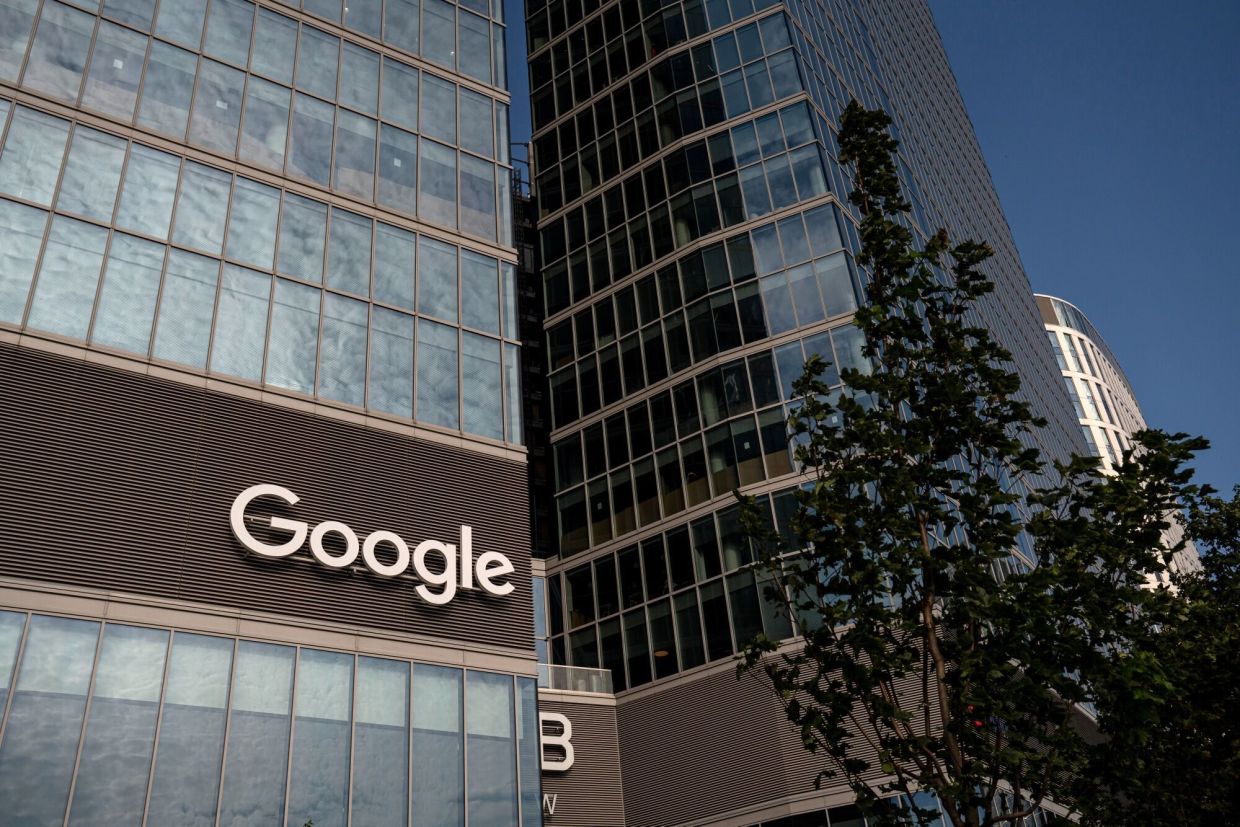
When Google markets its artificial intelligence capabilities to corporate clients, the technology giant promotes its hiring tools as a streamlined solution for processing overwhelming volumes of job applications and identifying the strongest prospects. Yet within Google itself, some of the company's most advanced AI researchers have quietly acknowledged serious flaws in these very systems, prompting them to establish a workaround for their own recruitment process.
The AGI Safety and Alignment Team within Google DeepMind, a division focused on managing the risks inherent in powerful artificial intelligence systems, has instructed prospective candidates to complete a supplementary form alongside their regular application. This extraordinary measure aims to circumvent what the team views as a significant screening risk: the possibility that qualified applicants could be rejected or delayed by the company's internal automated systems. A confidential document marked "PLEASE DO NOT SHARE THIS DOC WIDELY" and reviewed by Bloomberg outlined the team's candid assessment of the problem.
The documentation was remarkably straightforward about the limitation: "We have an applications system with a non-trivial probability your CV will be screened out incorrectly or take too long to reach us." By completing the special form, candidates receive assurance that an actual team member will personally review their submission, bypassing the algorithmic gatekeeping that might otherwise derail their prospects. This unusual acknowledgment from within one of the world's leading AI research institutions underscores a fundamental tension at the heart of modern recruitment technology.
Google's official response attempted to downplay the issue, with a company spokesperson asserting that the organisation remains committed to recruiting "the most qualified talent at Google DeepMind" and rejecting suggestions that the filtering systems are inherently flawed. The spokesperson clarified that the special form represents an optional expedited pathway created by the team to deliver resumes directly to the hiring managers rather than a critique of the underlying technology. However, the spokesperson also cautioned that "there are no shortcuts to getting hired," suggesting the form merely enhances visibility rather than guarantees consideration.
The revelation highlights how opaque and poorly understood AI implementation in hiring has become across the technology sector. Different companies employ fundamentally different approaches: some organisations deploy machine learning models to rank candidates according to predicted job performance, while others simply scan resumes for predetermined keywords and phrases. The outcomes vary dramatically depending on implementation quality and the underlying training data. Google's Workspace division, which develops productivity software used by millions of businesses globally, actively markets AI-enhanced recruiting features to customers, promising efficiency gains through automated job description drafting, resume evaluation, and hiring projection forecasting.
This expansion of AI throughout recruitment pipelines has triggered mounting concerns about algorithmic bias and discrimination. A recent Bloomberg investigation revealed that OpenAI's ChatGPT displayed measurable signs of potential prejudice linked to applicants' names when asked to evaluate resumes. More significantly, Workday Inc, a major provider of enterprise workforce management software, faces a lawsuit alleging that its AI hiring system systematically screens out candidates based on protected characteristics including race, age and disability status—violations of employment law. Workday has contested these allegations, maintaining that final hiring decisions involve human judgment. The company declined to provide additional commentary on the specific claims.
Paradoxically, while companies deploy AI to reduce hiring bias and improve objectivity, the systems themselves frequently encode and amplify historical patterns of discrimination present in their training data. Candidates across industries have begun leveraging AI tools to game these filters, essentially using artificial intelligence to outmaneuver other artificial intelligence. Some jobseekers now employ large language models to rewrite resumes and applications, optimising for algorithmic detection while others simply submit drastically higher volumes of applications, relying on computational speed to improve their odds.
Google DeepMind appeared aware of this counter-arms-race dynamic, incorporating a warning into their supplementary form addressing the manipulation problem. The guidance cautioned job seekers that their applications would prove more compelling without algorithmic assistance. The form included a pointed reminder: "A real human will read these. These humans get really tired of reading LLM answers, because they all sound very samey." This admission reveals that even AI-generated text has become so standardised and recognisable that experienced recruiters immediately identify and discount it, suggesting that raw authenticity may paradoxically become a competitive advantage in an increasingly automated landscape.
The situation at Google DeepMind encapsulates a broader contradiction affecting technology companies globally. Organisations simultaneously promote AI hiring tools to external clients while internally mistrusting those same systems enough to create escape hatches for their own recruitment. This divergence raises uncomfortable questions about whether these companies believe their own marketing claims or whether commercial pressures drive the promotion of tools their own researchers consider unreliable. For Southeast Asian technology workers and job seekers increasingly subjected to AI screening, the revelation offers cautionary perspective: the systems determining access to opportunities may function less reliably than presented, and direct human advocacy remains a valuable—if technically unsancioned—strategy for securing consideration.

