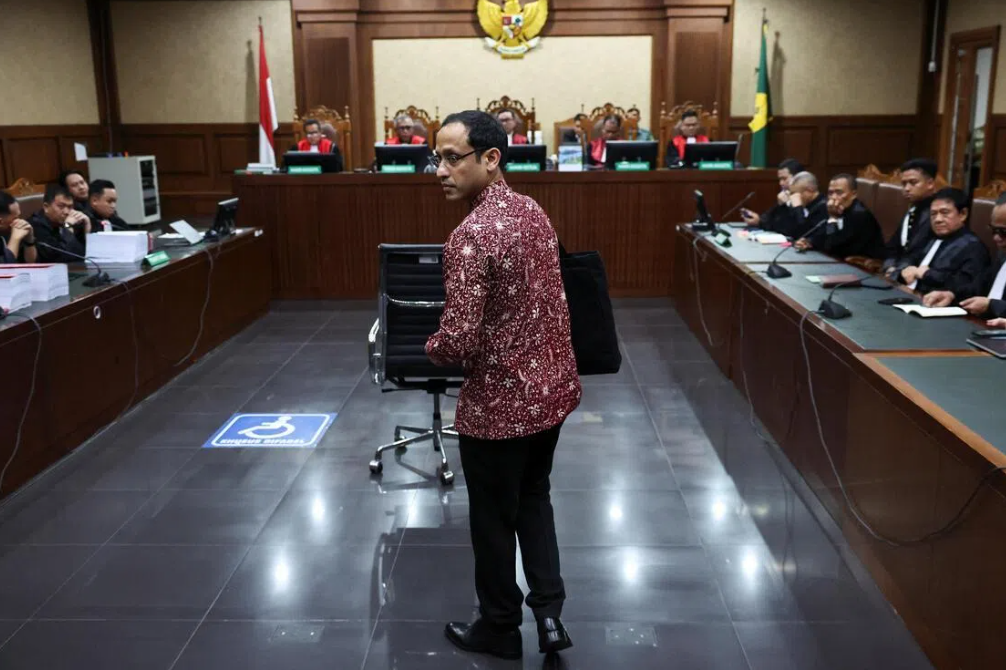
Indonesia's Jakarta Corruption Court has handed down a 10-year prison sentence to Nadiem Makarim, the Harvard-educated technology entrepreneur and founder of ride-hailing giant Gojek, in what may be the region's most closely watched corruption trial in recent memory. The verdict, delivered on June 30, concludes a dramatic fall from grace for a figure once celebrated as emblematic of a new breed of Indonesian technocrat capable of modernising government through digital innovation. Beyond the custodial sentence, the court imposed a fine of 1 billion rupiah (approximately US$56,000) and ordered Makarim to pay restitution of 809.6 billion rupiah (around US$45 million), with an additional five-year prison term if he fails to satisfy the financial obligation.
At the heart of the case lies a massive pandemic-era initiative to procure approximately 1.1 million Chromebook laptops between 2020 and 2022, when Indonesia's schools pivoted to remote learning during the Covid-19 emergency. The five-judge panel, led by chief judge Purwanto, determined that Makarim had deliberately abused his ministerial authority to benefit specific corporate entities, particularly his own technology conglomerate. The court found that he had "consciously and intentionally directed" the Chromebook policy with motives the judges characterised as "highly reprehensible," namely to strengthen Google's strategic business relationship with Gojek, his parent company PT Aplikasi Karya Anak Bangsa (PT AKAB). Such conduct, the panel concluded, fundamentally violated the oath of office required of any minister.
Makarim's trajectory from celebrated innovator to convicted fraudster illuminates the complex intersection of commerce, governance, and institutional trust in Southeast Asia's largest economy. Before accepting the education portfolio under former president Joko Widodo in 2019, the 41-year-old had built Gojek into Indonesia's first unicorn startup, expanding an initial motorcycle taxi and courier service into a comprehensive super-app ecosystem encompassing food delivery, digital payments through GoPay, and numerous other digital services. By the time he entered the cabinet, Gojek's valuation had reached approximately US$10 billion, cementing Makarim's reputation as an architect of Indonesia's tech-driven economic transformation.
The prosecution's case centred on allegations that the Chromebook procurement scheme, ostensibly designed to maintain educational continuity during lockdowns, actually resulted in approximately 2.18 trillion rupiah in state losses while channelling roughly 809 billion rupiah in personal benefit to Makarim through corporate structures he controlled. Prosecutors argued that Google's strategic investment decisions in Gojek had influenced the selection of Chromebook laptops as the preferred procurement choice, a claim Makarim categorically denied throughout the trial. The prosecution had sought an 18-year sentence, a substantially heftier fine of 1 billion rupiah, and 5.6 trillion rupiah in restitution, suggesting they viewed the case as extraordinarily serious.
Makarim's defence presented a starkly different narrative, one centred on good-faith governance during unprecedented crisis. His legal team emphasised that he had orchestrated the programme with genuine intent to sustain educational continuity when Indonesia faced one of its most disruptive periods in recent history. They maintained that approximately 97 percent of the 1.1 million Chromebooks had been successfully distributed to 77,000 schools by 2023, suggesting substantial delivery of tangible benefit to the education system. Crucially, Makarim's lawyers asserted that he had received no personal monetary compensation from the procurement and that the entire initiative reflected legitimate policy decisions rather than corrupt intent.
The defence further highlighted internal government research conducted in 2018, prior to Makarim's ministerial appointment, which had already identified potential limitations of Chromebook deployment in remote and rural areas lacking reliable internet infrastructure. This finding suggested that deployment challenges were institutional knowledge rather than hidden defects discoverable only through investigative hindsight. However, prosecutors countered with evidence of an August 2019 group chat showing pre-cabinet discussions about a Chromebook-focused digitalisation plan, which they interpreted as indicative of pre-existing schemes rather than spontaneous pandemic-response innovation.
The trial itself became a cultural phenomenon in Indonesia, drawing unprecedented public attention for a corruption proceeding. Dozens of Gojek motorcycle taxi drivers attended hearings in solidarity with their former employer's founder, creating emotionally charged courtroom scenes that transcended typical corruption litigation. Makarim himself engaged in symbolic gestures, arriving to one session dressed in a Gojek driver's jacket before changing into traditional batik attire, deliberately performing his connection to the grassroots community he had built. Court sessions were livestreamed and sparked viral social media campaigns organising public watch parties, while the Jakarta Corruption Court received amicus curiae briefs—formal interventions from "friends of the court"—supporting Makarim's position, an unusual phenomenon in Indonesian jurisprudence.
Makarim's social standing and family prominence added another dimension to the proceedings. As the son of prominent attorney Nono Anwar Makarim and grandson of an Indonesian independence movement figure, he embodied elite institutional credentials that typically insulate individuals from severe prosecution. Yet the court's verdict suggests that even such pedigree cannot override corruption findings when judicial determination deems state losses and abuse of ministerial position sufficiently egregious. His case thus represents a significant test of institutional independence and prosecutorial commitment in a jurisdiction where wealth and family connections have historically shaped legal outcomes.
In his final defence plea delivered on June 23, before the sentencing announcement, Makarim transformed the trial into a referendum on Indonesia's capacity to attract professional talent from the private sector into public service. He posed a question directly to the judges that transcended his personal fate: "Is this country still safe for us to serve?" This rhetorical appeal sought to frame the case not merely as a dispute over procurement decisions but as a statement about whether Indonesia could retain ambitious professionals willing to accept the reputational and legal risks associated with ministerial service. Such language suggested a deliberate strategy to influence judicial sentiment by emphasising the broader societal implications of the verdict.
The conviction carries profound implications for Indonesia's technology sector and regional governance dynamics. The case demonstrates that even Indonesia's most celebrated tech entrepreneurs remain vulnerable to corruption prosecution, potentially deterring future private-sector leaders from accepting government positions. For Malaysia and other Southeast Asian nations, the verdict offers lessons about the challenges of integrating technology-sector expertise into traditional government bureaucracies, particularly when rapid digitalisation initiatives intersect with procurement contracts worth billions. The decision also raises questions about the adequacy of institutional safeguards and oversight mechanisms when ministers simultaneously oversee their own or their family companies' commercial interests, a structural vulnerability relevant across the region.
Makarim's conviction represents a watershed moment in Indonesian corruption prosecutions, signalling that technological innovation credentials and private-sector success offer limited insulation from legal consequences when state investigations reveal alleged abuses of ministerial authority. The sentencing, while considerably lighter than the prosecution's 18-year demand, nonetheless delivers a decisive judgment that the court found Makarim guilty of fundamentally violating public trust. As Makarim navigates the appeals process, the case will likely influence broader Indonesian governance practices and the willingness of technology professionals throughout Southeast Asia to transition into public service roles. The verdict ultimately reflects an institutional assertion that even celebrated entrepreneurs remain bound by the same legal standards as conventional politicians.

