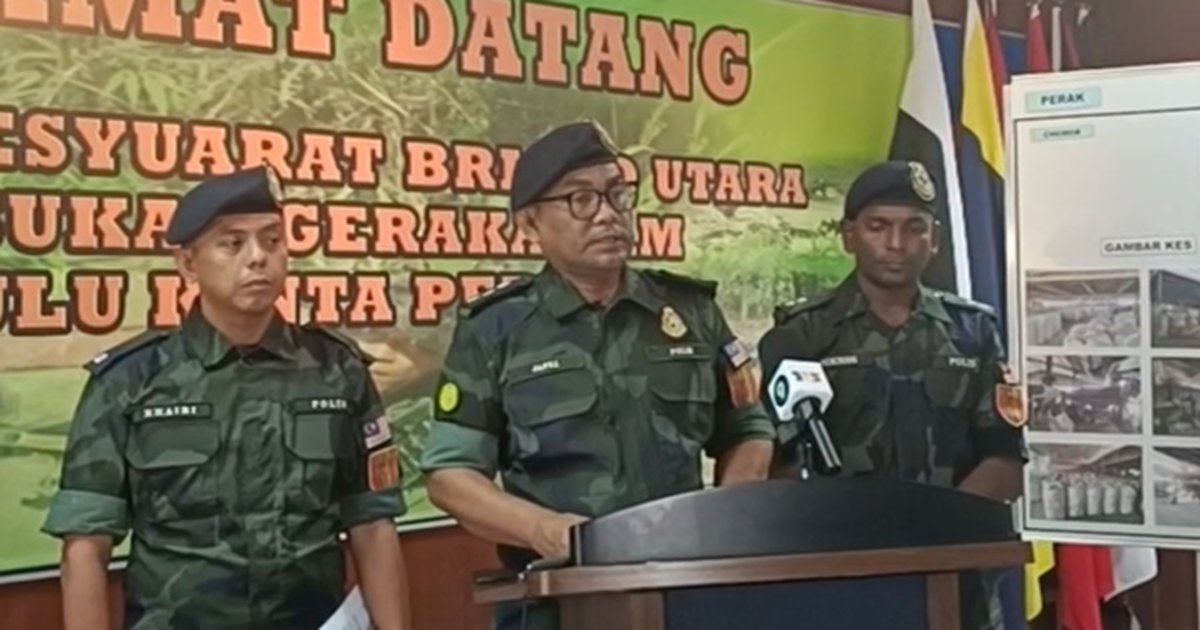
The General Operations Force Northern Brigade has delivered a significant blow to illegal mining networks operating across the northern Peninsular region, detaining 30 individuals and seizing mineral stocks alongside heavy machinery valued at approximately RM31.7 million. The coordinated enforcement action, launched from the GOF's Ipoh headquarters, represents the latest in an intensifying campaign to dismantle unauthorized extraction and processing operations that have proliferated in the two states.
Illegal mining has emerged as a persistent challenge for Malaysian authorities, particularly in resource-rich states like Perak and Kedah where vast deposits of tin, bauxite, and other commercially valuable minerals attract underground operators seeking to circumvent regulatory oversight and taxation. These clandestine operations not only deprive the government of legitimate revenue but also contribute to environmental degradation, including soil contamination, water pollution, and habitat destruction. The GOF's intervention in this sphere underscores the government's determination to assert control over natural resource extraction and protect both the nation's mineral wealth and its environmental integrity.
The Northern Brigade's operational strategy reflects a shift towards more aggressive enforcement, combining intelligence gathering with rapid-response raids designed to catch operators before they can relocate equipment or destroy evidence. The scale of confiscated assets—machinery and mineral stocks exceeding RM31 million—suggests the GOF targeted not small-scale informal operations but rather organized networks with substantial capital investment and processing infrastructure. Such networks often operate across multiple sites, using informal supply chains to move extracted materials toward buyers within Malaysia and across regional borders.
Perak, historically the nation's premier tin-producing state, continues to face challenges from illegal operators exploiting residual deposits and abandoned mining sites. The state's geographic complexity, with extensive rural areas and legacy mining landscapes, creates enforcement difficulties. Similarly, Kedah's agricultural orientation masks a significant mineral extraction sector, where unauthorized operations can more easily evade detection. Both states share porous boundaries and terrain that facilitate the movement of materials and personnel, making coordinated enforcement essential.
The detention of 30 individuals raises questions about the network's organizational structure and potential connections to larger criminal syndicates. Illegal mining operations at this scale typically involve multiple layers—from site managers and equipment operators to buyers and facilitators—suggesting the GOF's action disrupted a chain spanning extraction, processing, and distribution. Subsequent investigations will likely focus on tracing financial flows and identifying downstream buyers, who may include legitimate businesses unknowingly purchasing black-market minerals or deliberate participants in the supply chain.
The monetary value assigned to seized equipment and minerals carries both immediate and broader significance. The RM31.7 million represents lost natural resources and foregone government revenue, but it also reflects the profitability driving these operations. When unauthorized miners can extract and sell minerals without compliance costs, environmental remediation expenses, or taxation, they achieve cost advantages over licensed operators. This competitive distortion damages the viability of legitimate mining enterprises and erodes incentives for companies to operate within regulatory frameworks.
Environmental implications extend beyond immediate extraction sites. Illegal mining operations frequently bypass safety standards and environmental safeguards, leading to accelerated soil erosion, siltation of waterways, and toxic contamination from processing chemicals. In Perak and Kedah, where agriculture and water resources support millions of residents and generate significant economic output, such degradation carries downstream costs borne by farming communities, water boards, and urban consumers. The GOF's enforcement action therefore serves protective functions beyond resource recovery.
The political dimension of this crackdown warrants consideration. Public awareness of illegal mining has increased following environmental incidents and media reporting on the scale of underground extraction networks. State governments and federal authorities face pressure to demonstrate effective governance over natural resources. High-profile enforcement actions, particularly those yielding substantial asset seizures and arrests, signal commitment to accountability and rule of law—messaging that resonates with voters concerned about national wealth management and environmental protection.
Regional considerations also apply. Southeast Asia confronts widespread illegal mining that crosses borders and involves transnational criminal networks. Enhanced enforcement in Malaysia contributes to regional efforts to combat resource trafficking and establish credible legal frameworks. Neighboring countries, facing similar challenges with illicit extraction, may view the GOF's operation as a model for coordinated action and demonstrate the feasibility of disrupting established networks through sustained pressure.
Looking forward, the success of this operation will depend on sustained follow-up. Asset seizures and arrests represent tactical victories, but strategic success requires conviction and sentencing of detained individuals, dismantling of distribution networks, and prevention of operation relocation or reestablishment. Authorities must also address underlying demand by monitoring downstream buyers and supporting legitimate mining sectors in competing against black-market alternatives.
The GOF's action reflects broader recognition that illegal mining cannot be contained through occasional enforcement but demands systematic, resourced campaigns combining intelligence, technology, and inter-agency coordination. As Malaysia pursues sustainable development and environmental protection goals, controlling unauthorized mineral extraction remains a crucial policy objective, combining revenue protection, environmental stewardship, and maintenance of competitive markets for legitimate enterprises.

