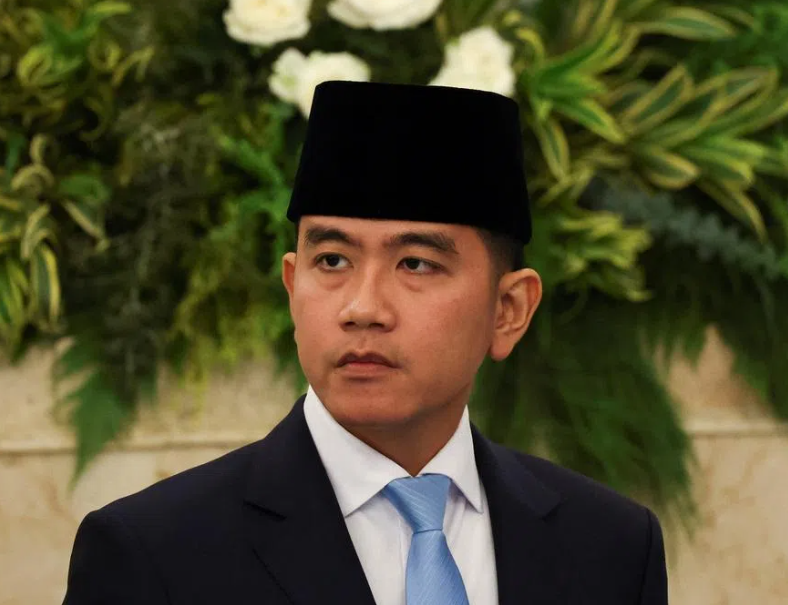
Vice-President Gibran Rakabuming Raka has invited five university students who had been protesting government policies to join him on an official working visit to eastern Indonesia, a move that underscores his attempt to position himself as a responsive and accessible leader at a critical moment for his political future. The students, who had taken to Jakarta's streets demanding reforms to the government's free meals programme and the Red and White Cooperative initiative, were brought into a closed-door meeting with Gibran just three days before the June 18 trip. The encounter transformed protest into a conversation at the presidential level, with the Vice-President's Office subsequently issuing a statement in which student representatives praised his receptiveness to their research findings and promised that their concerns would reach President Prabowo Subianto.
Yet the carefully choreographed nature of Gibran's outreach has not escaped critical scrutiny. Social media responses to his Instagram post about the meeting revealed scepticism, with commenters questioning whether the selected students genuinely represented Indonesia's most prominent universities or whether the entire episode amounted to political theatre. The suspicions deepened when news outlets reported that some of the student participants had subsequently received payments ranging from 2 million to 20 million rupiah, though the Presidential Palace stated it was investigating the matter. Such revelations raise uncomfortable questions about whether this engagement represents an authentic dialogue with youth critics or a transactional attempt to manage public sentiment ahead of a crucial electoral window.
Analysts at the Jakarta-based Center for Strategic and International Studies observe that Gibran's actions reflect a deliberate strategy to cultivate a particular political persona—that of a vice-president willing to listen and engage directly with ordinary citizens and student movements. At 38 years old and now nearly a year into his tenure alongside President Prabowo Subianto, the son of former president Joko Widodo appears intent on distinguishing himself within the administration and building public recognition. The timing of this outreach is unlikely to be coincidental, as speculation continues about potential presidential candidacies for 2029, despite Gibran's public silence on the matter. By positioning himself as responsive to grassroots concerns, he is effectively laying groundwork for future political moves while remaining formally non-committal.
The broader context for Gibran's engagement involves genuine public anger over controversial government initiatives. The free meals programme, one of President Prabowo's flagship policies, has faced mounting scrutiny following corruption allegations that led to the replacement and arrest of National Nutrition Agency (BGN) chief Dadan Hindayana in June, along with two former deputies. During his June 18 visit to a primary school in East Nusa Tenggara, Gibran acknowledged these governance shortcomings and promised improved oversight, while instructing officials to accelerate implementation in areas where infrastructure was already in place. His willingness to publicly acknowledge problems with the programme demonstrated political awareness, yet it simultaneously raised questions about why a vice-president with limited formal authority over these initiatives was suddenly addressing their failures.
The structural reality of Gibran's role within government severely constrains any genuine influence he might wield over these programmes. Since taking office in October 2024, analysts note he has largely remained on the sidelines of major policy decisions despite being linked to high-profile assignments involving Papua's development and the new capital Nusantara. Unlike some of his predecessors, he has not been granted a major policy portfolio. The free meals programme operates under the BGN, which reports directly to the president, while the Red and White Cooperative initiative—another controversial pillar of Prabowo's agenda—is coordinated by multiple ministries and agencies as a presidential priority. Gibran's recent visibility around these programmes does not necessarily indicate substantive involvement in their conception or implementation.
Researchers at Padjadjaran University have suggested that available evidence indicates Gibran has not been centrally involved in either the free meals or cooperative programmes, which appear to operate primarily under the control of military and police-linked structures. This assessment suggests that his recent engagement with student critics represents less a senior official defending his policies and more a junior partner seeking to demonstrate relevance within an administration where actual power over these initiatives lies elsewhere. The vice-president's moves, in this interpretation, represent a calculated effort to ride momentum from student demonstrations and position himself as the more sympathetic face of government, while substantive decision-making authority remains concentrated with other actors.
The implications for Malaysian and regional observers are significant, as Gibran's positioning reflects broader patterns of how political actors in Southeast Asia respond to public pressure and position themselves within power structures. His strategy—engaging critics, acknowledging problems, and making procedural promises while lacking substantive authority—mirrors tactics used by other ambitious regional politicians seeking to build personal brands and public constituencies. The apparent cost of such engagement, measured in modest financial transactions with select student leaders, is comparatively low but potentially corrosive to public trust if perceived as co-optation of protest movements. For Indonesia's younger generations, the encounter raises questions about whether direct access to power structures can effect real change or whether such meetings function primarily as sophisticated public relations exercises.
Researchers characterise Gibran's strategy as deliberately low-cost in terms of actual policy commitments or institutional change. By selecting relatively modest universities whose leaders were open to dialogue, by holding the meeting in a sympathetic manner, and by promising to communicate concerns upward, he generated positive media coverage and demonstrated responsiveness without committing to substantive reforms. This approach reflects what one CSIS analyst terms a performative strategy—using the 'lowest-cost' options to maintain public attention and demonstrate relevance. For Gibran specifically, such tactics serve the dual purpose of building a personal political brand distinct from that of the president while signalling to the broader electorate that he is attuned to popular concerns and accessible to citizens, assets that could prove valuable in a 2029 presidential contest.
The student payment controversy, however, introduces a potential vulnerability into this narrative. If the money transfers are perceived as attempts to secure positive testimony or silence critics, the entire engagement risks being delegitimised as a cynical manipulation of youth activism. Conversely, if the payments are explained as standard reimbursement for travel or time, they could undermine the image of authentic grassroots engagement. The Presidential Palace's promise to investigate leaves ambiguity that itself becomes a political factor. For Gibran, this murkiness around financial transactions threatens to convert what he intended as a demonstration of accessibility into evidence of political choreography, potentially reinforcing critics' contentions that the whole exercise was orchestrated rather than organically responsive.
Looking forward, Gibran's trajectory within the Prabowo administration and his potential aspirations beyond 2024 will likely be shaped significantly by how successfully he navigates this balance between demonstrating relevance and overstepping into areas where actual authority lies. His limited formal power over the programmes that have attracted student protests means that any meaningful reforms to the free meals scheme or cooperative initiatives would require presidential authorization or direct pressure from ministries that technically control them. Gibran's value, therefore, lies not in his ability to implement change but in his capacity to serve as a pressure point through which public concerns can be elevated and legitimised within the power structure. This positioning—as an intermediary between society and the presidency—could enhance his political standing if he proves effective at channelling sentiment upward, or it could expose him as a figurehead lacking substantive influence if reforms fail to materialise.
The broader significance of Gibran's student engagement extends beyond his personal political calculations. It reflects an administration under pressure from multiple directions—student activists, civil society organisations, and a public concerned about governance lapses in signature programmes. By having his vice-president serve as the visible face of responsiveness, President Prabowo effectively absorbs some criticism while maintaining distance from detailed policy discussions. For student movements across Indonesia, the encounter represents both an opportunity and a potential pitfall: direct access to senior officials suggests political influence, yet the limited actual authority of those officials, combined with questions about the authenticity of the engagement, highlights the asymmetry between appearance and reality in Indonesia's political system. As regional observers assess how contemporary Indonesian leadership manages public dissent and builds political capital, Gibran's performance offers revealing insights into the strategies and constraints that shape governance in Southeast Asia's largest democracy.

