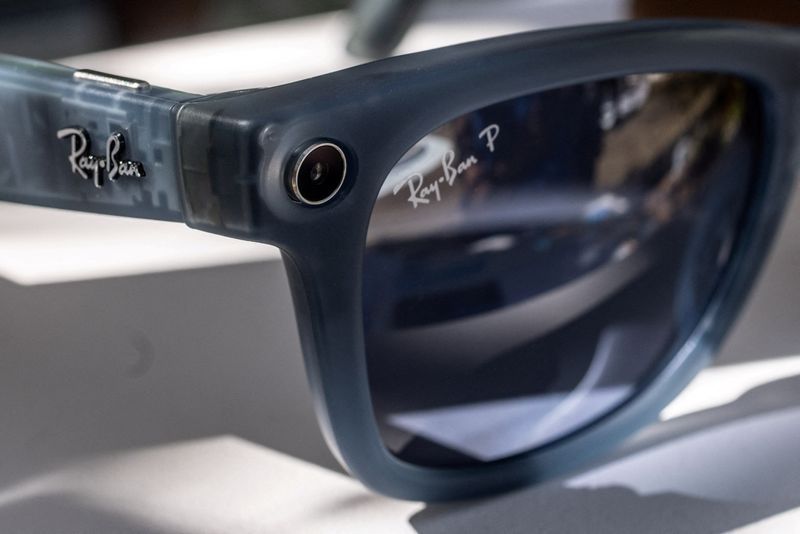
Germany's escalating battle over artificial intelligence and personal privacy has reached a critical juncture with the filing of a formal criminal complaint against Meta and major eyewear retailers. Digital rights advocacy organisation HateAid submitted the complaint to Frankfurt's specialist digital crime prosecution unit, arguing that the Ray-Ban Meta Wayfarer smart glasses breach fundamental German data protection statutes. The move reflects deepening tensions between tech innovation and stringent European privacy standards in a region where constitutional protections for individual privacy remain among the world's strongest.
At the heart of the dispute lies a fundamental tension over what constitutes acceptable surveillance technology in public spaces. HateAid contends that smart glasses equipped with video recording capabilities inherently violate German federal digital data protection legislation that specifically prohibits selling communication devices designed to record people covertly. The organisation's managing director Josephine Ballon articulated the group's central concern: individuals navigating German streets and public spaces have no way to know whether they are being filmed and whether that footage might subsequently be shared online without consent. This asymmetry of awareness represents precisely the kind of invasive surveillance that German law has traditionally sought to prevent.
The complaint names not only Meta's leadership but also EssilorLuxottica, the Italian multinational that manufactures Ray-Ban products under partnership with Meta, and four major German retailers: Fielmann, Apollo-Optik, Mister Spex, and MediaMarkt. By targeting the entire distribution chain, HateAid is attempting to establish legal responsibility across every commercial entity involved in bringing these devices to German consumers. Mister Spex responded by stating it had received no official notification of the complaint and reiterated its commitment to privacy protection, though the other parties remained silent when contacted by news organisations.
Germany's own telecommunications regulator, the Federal Network Agency (BNetzA), has already issued preliminary guidance on this issue. In late 2023, the agency stated that connected devices capable of covert audio or video recording were subject to legal restrictions. However, the regulator's current position creates ambiguity: while BNetzA acknowledges that ownership, importation, and sale of smart glasses are not categorically banned, the agency stipulates that any recording function must be clearly visible through optical signals or other obvious indicators. This interpretation suggests that glasses which unobtrusively record video through integrated cameras would potentially violate regulatory expectations, even if the letter of existing law remains somewhat unclear.
The regulatory environment has grown increasingly complex as different German jurisdictions pursue separate legal approaches. In July, news broadcaster SWR reported that Hamburg's state-level privacy protection agency had initiated legal proceedings regarding smart glasses usage. This fragmented enforcement landscape reflects the broader challenge facing German policymakers: existing legislation was written before such technology became commercially viable, creating gaps between statutory language and technological reality. Regulators are now attempting to stretch traditional privacy frameworks to accommodate devices that pose novel surveillance risks.
Beyond Germany's borders, this case carries significant implications for Southeast Asian regulators grappling with similar questions. Malaysia, Singapore, and other regional economies are increasingly hosting technology investments and consumer markets for AI-enabled devices. The German precedent demonstrates how developed nations with strong privacy traditions are beginning to resist surveillance capabilities embedded in everyday consumer products. As Malaysian authorities develop their own artificial intelligence governance frameworks, they may face pressure to adopt similarly protective stances, particularly if public concern about covert recording and image-based abuse grows.
HateAid's analysis emphasises a particularly troubling dimension: the disproportionate impact on vulnerable populations. The advocacy group has documented rising instances of image-based digital violence, with women constituting the majority of victims. Smart glasses that enable inconspicuous recording represent a technological acceleration of this problem. The devices allow perpetrators to disguise surveillance as normal eyewear, dramatically lowering the technical barriers to creating non-consensual video recordings. This gendered dimension transforms the complaint from an abstract privacy question into a matter of personal security and dignity.
The commercial stakes for Meta and its retail partners are substantial. Germany represents one of Europe's largest markets, and a successful prosecution could establish legal precedent affecting sales throughout the European Union. The complaint potentially threatens the entire business model of smart glasses as currently manufactured. If German courts rule that the Ray-Ban Meta glasses inherently violate privacy law regardless of user intent, Meta would need to fundamentally redesign the devices—perhaps by adding prominent recording indicators, disabling recording capabilities, or implementing complex permission systems—to maintain market access in Germany.
The dispute also highlights tensions within the technology industry itself. Meta has positioned smart glasses as the future of human-computer interaction and augmented reality. The company maintains that the devices have legitimate use cases, from photography to navigation assistance. However, HateAid and other privacy advocates argue that any device capable of covert recording poses unacceptable risks that outweigh potential benefits. This philosophical disagreement cannot be easily resolved through regulatory compromise because the core technologies at stake—small cameras integrated into eyewear—serve surveillance functions whether users intend them to or not.
Looking ahead, the outcome of this complaint could reshape how technology companies approach privacy-sensitive product design across the European market. Other jurisdictions, including those in Southeast Asia, will likely monitor the German proceedings closely. If regulators determine that smart glasses violate privacy principles, manufacturers may be forced to develop region-specific versions with enhanced safeguards or recording restrictions. Conversely, if the courts side with Meta, it could embolden other companies to proceed with similar surveillance-capable consumer products, accelerating a broader shift toward ambient recording in public spaces. For Malaysian consumers and policymakers, understanding how Germany resolves this tension will prove instructive as artificial intelligence becomes increasingly embedded in everyday devices.

