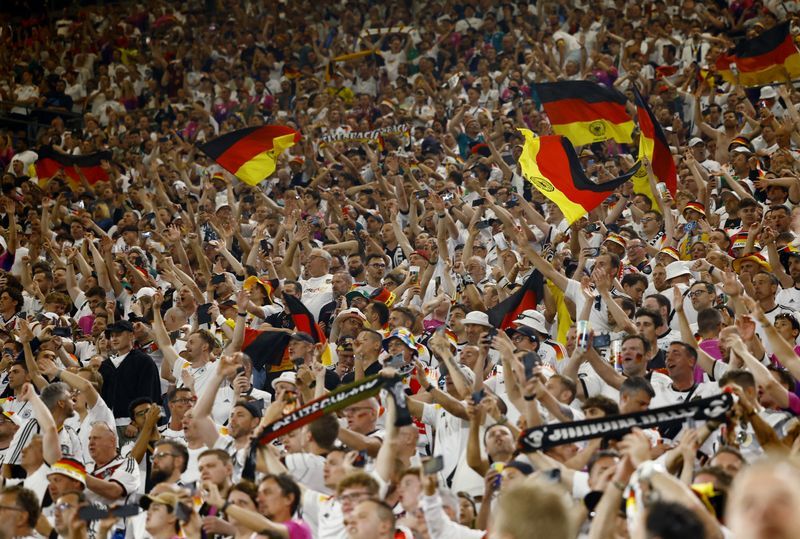
German law enforcement authorities have initiated a sweeping investigation into the country's national soccer governing body, with searches conducted at the Deutsche Fußball-Bund (DFB) headquarters as part of a broader probe into irregularities surrounding ticket distribution for Euro 2024. The operation, reported by Bild newspaper on Wednesday, represents a significant development in scrutinizing the administrative practices of one of Europe's most prominent sporting institutions during what was meant to be a showcase tournament for German football.
The inquiry centers on suspected violations in how tickets were allocated for matches during the continental championship, raising questions about transparency and accountability in the management of access to one of football's marquee tournaments. The investigation extends beyond a single location, with raids occurring at multiple sites throughout Germany as part of a coordinated enforcement effort by German police and prosecution authorities. While official statements from law enforcement did not specifically name the DFB in their public communications, the Bild report makes clear that the soccer federation's offices were among the key locations targeted in the operation.
Among those under investigation are both a German national and a French national, according to the newspaper's account of the inquiry. The involvement of individuals from two countries hints at a potential cross-border dimension to the alleged irregularities, though the precise nature of their involvement remains unclear from available details. The multi-jurisdictional aspect of the case may complicate investigation procedures, given the different legal frameworks and enforcement mechanisms operating in Germany and France, though such complexity is not uncommon in European sports governance disputes.
Ticket allocation for major sporting events has long been a contentious area, particularly at the European Championship level where demand vastly outstrips supply. The Euro 2024 tournament, held on German soil, generated enormous interest both domestically and across the continent, creating substantial pressure on officials to manage distribution fairly while also accommodating various stakeholders including national federations, sponsors, hospitality partners, and the general public. When allocation processes fail to meet public expectations or legal standards, reputational damage extends beyond the immediate individuals involved to the broader institutions responsible for governance.
The DFB's reputation as administrator of German football carries significant weight in European soccer politics. As the federation governing a nation with multiple Bundesliga clubs competing internationally and a national team historically successful in major competitions, the organization wields considerable influence in continental football affairs. Any findings of misconduct would therefore resonate far beyond Germany's borders, potentially affecting the DFB's standing within UEFA and its ability to host or organize future tournaments at the continental level.
The investigation reflects broader concerns about governance in European sports administration that have surfaced in recent years. Scandals involving ticketing practices, hospitality distribution, and allocation transparency have prompted heightened scrutiny from both regulatory authorities and the public, who increasingly expect accountability from governing bodies managing public events. The decision by German prosecutors to deploy investigative resources suggests officials deemed the allegations sufficiently serious to warrant comprehensive examination of organizational practices and potentially individual conduct.
For Malaysian and Southeast Asian observers of European football, such governance questions carry implications for how football's international institutions manage major tournaments and allocate resources. While the immediate focus concerns Euro 2024, the investigation touches on systemic questions about how sporting bodies balance commercial interests, administrative efficiency, and equitable access—issues relevant to any nation seeking to host or participate in international sporting events. The scrutiny also underscores that even well-established federations operating in developed sporting infrastructure face investigation when allegations arise.
The timing of the investigation, following the completion of Euro 2024, allowed authorities to examine records and conduct searches without disrupting the tournament itself. This sequential approach to enforcement reflects consideration for the sporting calendar while maintaining investigative momentum. The full scope of the inquiry, including potential charges or disciplinary consequences, remains to be determined as the investigation progresses through German legal procedures.
The outcome of this case may influence how future major tournaments in Europe are administered, potentially establishing precedents for ticket allocation transparency and accountability measures. Regulatory bodies overseeing international sports may well examine the investigation's findings and any resulting recommendations, incorporating lessons into updated governance frameworks. For the DFB specifically, demonstrating institutional responsiveness and commitment to compliance will be essential to preserving confidence among German football supporters and international partners as the investigation concludes.

