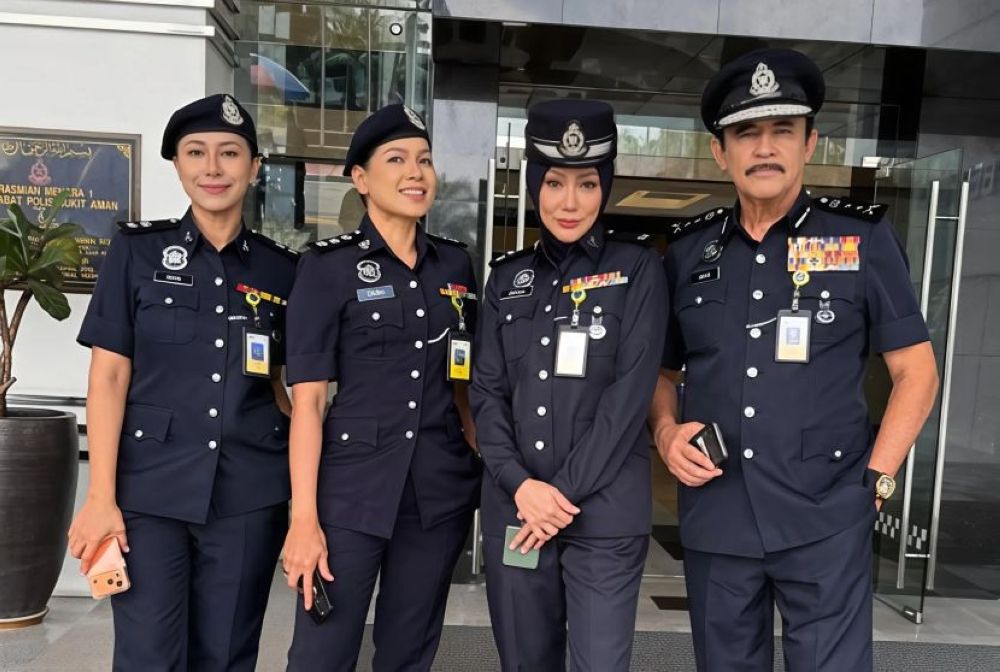
The production team behind Gerak Khas 2.0 has made the decisive choice to remove an actress from the upcoming 26-episode drama following her arrest on drug-related charges, with producer Datuk Yusof Haslam declaring that there is no room for redemption once such lapses occur. The actress tested positive for three types of drugs during a police raid by the Dang Wangi district headquarters on July 7, prompting the production company to take swift corrective action to protect the show's credibility and the reputation of the Royal Malaysia Police, which serves as the backdrop for the series.
Yusof explained that the timing of the incident, coming just a week after the drama's premiere, presented a manageable challenge for the production schedule. With approximately 90 percent of the 26-episode series already completed by the time of the arrest, the production team faced only around two additional weeks of filming. The actress still appeared in material scheduled for episodes 23 and 24, yet the producer made the call to excise all her remaining scenes entirely rather than attempt to work around her absence or seek solutions that might compromise the production's integrity.
The decision underscores the precarious position that major productions face when cast members encounter legal troubles. Rather than argue about sunk costs or explore negotiation possibilities, Skop Production prioritised maintaining professional standards. Yusof acknowledged that the actress had worked successfully on previous projects without incident, suggesting that her involvement seemed unproblematic during the casting and early production phases. However, he maintained an uncompromising stance once the arrest became public knowledge, treating it as a watershed moment that demanded complete separation from the project.
Yusof's handling of the situation reveals the weight of responsibility that producers feel toward the institutions their dramas represent. He noted that he had repeatedly emphasised to the entire cast and crew the importance of personal conduct that reflects positively on the police force, given that Gerak Khas 2.0 depicts PDRM operations and values. This messaging was not casual or incidental but formed part of the production's foundational cultural expectations. The producer had even separately warned the actress twice before her arrest about the dangers of engaging in activities that could damage the drama's standing or the police force's image.
The producer's response reveals a particular philosophy about consequences and redemption in the entertainment industry. When asked whether he would reconsider his decision or entertain appeals from the actress, Yusof was categorical: he rejected all pleas and excuses, telling her directly that the window for such discussions had closed. His statement—"it's too late"—carries both a practical and moral dimension, suggesting both that the production schedule no longer permits negotiation and that a breach of trust of this magnitude cannot be repaired through explanation or remorse.
Yusof framed his approach as a teaching moment not merely for the actress involved but for the broader creative community. He suggested that the incident serves as a cautionary tale for other performers and crew members, emphasising that once reputational damage occurs, earlier achievements and contributions become secondary in the public memory. His observation that people quickly forget prior good work once scandal erupts reflects a realistic assessment of how entertainment industry accountability operates, particularly when substance abuse is involved.
The producer also acknowledged the inherent limitations of authority figures attempting to shape the personal lives of adult professionals. His analogy comparing cast management to parenting—noting that even conscientious parents cannot fully control the behaviour of all their children—suggests resignation about the boundaries of production leadership. Despite establishing clear expectations and even issuing specific warnings, Yusof could not prevent the actress from making choices that contradicted the production's values and professional requirements.
Gerak Khas 2.0 continues with a substantial ensemble cast that includes established performers Hans Isaac, Erra Fazira, C. Kumaresan and Salina Saibi. The police inspector roles, which form the narrative spine of the drama, are portrayed by Tisha Shamsir, Nabiha Aimi, and Emily Elizabeth, providing continuity for viewers despite the departure of one cast member. The drama's connection to the original Gerak Khas franchise—one of Malaysia's most iconic police procedural series—elevates expectations around professionalism and public image.
The decision to completely remove the actress's scenes rather than leave them as filmed represents a significant financial and creative commitment. It requires re-editing episodes, potentially adjusting narrative threads, and accepting that completed work will not appear in the final product. Such drastic measures are typically reserved for situations where producers believe that the reputational risk of inclusion outweighs the sunk costs of removal. The fact that Yusof chose this path despite having already invested resources suggests the depth of his concern about associating the drama—and by extension, the police force—with an actress dealing with serious criminal charges.
This episode highlights tensions within Malaysia's entertainment industry between inclusivity and accountability, second chances and professional standards. The Gerak Khas 2.0 situation suggests that when dramatic works are explicitly designed to represent and enhance the image of government institutions, producers operate under heightened pressure to maintain that alignment. The actress's arrest, regardless of its legal outcomes, effectively disqualified her from participation in a project where her public persona becomes inseparable from the institution being dramatised.
For Malaysian viewers and the broader regional audience, the producer's swift action may signal either admirable institutional protection or inflexibility toward human fallibility, depending on perspective. What remains clear is that in high-profile productions connected to government bodies, allegations or convictions can have immediate professional consequences that extend well beyond the legal system's judgments. The completion status of Gerak Khas 2.0's filming meant the production possessed flexibility that other projects might lack, yet Yusof's unequivocal choice suggests principle rather than mere convenience drove the decision.

