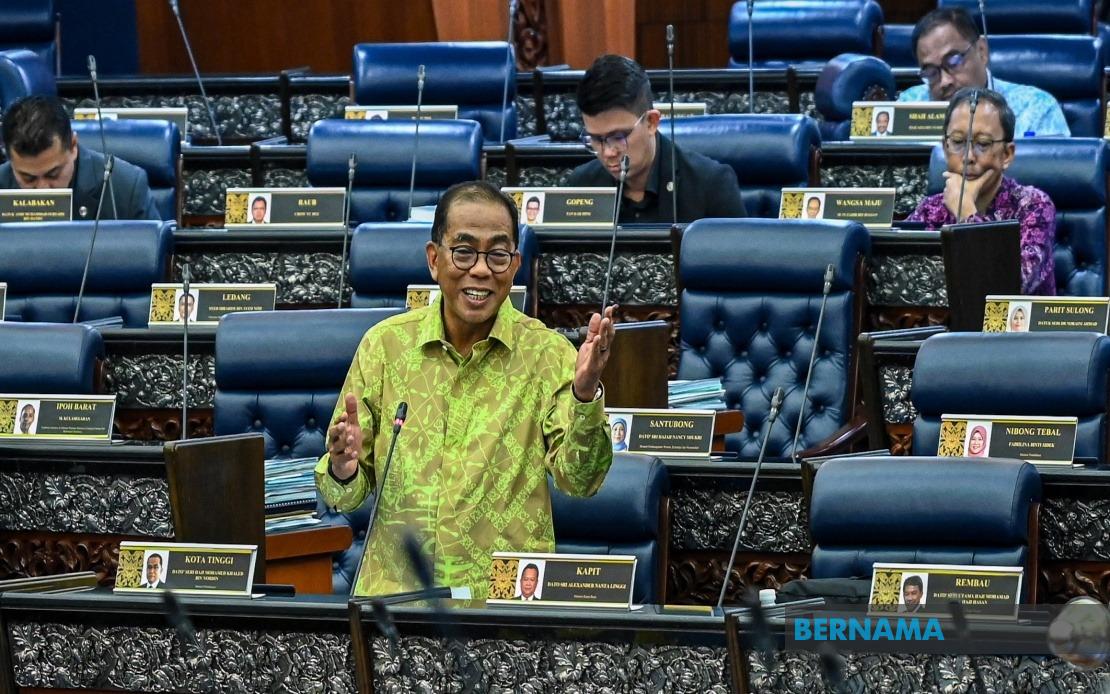
Defence Minister Datuk Seri Mohamed Khaled Nordin has announced that a complete investigative report into the grenade explosion that killed two military personnel at Hobart Camp Firing Range in Gurun, Kedah, will be ready for submission on July 23. The incident, which occurred during a Combat Enhancement Training exercise on June 16, claimed the lives of Lance Corporal Siti Khadijah Sungip and Sergeant Norazmi Abu Bakar, both of whom sustained catastrophic injuries in the blast inside a bunker and succumbed while being evacuated to Sultan Abdul Halim Hospital in Sungai Petani.
The Defence Ministry established a board of inquiry immediately after the tragedy, convening its proceedings on June 17, 2026. While the initial investigation report was submitted to the 2nd Division Headquarters and Army Western Field Command Headquarters, the ministry determined following its review that further examination was warranted. When the findings reached the Defence Ministry on July 13, officials identified gaps in the investigative process, prompting the decision to recall witnesses for additional questioning and potentially gather statements from other individuals with relevant knowledge of the incident.
Mohamed Khaled stressed that this methodical approach reflects the gravity with which authorities are treating the matter. The explosion occurred at approximately 10.57 am during the training exercise, and the decision to conduct more comprehensive questioning ensures that technical elements, operational protocols, and eyewitness accounts are fully documented and cross-referenced before definitive conclusions are drawn about what caused the tragedy. This measured pace, while extending the investigation timeline, reflects institutional commitment to establishing the precise sequence of events and identifying any procedural breakdowns.
In response to parliamentary questions from Datuk Mohd Isam Mohd Isa of Tampin, the Defence Minister revealed the immediate steps taken to prevent recurrence. Army Chief General Tan Sri Azhan Md Othman issued a directive for the temporary suspension of all grenade-throwing exercises across the armed forces following the incident. Additionally, a comprehensive special inspection was ordered for all remaining grenades held by the 1st Squadron of the Royal Engineer Regiment, signalling that ordnance management across military training facilities has come under heightened scrutiny.
The tragedy has prompted systemic safety enhancements that extend beyond the immediate investigation. The ministry has rolled out several infrastructure and procedural improvements designed to bolster safety standards at firing ranges nationwide. Among these measures is the installation of closed-circuit television cameras at all range facilities, enabling real-time monitoring and post-incident forensic review of training activities. Body-worn cameras are being introduced for personnel directly involved in explosive ordnance handling, creating an additional layer of documentation for hazardous training scenarios.
Perhaps most significantly, the Defence Ministry has implemented a casting policy for ammunition and explosives that will establish and track the service life of all ordnance in military inventory. This initiative addresses a critical gap in equipment management, as grenades and other explosive devices deteriorate over time and can become unpredictable or unsafe if used beyond their intended operational lifespan. By creating a systematic framework to monitor and retire aging munitions, the armed forces aim to eliminate one potential source of catastrophic failure during training exercises.
The Gurun incident has exposed vulnerabilities in training protocols that military planners across Southeast Asia and beyond have grappled with for decades. Grenade-throwing exercises are inherently hazardous, involving the detonation of explosive devices in close proximity to personnel. While such training is essential for developing combat readiness, the margin for error is minimal, and equipment failures or procedural lapses can rapidly escalate to tragedy. The Malaysian Armed Forces' response demonstrates recognition that organisational culture and systematic safeguards must evolve continuously to protect personnel engaged in dangerous but necessary preparation for operational roles.
For Malaysian defence planners, this incident underscores broader questions about force modernisation and institutional governance. As the armed forces undergo capability upgrades and operational restructuring, training infrastructure and safety protocols warrant equivalent investment. The measures announced—surveillance systems, documentation requirements, and ordnance lifecycle management—represent relatively modest expenditures relative to their potential to prevent loss of life. Implementation timelines and resource allocation for these improvements will reveal institutional commitment.
The parliamentary scrutiny represented by Mohd Isam's questions reflects legitimate public interest in military safety. Malaysians expect that personnel volunteering to serve their country in uniformed roles receive adequate protection and that training activities are conducted with maximum regard for life. The transparency with which Defence Minister Mohamed Khaled addressed the matter, providing specific timelines and detailing investigation proceedings, contributes to public confidence in institutional accountability mechanisms. However, the delayed completion of the inquiry—with the final report not expected until late July—indicates the complexity of reconstructing precisely what occurred during the lethal blast.
Regional defence establishments will likely monitor Malaysia's investigation closely. Southeast Asian militaries operate in environments where resources for training infrastructure investment are often constrained, and institutional practices governing ammunition management and training safety protocols vary significantly across nations. The Malaysian case provides instructive evidence regarding how explosives-related incidents are investigated, how accountability is assigned, and how lessons translate into preventive measures. As the region's defence forces contend with increasingly demanding training requirements to address contemporary security challenges, the priority accorded to personnel safety becomes a defining characteristic of professional military organisation.
The July 23 submission date represents a critical juncture. Once the board of inquiry submits its findings, Defence Ministry officials must determine what disciplinary or procedural actions are warranted, which units or personnel bear responsibility, and how the specific causative factors—whether technical equipment failure, human error, or procedural inadequacy—should inform broader institutional reforms. The announcement of improved safety measures suggests that officials anticipate systemic deficiencies rather than isolated lapses, a conclusion that carries implications for training programmes across multiple military branches and facilities.

