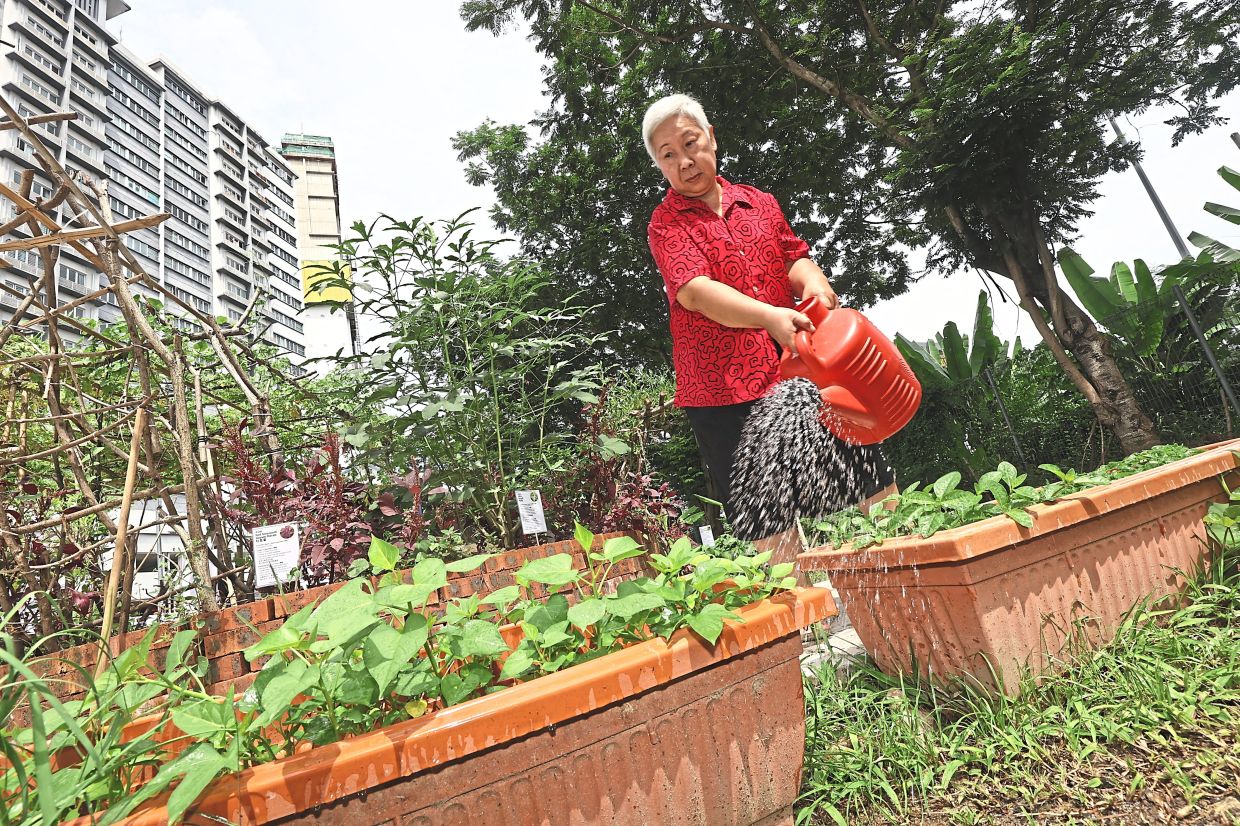
An overgrown patch of land behind 1Razak Mansion in Kuala Lumpur has undergone a remarkable transformation over the past six months. What was once a neglected corner, choked with wild vegetation and serving little community purpose, now stands as a carefully cultivated garden brimming with herbs, vegetables, fruit-bearing plants and flowers. The 1Razak Mansion Food Forest, officially launched recently through collaboration between social enterprise PWD Smart FarmAbility, building management, and residents, represents an innovative response to the specific demographic needs of this urban residential complex.
The project holds particular significance given the resident profile at 1Razak Mansion, where approximately 80% of households are headed by senior citizens. During the launch, Minister in the Prime Minister's Department (Federal Territories) Hannah Yeoh highlighted how traditional recreational programmes at the complex, such as tai chi classes, primarily address physical wellness. Yet mental health requirements among elderly populations deserve equal priority, she emphasised, and communal agricultural spaces can serve as meaningful therapeutic environments that extend well beyond conventional exercise routines.
For 64-year-old resident Alice Fernandez, the food forest addresses multiple dimensions of wellbeing simultaneously. The garden creates opportunities for purposeful activity that older residents can undertake at their own pace, without the physical demands of off-site recreation. More pragmatically, the shared garden reduces household food expenses by enabling residents to harvest fresh produce directly, easing financial pressure on those living on fixed retirement incomes. Yet beyond these tangible benefits lies something equally valuable: the psychological impact of tending living plants, connecting with nature, and contributing visibly to a communal space. Without such an environment, Fernandez observes, many elderly residents face the isolation and mental stagnation of remaining confined to their units.
The garden has already integrated itself into residents' daily routines. Fernandez has made the food forest a regular stop during her morning jog, and she frequently returns during leisure time to water plants and assist with upkeep. This organic adoption by the community demonstrates how well-designed public space can naturally encourage engagement rather than requiring enforcement. The location itself proved pivotal to success—proximity to the garbage disposal area had previously made the spot undesirable, but beautification has reversed its standing from neighbourhood nuisance to cherished amenity.
Thieeben Sivabalasingam, 38, worked behind the scenes managing logistics during the garden's construction phase. His perspective, having witnessed the project evolve from bare earth to mature planting, underscores the communal effort required. When he first arrived to transport materials during the site-clearing phase, the eventual landscape remained difficult to visualise. Yet returning weekly to find careful progress—fences erected in proper alignment, materials thoughtfully arranged—reminded him of the collective commitment to realising the vision. Standing in the completed garden with his three-year-old son Aiden, Sivabalasingam recognised that the project extends its benefits across generations, introducing younger residents to sustainable food cultivation and environmental stewardship.
The psychological dimension that community members repeatedly emphasised cannot be overstated. Sivabalasingam articulated what many elderly residents intuitively understand: the importance of having activities that generate daily purpose and anticipation. Beyond nutritional benefits from homegrown food, the garden provides something more fundamental—a reason to rise each morning, a concrete focus for attention and effort, and participation in something valued by the broader community. For populations facing post-retirement identity transitions and social isolation, such activity spaces offer therapeutic value that pharmaceutical interventions cannot replicate.
The initiative attracted interest from neighbouring communities as well. Jenny Wong, 70, and her husband KC Wong, 76, travelled from the adjacent Razak City Residences to attend the launch. Both recognised the garden's value as a healthful hobby while simultaneously advancing environmental goals. KC articulated what many retired residents with available time recognise—the desire to contribute meaningfully to their residential communities through active stewardship. The Wongs hoped their own community would soon pursue similar initiatives, reflecting broader appetite for participatory, purpose-driven programmes among Malaysia's growing senior population.
Dr Billy Tang Chee Seng, 60, who founded PWD Smart FarmAbility, conceptualises the food forest as foundational infrastructure for more expansive community development rather than a concluded project. Future phases include installing a kitchen hub within the garden where residents can learn cooking techniques utilising harvested ingredients, formalising agricultural knowledge through educational programmes, and introducing younger residents to soil science and microbiology through microscope-based learning. These additions would transform the garden from passive recreational space into an intergenerational learning environment combining practical skill development with scientific literacy.
The broader implications extend beyond 1Razak Mansion itself. Urban agriculture initiatives tailored to demographic realities face mounting importance as Malaysia's population ages. Senior-friendly food production spaces address multiple policy objectives simultaneously: food security, mental health promotion, social cohesion, environmental sustainability, and healthy ageing. The model demonstrates how underutilised urban land can be repurposed to deliver meaningful community benefits when designed with specific resident needs in mind. As other Malaysian residential complexes encounter similar demographic shifts toward older populations, the 1Razak Mansion experience provides a replicable framework for stakeholders considering comparable interventions.
The project ultimately exemplifies how thoughtful urban planning intersects with social enterprise to address genuine community needs. By converting abandoned space into a resource that simultaneously produces food, generates purposeful activity, and strengthens social bonds, the food forest embodies integrated development that recognises elderly residents as active community participants rather than passive beneficiaries. As the initiative expands through planned educational components and potential replication elsewhere, it signals growing recognition that thriving communities require intentional investment in environments supporting wellbeing across the full lifespan, with particular attention to populations like senior citizens whose needs have historically received insufficient spatial or programmatic consideration.

