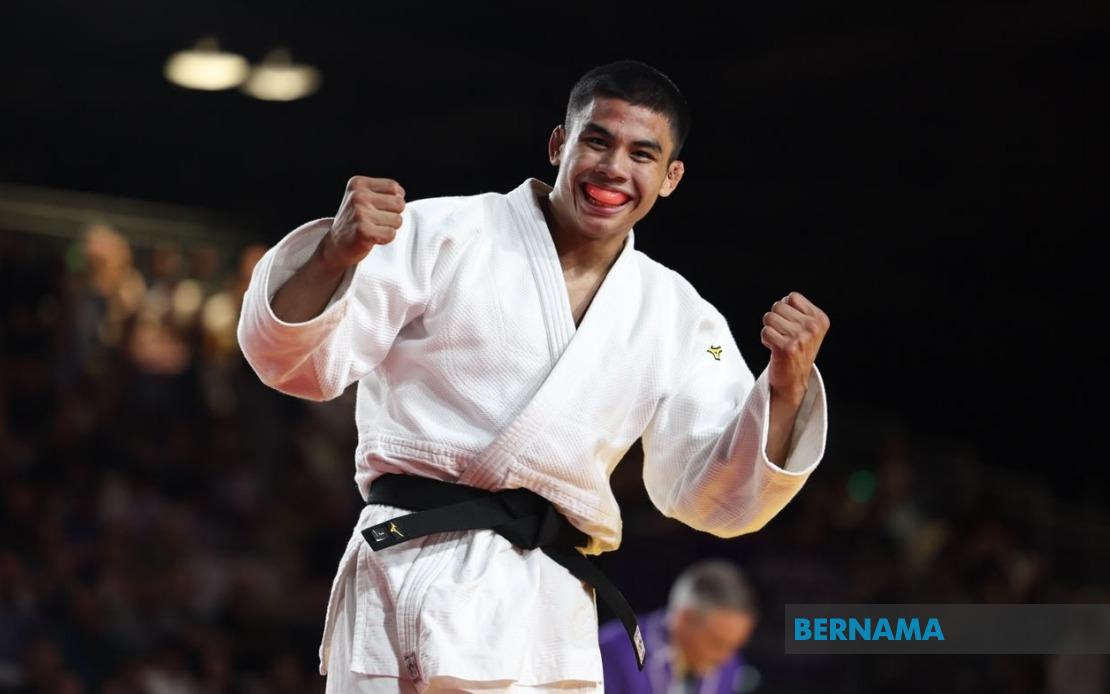
Amir Daniel Abdul Majeed has etched his name into Malaysian sporting folklore by becoming the country's first judoka to claim gold at the Commonwealth Games, a breakthrough moment that arrives after two decades of dedicated training and unwavering personal discipline. At the Scottish Event Campus in Glasgow yesterday, the 21-year-old delivered a commanding performance to defeat South Africa's Timothy Meuwsen in the men's under-81 kilogramme final, securing Malaysia's eighth gold medal at the Games and cementing his status as one of the nation's most promising young athletes.
Behind this championship victory lies a story rooted not in the dojo but in childhood stubbornness and maternal ingenuity. When Amir Daniel was just four years old, his mother Yeoh Suatkhim faced the familiar parental challenge of breaking her son's thumb-sucking habit. Rather than resorting to scolding or punitive measures, she recognised something intriguing in the boy's nature—a capacity for single-minded focus that could be redirected toward productive goals. She offered him a simple bargain: discontinue the habit, and a cherished storybook would be his. Yeoh recalls that her son abandoned the behaviour almost immediately, driven entirely by the promise of that single reward, a testament to his remarkable ability to commit to self-improvement even at such a tender age.
This early display of determination would prove formative to Amir Daniel's character development well into adulthood. Yeoh has consistently observed that whenever her son sets his mind to achieving something, he pursues it with an intensity that transcends typical childhood motivation. This quality became increasingly evident as he matured, particularly once organised sport entered his life. At the age of five, Amir Daniel was introduced to judo under the tutelage of national coach Md Nashriq Md Nassir, a relationship that would define the next sixteen years of his athletic and personal development.
Md Nashriq's influence extended far beyond technical instruction on the mat. For Yeoh, the coach emerged as a trusted advisor regarding her son's broader upbringing, encompassing educational priorities, disciplinary standards, and character formation. When Amir Daniel faced critical examination periods, his mother would confer with Md Nashriq to establish informal agreements that ensured academic obligations remained central to the teenager's priorities. The young judoka developed a profound respect for these commitments, understanding that promises made to his coach carried absolute weight. Yeoh credits this coaching relationship as instrumental to her son's holistic development, suggesting that without Md Nashriq's guidance and consistent presence, Amir Daniel's trajectory might have followed an entirely different path.
The Glasgow triumph represents the culmination of this long partnership and philosophical approach to athletic development. Amir Daniel's previous appearance at the Commonwealth Games in Birmingham 2022 yielded a bronze medal in the men's under-73 kilogramme category, providing valuable international experience but also illustrating the significant gap between podium finishes and standing atop the hierarchy. His weight division increase and technical refinement over the intervening four years demonstrate the kind of methodical progression that characterises elite athletic careers. The gold medal, however, represents something categorically different—not merely competitive success but the realisation of a historic achievement for Malaysian judo on the Commonwealth stage.
For Malaysian sports, this victory carries particular significance given the nation's relatively modest track record in judo at major international competitions. Southeast Asian nations compete in a complex global landscape where judoka from traditional powerhouses in Europe and Asia often dominate Commonwealth and Olympic rankings. Amir Daniel's breakthrough therefore signals the emergence of Malaysian judo as a competitive force, potentially inspiring younger athletes and demonstrating that sustained, systematic development can produce champions capable of defeating established international rivals. His defeat of a South African opponent in particular underscores that this is not a regional achievement but a globally credible victory.
Yeoh's parenting philosophy regarding childhood exposure to sports and structured learning has manifested across both her children. Her eldest daughter Nur Yasmeen similarly benefited from this framework of engagement in meaningful activities from an early age, establishing patterns of discipline and ambition. When Amir Daniel subsequently chose to pursue judo seriously, he entered a household culture already oriented toward athletic excellence and intellectual development. This familial context helps explain how he managed the demanding balance between elite-level sport and educational responsibilities—not through compartmentalisation but through integration of both as mutually reinforcing life priorities.
Looking forward, Yeoh has articulated ambitious aspirations for her son that extend beyond Commonwealth success. The family openly acknowledges Olympic participation as the ultimate target, a goal that requires progression through increasingly competitive international tournaments and continued technical refinement. At 21, Amir Daniel possesses time to mount a credible Olympic campaign, particularly given the strength he has already demonstrated at Commonwealth level. His competitive window for Olympic selection likely spans the next six to ten years, during which his physical maturity and experience will deepen further.
Yeoh's remarks emphasise that her son intends to pursue these elevated goals while simultaneously maintaining academic commitments and contributing to the broader Malaysian judo community through mentorship of younger judokas. This multi-dimensional approach to ambition—balancing personal Olympic aspirations with community responsibility and intellectual development—reflects the values instilled by both his family and coaching environment. Rather than viewing these objectives as competing priorities, Amir Daniel appears to have internalised them as interconnected elements of a purposeful life.
The Commonwealth gold medal therefore represents not merely a personal sporting achievement but validation of a particular approach to athlete development that prioritises character formation, educational balance, and long-term perspective over short-term competitive victories. As Malaysia celebrates this historic breakthrough in judo, the narrative of Amir Daniel—from the child who abandoned thumb-sucking for a storybook to the young man who conquered elite international competition—offers a compelling model for how discipline, family support, and consistent coaching guidance can transform potential into sustained excellence at the highest levels of sport.

