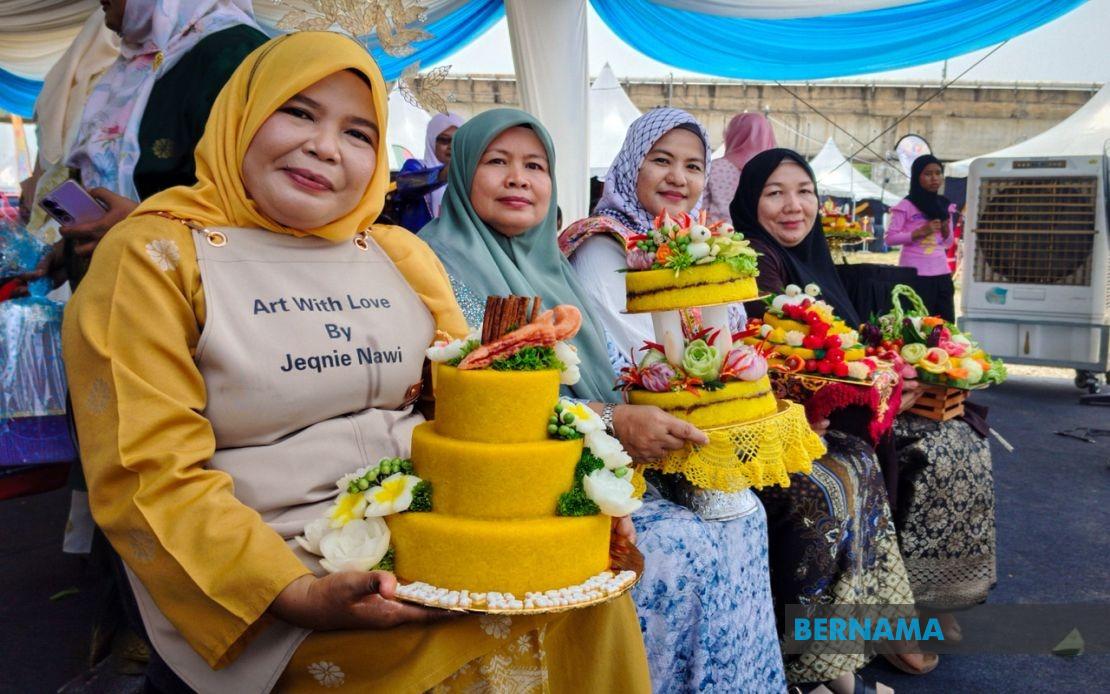
Nortiny Nawi's professional reinvention offers an inspiring portrait of how culinary passion can evolve into sustainable enterprise. Four years after stepping away from her position as a resort marketing officer, the 46-year-old has established a flourishing operation centred on the artful preparation of pulut kuning—the golden turmeric-infused glutinous rice that holds cultural significance in Malay celebrations. Working from her home in Kampung Gong Cokoh in Pasir Puteh, Nortiny has positioned herself at the intersection of traditional food craft and contemporary event catering, capturing market demand that extends well beyond Kelantan's borders.
The journey towards entrepreneurship was neither sudden nor unplanned. During her tenure at the resort, Nortiny cultivated her culinary interests by observing kitchen operations during her downtime, gradually building knowledge and confidence in food preparation techniques. This period of informal apprenticeship proved foundational, allowing her to develop the foundational skills that would later distinguish her independent venture. Rather than treating cooking as a hobby confined to weekends and gatherings, she made the deliberate decision to pursue it as her primary livelihood—a choice that reflects broader trends among Malaysian professionals seeking meaningful work aligned with their genuine interests.
The pricing structure of her pulut kuning arrangements reveals the tiered nature of her operation. Individual orders range from RM100 to RM280 per arrangement, a span determined by two critical variables: the weight of glutinous rice required and the intricacy of decorative design requested. This pricing model demonstrates sophisticated understanding of value-added production in artisanal food services, where customization commands premium rates. Her recent triumph at the Kelantan Folk Arts Festival (FKRK), where she won top prize with an eight-kilogramme creation adorned with white radish carvings, validates both the quality of her work and its recognition within formal cultural spaces.
What distinguishes Nortiny's operation within Malaysia's broader micro-enterprise landscape is her capacity to handle substantial order volumes. She manages up to six commissions daily, contingent upon design complexity—a figure that underscores both the consistency of customer demand and the physical limitations of her production model. Her clientele spans individual consumers, educational institutions, and government departments throughout Kelantan, suggesting that pulut kuning arrangements have transcended purely ceremonial contexts to become institutionalized elements of official functions and school celebrations.
The operational realities of pulut kuning production impose demanding constraints that distinguish this work from allied culinary ventures. Unlike cakes or pastries that can be prepared ahead and refrigerated, pulut kuning arrangements require same-day preparation. Nortiny's typical workday begins at 3 am, when she initiates the steaming process for glutinous rice. The subsequent stages—kneading, cooling, and shaping into intricate patterns—demand continuous attention and cannot be compressed into standard working hours. This labour-intensive approach necessitates exceptional time management and physical stamina, yet Nortiny frames these challenges not as burdens but as expressions of her commitment to quality and customer satisfaction.
The decorative components of her arrangements represent another dimension of her artisanal approach. White radish carvings and other vegetable-based embellishments require both technical skill and artistic vision, transforming functional food into visually compelling centrepieces suitable for significant social occasions. This elevation of pulut kuning from everyday sustenance to premium celebration centrepiece reflects evolving consumer expectations within Malaysian event spaces, where presentation and aesthetic sophistication increasingly command market value.
Nortiny's trajectory illuminates the economic viability of culturally-rooted small enterprises within Malaysia's entrepreneurship ecosystem. Her transition from salaried employment to independent business operation represents the kind of skills-to-enterprise conversion that policy makers increasingly encourage. Rather than requiring significant capital investment or complex supply chains, her business model relies primarily on her expertise, home facilities, and direct customer relationships—a structure particularly suited to the contemporary gig and direct-to-consumer economy.
The psychological dimension of her work cannot be overlooked. Nortiny explicitly identifies customer appreciation as her primary motivation, suggesting that the satisfaction derived from creating products that enhance significant life events sustains her through demanding physical labour. This intrinsic motivation—distinct from purely financial return—often characterizes successful artisanal and craft-based enterprises, where practitioners continue investing substantial effort despite accessible alternative employment.
Looking forward, Nortiny's stated ambition to establish larger premises reflects her confidence in sustained business growth. This expansion plan signals her intention to scale operations while maintaining quality standards, potentially moving beyond home-based production constraints. Such development would align her operation with formalised business structures while presumably allowing for modest workforce expansion, though the specialized nature of pulut kuning preparation likely means significant personal involvement will remain essential.
For Malaysian policymakers and entrepreneurs evaluating economic development strategies, Nortiny's experience offers relevant insights. Her success demonstrates that culturally-embedded food traditions can generate viable commercial opportunities within regional economies, particularly when practitioners combine technical skill with market awareness and customer service orientation. The existence of consistent demand across multiple customer categories—individuals, schools, and government bodies—suggests that pulut kuning arrangements occupy a genuine market niche rather than representing ephemeral consumer fashion.
Her achievement also reflects broader patterns within Southeast Asian entrepreneurship, where family-based, skill-dependent enterprises continue generating meaningful income despite the prevalence of formal employment sectors. As automation and digital transformation reshape labour markets, individuals like Nortiny exemplify alternative pathways to economic security and professional fulfilment.

