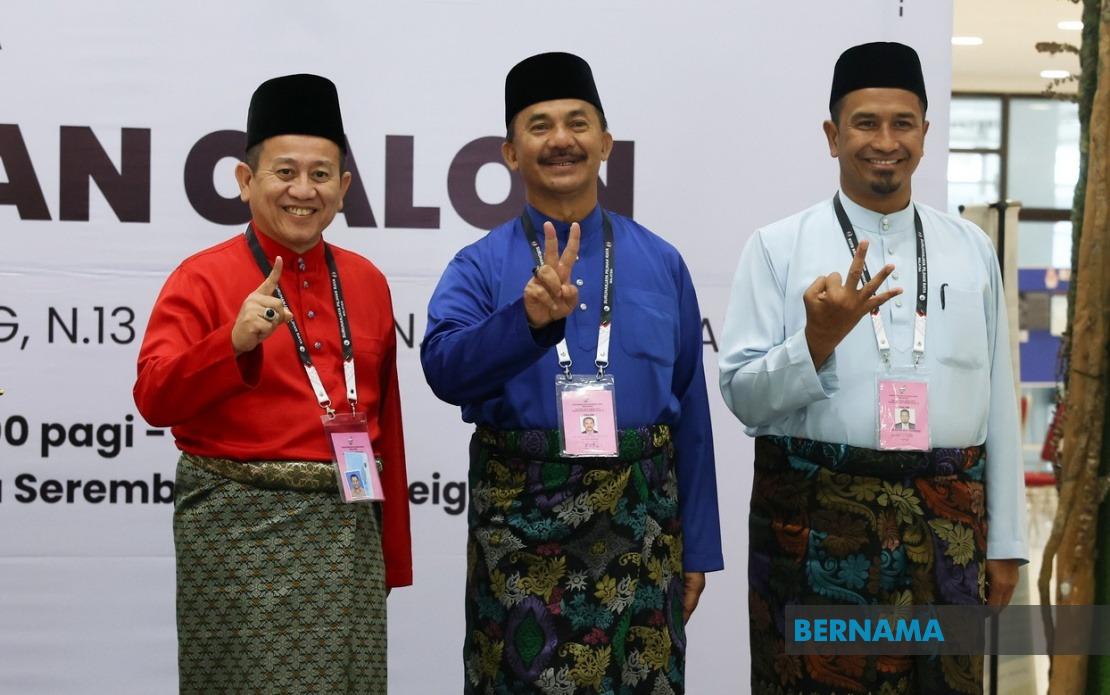
Negeri Sembilan voters will encounter a notably refreshed political landscape when they head to polling stations on August 1, as Malaysia's major political coalitions have opted to blend experienced legislators with an influx of new candidates vying for control of the state's 36 assembly seats. The combination of familiar faces and newcomers across Pakatan Harapan (PH), Barisan Nasional (BN), Perikatan Nasional (PN), and smaller parties represents a strategic shift in how these coalitions are approaching the 16th state election, providing the electorate with alternative choices beyond the traditional political establishment.
Pakatan Harapan is contesting all 36 available seats and has committed considerable resources to the election by recruiting 24 fresh candidates to join its slate. This substantial injection of new blood into PH's lineup indicates a deliberate attempt to project dynamism and appeal to voters seeking change, whilst retaining experienced representatives in key constituencies. Alongside these newcomers, PH is relying on established figures to anchor its campaign, most notably Negeri Sembilan PH Chairman Datuk Seri Aminuddin Harun, who has strategically relocated his political base from the Sekamat constituency to contest Linggi instead, a move designed to strengthen party positioning in a potentially vulnerable electoral landscape.
The coalition's heavyweight contingent also includes DAP Secretary-General and Transport Minister Anthony Loke, who will defend his Chennah seat, thereby ensuring a strong ministerial presence in the state's political discourse. Loke's participation underscores PH's commitment to maintaining federal influence within Negeri Sembilan's state politics, linking local legislative outcomes to broader national governance priorities. His re-election would reinforce PH's role in managing national transport infrastructure policy whilst maintaining grassroots support in his home state.
Barisan Nasional is adopting a similarly balanced approach by fielding 13 new candidates from its total slate of 25, positioning the coalition as neither overly dependent on aging political structures nor completely abandoning institutional experience. UMNO Deputy President and Foreign Minister Datuk Seri Mohamad Hasan will defend the Rantau seat, providing BN with a senior federal figure whose involvement legitimizes the coalition's state-level ambitions and potentially influences voter perceptions of BN's national standing. Alongside Hasan, Barisan Nasional State Chairman Datuk Seri Jalaluddin Alias is seeking re-election in Pertang, a seat he won during the 2023 state election, representing continuity in BN's administrative representation.
Interestingly, UMNO's Datuk Ismail Lasim has opted not to defend his previously won Senaling seat, instead pivoting to contest Juasseh, a tactical repositioning that suggests internal party calculations about battleground constituencies and electoral vulnerabilities. Such maneuvers within BN's candidate selection reveal the complex strategic considerations governing coalition politics in Negeri Sembilan, where marginal seats and demographic shifts necessitate careful deployment of available political resources.
Perikatan Nasional is contesting 11 seats through its component parties including PAS, Gerakan, Wawasan, and the Malaysian Indian People's Party, comprising a smaller but strategically significant electoral presence. Meanwhile, Parti Pribumi Bersatu Malaysia, which previously contested under the PN banner during the 2023 elections, has elected to run under its own party logo this time, a symbolic departure suggesting organizational independence or shifting political calculations within the broader opposition alignment. Bersatu's Information Chief Datuk Tun Faisal Ismail Aziz represents the party's new candidate contingent, whilst party chairman Hanifah Abu Bakar will defend the Labu seat, reflecting Bersatu's efforts to maintain both generational succession and electoral continuity.
Beyond the three major blocs, the electoral contest encompasses representatives from smaller parties and independent candidates, creating a fragmented but vibrant political marketplace. Parti Berjasa, Parti Orang Asli Malaysia, and Parti Sosialis Malaysia are each fielding single candidates, alongside four independent contenders, collectively enriching the diversity of political choice available to Negeri Sembilan's voters. This proliferation of candidacies, whilst potentially diluting vote shares, nonetheless demonstrates active political participation across the ideological spectrum and geographic breadth of Malaysian society.
The candidate pool itself exhibits striking demographic variation, with ages spanning from 23 to 70 years. Bersatu's Sri Tanjung candidate Leevineshwaraan Murugan at 23 represents the election's youngest aspirant, embodying the generational renewal many parties are emphasizing, whilst PH's Gemencheh candidate Datuk Abd Latiff A Tambi at 70 exemplifies the experienced cohort whose institutional knowledge and established networks remain valuable political assets. This generational spectrum reflects broader Malaysian society whilst highlighting how political parties navigate the tension between youth mobilization and veteran resource deployment.
With 103 candidates confirmed following the nomination closure at 10 am, the electoral field has solidified into its final configuration, establishing the parameters within which voters must exercise their democratic choice. The sheer number of contenders demonstrates robust political competition and engagement across multiple constituencies, suggesting that few seats will remain uncontested or subject to administrative appointments. This competitive saturation may complicate vote-splitting scenarios, potentially advantaging well-organized parties with coherent messaging and established ground networks.
The Election Commission's scheduling of early voting for July 28, with polling day set for August 1, provides both voters and election administrators clear timelines for preparation and participation. The compressed campaign period between nomination closure and voting day necessitates efficient candidate mobilization and messaging delivery, potentially favoring established parties with existing organizational infrastructure over newcomers requiring rapid constituent base-building. For Malaysian observers, the Negeri Sembilan election serves as a barometer for emerging political trends, coalition stability, and voter sentiment in a relatively compact state election environment.
The apparent strategic emphasis by all major coalitions on fielding significant numbers of new candidates suggests broader recognition that electoral competitiveness increasingly demands political renewal and generational transition. Voters in Negeri Sembilan will effectively determine whether these fresh faces can credibly challenge established political arrangements or whether traditional power structures retain decisive electoral advantages despite cosmetic candidate rotations. The outcome will likely provide valuable insights into whether Malaysian voters prioritize stability and experience or embrace political change and renovation.

