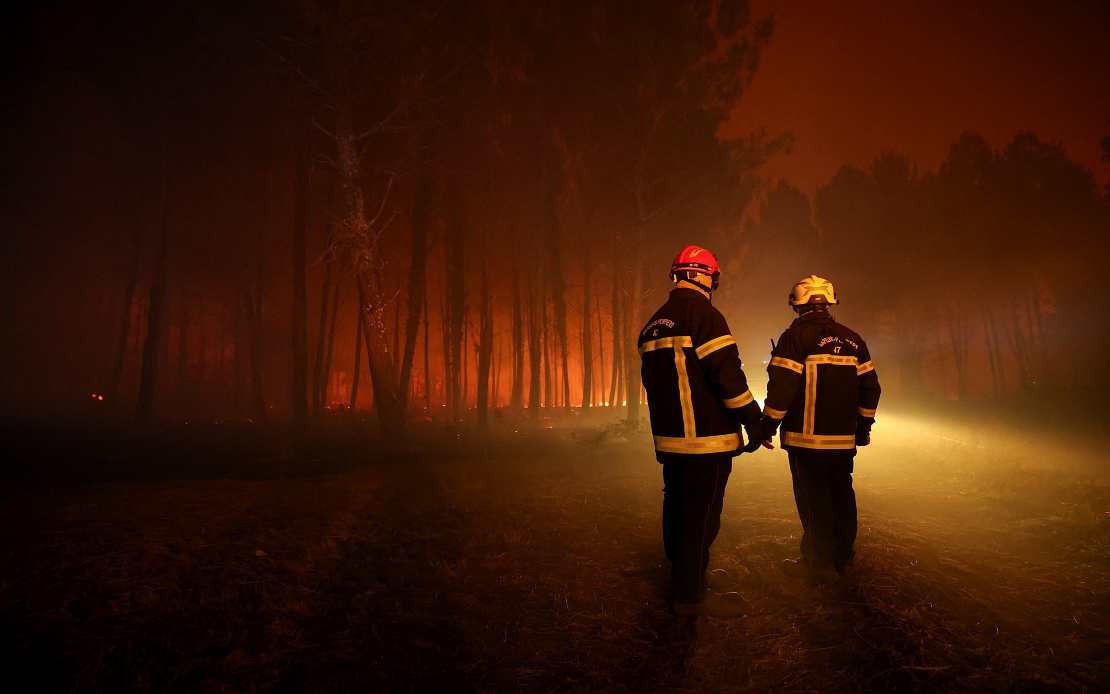
A 15-year-old teenager in France faces formal charges following a devastating fire in Merignac, located near Bordeaux airport, that resulted in the deaths of two firefighters last month. The youth was presented before a judge on Thursday and subsequently placed in a closed educational facility pending further proceedings, according to reports from broadcaster BFMTV. The case has drawn significant attention across Europe, highlighting questions about adolescent accountability and the dangers firefighters face while responding to emergencies.
The teenager and his 22-year-old brother had both been detained by police as investigations into the fire's origins unfolded. However, the investigation took a significant turn when the older brother, arrested on Wednesday, was subsequently released without charges. The turning point came when the younger teenager admitted to his role in starting the blaze, effectively clearing his sibling of any criminal responsibility in the matter. This development underscores how cooperation during police investigations can lead to more targeted prosecutions rather than broad-based allegations.
According to reporting by French daily Sud Ouest, the fire is believed to have originated from a discarded cigarette butt. The sequence of events reportedly involved the two brothers stopping in the Merignac area while smoking. The older brother deliberately extinguished his cigarette in a parking lot, demonstrating what would be considered responsible disposal. The teenager, however, allegedly threw his lit cigarette onto nearby grass, an act that ignited the surrounding vegetation and ultimately triggered the larger structure fire that would prove fatal.
The consequences of what may have begun as a moment of carelessness escalated dramatically when firefighters arrived to combat the spreading blaze. On July 21, two emergency responders lost their lives while battling a building fire that had grown from the initial grass fire. The tragic circumstances involved their emergency vehicle becoming engulfed and trapped by the advancing flames, leaving them unable to escape. This tragic outcome emphasizes the inherent dangers that firefighters confront in their profession, often in situations where public behavior creates preventable hazards.
The Bordeaux prosecutor's office launched a comprehensive investigation immediately following the incident, examining both the specific circumstances of the fire and the technical factors that contributed to its rapid spread and lethality. Such investigations are standard procedure in France when deaths occur in emergency response situations, serving to establish clear causation and determine appropriate legal accountability. The prosecutor's office would have worked closely with fire investigation specialists to reconstruct the fire's progression and identify the precise ignition source.
For Malaysian readers, this case carries relevance beyond its immediate French context. It demonstrates how individual actions, particularly those involving fire hazards, can have catastrophic consequences that extend far beyond the person initiating the danger. Malaysia experiences significant fire challenges, particularly during dry seasons in peninsular regions and in densely populated urban areas, making public awareness about responsible cigarette disposal and general fire safety increasingly important. The case illustrates why education campaigns emphasizing proper waste disposal remain critical public health measures.
The decision to charge the teenager in an educational facility rather than a conventional criminal detention reflects French juvenile justice principles, which prioritize rehabilitation over purely punitive approaches for younger offenders. This approach differs considerably from how various countries handle adolescent criminal responsibility, and it suggests that French authorities view the case as one requiring corrective intervention combined with legal accountability. The placement in a closed educational centre indicates restrictions on the youth's freedom while emphasizing educational and rehabilitative components.
From a broader Southeast Asian perspective, this incident underscores ongoing challenges in fire prevention and the critical importance of public compliance with safety protocols. Many nations in the region contend with similar issues regarding careless fire initiation, whether through discarded smoking materials or other negligent behaviors. The tragic loss of two trained professionals responding to what began as preventable vegetation fire raises important questions about how societies can better promote fire safety consciousness among younger populations.
The release of the older brother represents an important distinction in criminal investigation procedures. Rather than pursuing charges against individuals without direct responsibility, authorities focused their prosecution on the person with demonstrated culpability. This approach reflects modern investigative principles that emphasize proportionality and accuracy in criminal proceedings. It also demonstrates how witness cooperation and confession can streamline investigations and direct enforcement resources toward appropriate targets.
The case will likely influence discussions in France regarding juvenile crime, fire safety legislation, and emergency responder protection measures. As investigations continue and the case progresses through the French legal system, additional details may emerge about the specific conditions that allowed the small grass fire to escalate into a fatal structure fire. Such information could inform future fire prevention strategies and building safety standards, ensuring that lessons learned from tragic incidents contribute to broader protective measures across similar jurisdictions including those in Southeast Asia.

