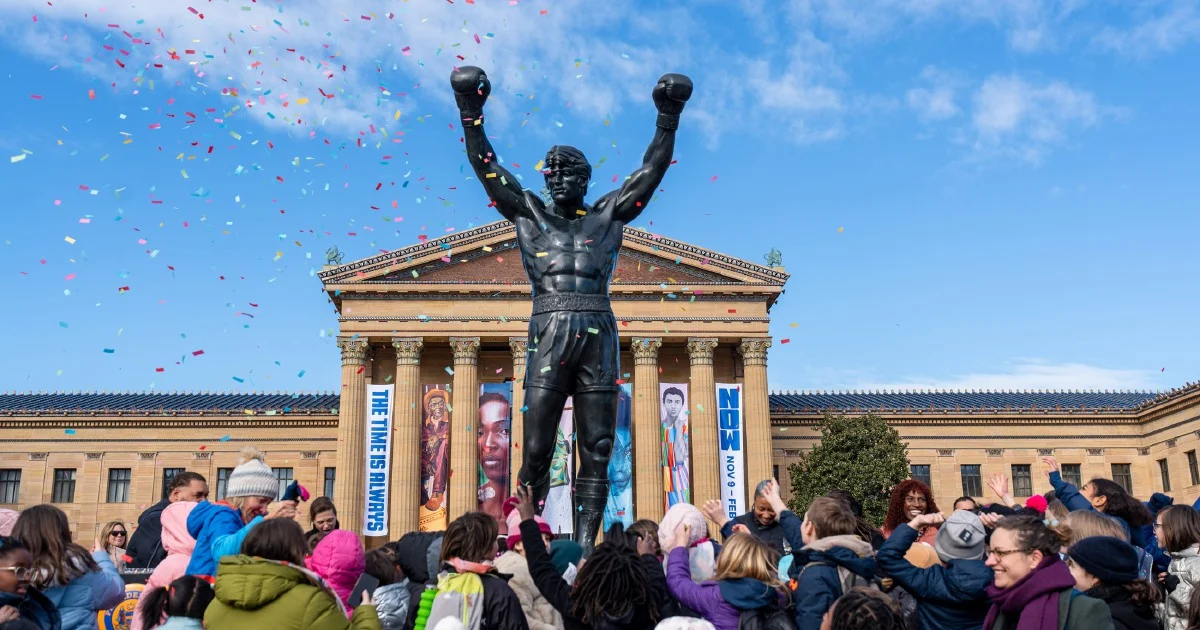
French football fans preparing to support their national team at the World Cup received an unusual caution from Philadelphia authorities on Saturday: leave the city's most famous statue alone. The warning centres on the bronze Rocky Balboa monument, a beloved landmark that has allegedly brought bad luck to numerous sporting teams whose supporters dressed it in their colours during major tournaments.
The superstition surrounding the Rocky statue reflects a curious phenomenon that has unfolded over multiple sporting events. Whenever supporters of competing nations have adorned the sculpture with team scarves, jerseys, or other memorabilia, those teams have subsequently suffered unexpected defeats or early exits from major tournaments. The pattern has become sufficiently notable that local authorities and sports officials now actively discourage such displays, viewing them as potential harbingers of athletic misfortune.
Philadelphia's relationship with the Rocky statue carries deep emotional significance for the city. The sculpture, which depicts the fictional boxer from Sylvester Stallone's iconic film franchise, has become an unofficial symbol of Philadelphia's working-class spirit and underdog mentality. Standing prominently on the city's streets, the monument draws visitors from around the world who view it as a cultural touchstone and a representation of perseverance against the odds.
The curse narrative gained particular traction following several high-profile sporting disappointments. Teams whose fans engaged in the tradition of dressing the statue found themselves eliminated from tournaments far sooner than expected, creating a self-reinforcing belief among the sporting community that the statue carries genuine predictive power. Whether viewed as genuine superstition or merely coincidence, the pattern has become embedded in sporting folklore surrounding the venue.
For France specifically, the warning carries additional weight. As a dominant World Cup contender with previous tournament victories, the French delegation cannot afford to dismiss even superstitious concerns. The national team arrives at the tournament with expectations of deep tournament progression, making any potential disadvantage—real or imagined—a matter of strategic consideration. The warning thus targets both the supporters' enthusiasm and the team's institutional concern about maintaining every possible competitive advantage.
The advisory represents a practical effort by Philadelphia officials to protect the statue's condition while simultaneously managing the superstition that has become associated with it. By issuing clear warnings before the tournament begins, authorities hoped to discourage French supporters from engaging in the tradition that allegedly carries negative consequences. This proactive approach acknowledges the statue's cultural importance while attempting to prevent the accumulation of sports regalia that had characterised previous occasions.
Such superstitions permeate international football culture, particularly during World Cup tournaments when heightened emotions and global attention magnify both the significance and the perceived importance of even minor details. Fans often believe that their actions—from wearing specific clothing to avoiding certain rituals—can influence their team's performance. This psychological investment creates powerful feedback loops where believers interpret outcomes through the lens of their pre-established beliefs.
The Rocky statue warning also illustrates the intersection between urban culture and sporting identity. Philadelphia's monument has transcended its status as a film reference to become a civic icon, and the superstition attached to it adds another layer to its cultural significance. Different cities and nations attach different meanings to shared spaces, and international sporting events create moments when these varying interpretations collide.
For Malaysian readers and Southeast Asian football enthusiasts, the Rocky statue warning offers insight into how sporting traditions differ across cultures and continents. While Southeast Asia has developed its own rich football culture and superstitions, the transatlantic spread of World Cup-related beliefs demonstrates how international sports create shared mythologies that transcend geographical boundaries. The warning also reflects broader patterns in how fans, teams, and officials navigate the psychological dimensions of major tournaments.
The admonition likely carries limited practical impact on French supporters' behaviour, as most international visitors may remain unaware of the supposed curse until specifically warned. However, the symbolic dimension of the warning—acknowledging a belief system serious enough to warrant official attention—underscores how World Cup tournaments operate on multiple levels simultaneously: athletic competition, cultural expression, and psychological narrative all converge around the football pitch.
As France prepares for tournament competition, the Rocky statue warning represents just one element among countless pre-tournament preparations, superstitions, and psychological strategies that teams employ. Whether French supporters heed the Philadelphia caution will reveal something about the tension between rational preparation and superstitious belief that characterises international football at its highest level.

