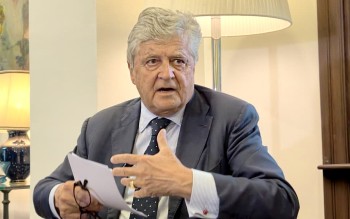
France has extended a formal offer to support Malaysia's potential entry into civil nuclear energy production, positioning itself as a strategic partner in the country's energy transition journey. The proposal comes as Malaysia conducts a comprehensive national review of low-carbon electricity generation options, with nuclear power emerging as a topic of serious government consideration. French Minister Delegate for Foreign Trade and Economic Attractiveness Nicolas Forissier made the overture during his inaugural official visit to Kuala Lumpur, emphasising that any decision to pursue nuclear development would ultimately rest with Malaysia's leadership and public consensus.
The French government's interest reflects a broader diplomatic push to deepen economic and political ties with Southeast Asia's third-largest economy. Forissier's visit, which took place in early July, was not a solo mission but rather the centrepiece of a broader commercial offensive, with more than 20 French companies participating in the delegation. This scale of participation underscores the commercial opportunities that French firms see in supporting Malaysia's energy infrastructure modernisation, particularly in the context of the country's stated commitment to carbon neutrality.
France's credentials in nuclear energy are substantial. Approximately 60 per cent of the nation's electricity generation relies on nuclear power, making it one of Europe's most decarbonised electricity systems. The remainder comes from renewable sources including solar and wind installations. This track record has positioned France as a credible advisor on scaling atomic energy production while maintaining grid stability and environmental responsibility. The French delegation's message to Malaysian policymakers was straightforward: if Malaysia chooses to pursue nuclear energy, France possesses both the technological expertise and industrial capacity to provide comprehensive support.
During his press engagement in Kuala Lumpur, Forissier acknowledged that Malaysia was still in the early deliberative stages of evaluating nuclear energy's role in future electricity supply. He noted that government officials across multiple ministries had engaged in substantive discussions about the technology's potential benefits and challenges. The French official characterised this exploratory phase as precisely the right approach, emphasising that nuclear energy represents perhaps the most effective pathway to decarbonising electricity production on a significant scale. The fact that Malaysia is holding open national debates on the topic suggests serious consideration rather than token discussion.
The question of long-term commitment featured prominently in Forissier's remarks. Nuclear energy, by its technical and economic nature, demands sustained investment and planning over decades. France was signalling to Malaysia that any partnership would need to contemplate a 50 to 80-year horizon, encompassing everything from reactor construction and operation to eventual decommissioning and waste management. This extended timeframe underscores both the complexity of the undertaking and France's willingness to establish enduring institutional relationships with Malaysian counterparts.
The timing of France's nuclear overture aligns with Malaysia's broader energy policy recalibration. The country has committed to ambitious renewable energy targets while simultaneously grappling with the challenge of maintaining reliable baseload power generation. Coal, which has historically provided Malaysia's backbone electricity supply, faces increasing scrutiny from both international climate commitments and domestic environmental considerations. Natural gas, while cleaner than coal, still generates carbon emissions. Within this context, nuclear energy presents a theoretically attractive option for generating substantial quantities of electricity with near-zero carbon output during operation.
Yet Malaysia's path toward nuclear energy, if it proceeds at all, faces significant hurdles beyond the technical domain. Public perception of nuclear safety, waste disposal concerns, and the political economy of transitioning away from established fossil fuel infrastructure all represent substantial obstacles. The French delegation's presence in Kuala Lumpur was as much about building confidence in nuclear technology as it was about commercial opportunity. By bringing senior officials and multiple companies, France was demonstrating institutional commitment to supporting Malaysia through any transition process.
The broader French diplomatic initiative extends well beyond nuclear energy discussions. Forissier's visit represented the latest manifestation of strengthened political engagement between Paris and Kuala Lumpur. The statement released by the French delegation referenced a series of high-level exchanges occurring with increasing frequency. Prime Minister Datuk Seri Anwar Ibrahim had visited France in early July, just days before Forissier's arrival in Malaysia. Additionally, Malaysia's Defence Minister had visited a French aircraft carrier in March 2025, signalling military and strategic dimension to the bilateral relationship. These diplomatic engagements suggest France is pursuing Malaysia as part of a broader Southeast Asian strategy.
For Malaysia, France's nuclear overture arrives at a pivotal moment in energy policy formulation. The country's Twelfth Malaysia Plan and various climate commitments require Malaysia to make substantive choices about its electricity generation mix over the coming decades. While Southeast Asia has historically lagged behind other regions in nuclear adoption—with only limited nuclear installations in the region—growing climate urgency is prompting serious reconsideration. Countries across the region are examining whether nuclear energy could complement aggressive renewable development targets.
The French engagement also carries implications for Malaysia's position within regional and global energy diplomacy. Accepting technical assistance from France would signal Malaysia's pragmatic approach to decarbonisation, rather than ideological commitment to any single technology pathway. This stance aligns with international consensus that achieving net-zero emissions likely requires a diversified energy portfolio. By entertaining French overtures, Malaysia would also be positioning itself to benefit from decades of accumulated French expertise in reactor design, safety protocols, and operational management.
However, the distance between exploring nuclear energy options and making irrevocable commitments remains substantial. Malaysia's government has explicitly stated that it is evaluating rather than deciding, a distinction with real significance. National discussions and debates must occur, with input from energy experts, environmental advocates, local communities, and the general public. The French offer provides one option among several pathways forward, but the ultimate energy strategy adopted by Malaysia will reflect domestic priorities and societal consensus rather than external pressure.
Looking forward, France's diplomatic and commercial positioning suggests sustained engagement with Malaysia on energy matters. Whether this engagement culminates in concrete nuclear partnerships or remains consultative depends on outcomes of Malaysia's ongoing policy deliberations. What is clear is that major industrial democracies like France now recognise Southeast Asia as central to global decarbonisation efforts, and Malaysia's choices regarding energy infrastructure will have implications extending well beyond national borders into regional climate trajectories and geopolitical alignments.

