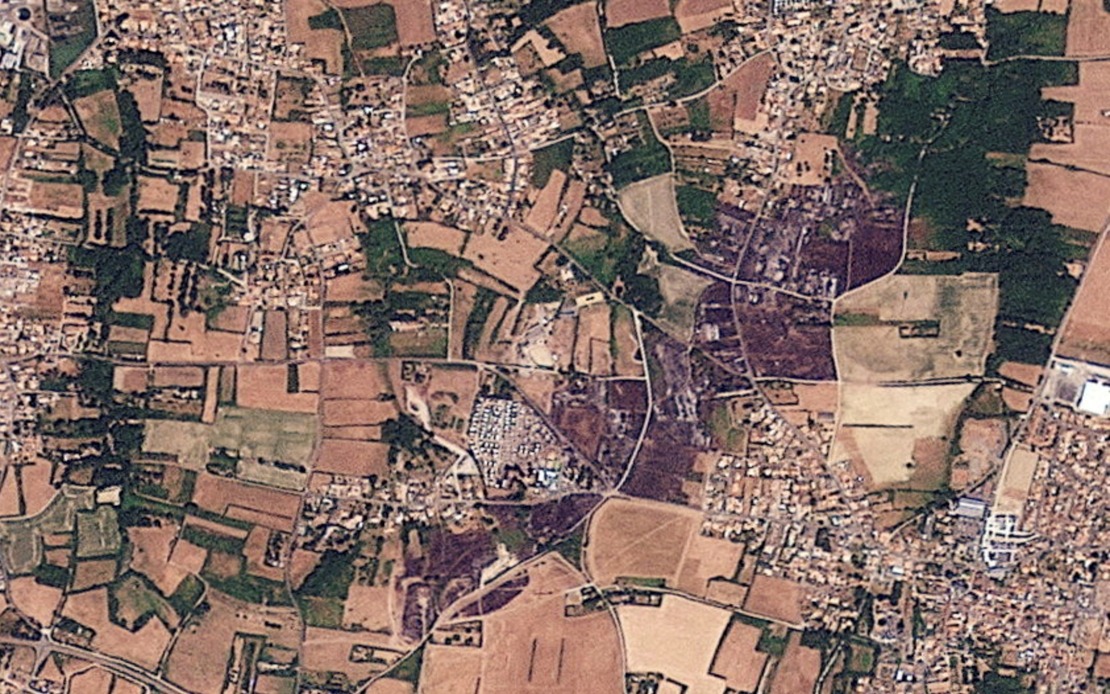
France is facing an intensifying wildfire crisis that has consumed vast tracts of forest and disrupted infrastructure, with two major blazes in the Fontainebleau forest advancing overnight and destroying nearly two thousand hectares of woodland. The dual conflagration, which began on Sunday, represents the latest chapter in what has become a persistent threat to France's natural landscapes, with the first outbreak scorching approximately 1,500 hectares while a secondary fire has devoured between 300 and 400 hectares of additional forest. The scale of destruction has necessitated the deployment of roughly 600 firefighters who remain actively engaged in containment and suppression operations as the blazes continue to pose threats to surrounding areas.
The authorities have moved swiftly to establish a criminal dimension to the unfolding disaster, with investigators arresting two individuals suspected of deliberately initiating the initial Fontainebleau fire. This development underscores a troubling pattern of arson activity across French territory, as the national government has documented 59 arrests of people suspected of intentionally igniting wildfires since the commencement of the fire season. The deliberate nature of these incidents has galvanised political responses from senior officials who view the criminal setting of fires as a matter demanding severe judicial consequences.
French Transport Minister Philippe Tabarot has articulated an uncompromising stance toward those found responsible for arson-related blazes, demanding that courts impose exceptionally stringent penalties on convicted offenders. However, Tabarot's position also acknowledges a medical dimension to the phenomenon, recognising that certain individuals who compulsively set fires may be driven by pyromania, a psychiatric condition requiring therapeutic intervention rather than purely punitive measures. His dual approach reflects a more nuanced understanding of fire causation, distinguishing between criminal negligence or malice and psychological pathology that demands clinical treatment alongside or instead of imprisonment.
Beyond the Fontainebleau crisis, France is simultaneously contending with multiple other wildfire incidents stretching resources and raising concerns about the nation's vulnerability to large-scale forest fires. In the Pyrenees-Orientales region, the Trevillach fire that erupted earlier in July has inflicted damage upon critical railway infrastructure, necessitating extended service suspensions along the Perpignan-Villefranche-Vernet-les-Bains corridor. The state-owned railway operator SNCF has announced that train services between Ille-sur-Tet and Villefranche-Vernet-les-Bains will remain halted until at least July 20, demonstrating how wildfire impacts extend far beyond immediate environmental destruction into broader economic and social disruption.
The northern region of Brittany has also fallen victim to fire activity, with evacuations executed in the Côtes-d'Armor department after a heath fire ignited near Cap Fréhel on Monday. More than one hundred residents were compelled to leave their homes as emergency responders worked to contain a blaze that consumed approximately 38 hectares of protected coastal landscape. Simultaneously, the Lozère region reported that firefighting teams have been battling outbreaks that have destroyed 107 hectares, indicating that the wildfire threat encompasses not merely isolated hotspots but rather a diffuse and challenging national challenge.
For Malaysia and the Southeast Asian region, the escalating wildfire crisis in France carries several instructive implications. While Southeast Asia faces its own seasonal wildfire risks, often driven by agricultural burning practices and climate volatility, the French experience demonstrates how even developed nations with sophisticated firefighting capabilities struggle against large-scale conflagrations, particularly when human intent plays a role in ignition. The deliberate arson component that characterises nearly a fifth of French arrests suggests that preventative measures must address not only environmental and meteorological factors but also the criminal and psychological dimensions of fire-setting behaviour.
The infrastructure disruption evident in the Pyrenees-Orientales example—where rail networks face extended closures following fire damage—carries particular relevance for Malaysian policymakers and transportation planners. Southeast Asia's increasingly interconnected rail systems and expanding transport networks remain vulnerable to similar disruption should wildfire activity intensify in forested regions adjacent to critical infrastructure. The cumulative economic cost of extended service interruptions, combined with direct property losses and firefighting expenditures, underscores the need for comprehensive risk mitigation strategies that extend beyond immediate fire suppression.
Moreover, the French government's recognition that psychological intervention must complement legal penalties in addressing fire causation offers a model for regional governments in Southeast Asia. Many countries in the region struggle with seasonal fire incidents that combine natural conditions with human factors, including both accidental negligence and intentional setting. Developing psychiatric and psychological support systems alongside stronger legal frameworks could provide a more comprehensive approach to reducing fire incidents that increasingly threaten forests, communities, and economic activity.
The scale of mobilisation in France—with hundreds of firefighters deployed simultaneously across multiple regions—also illustrates the resource intensity of modern wildfire response. For developing nations in Southeast Asia with more limited firefighting capacity, the French precedent highlights the necessity of regional cooperation frameworks and mutual aid arrangements that enable resource-sharing during crisis periods. As climate change potentially increases wildfire frequency and intensity across both Europe and Southeast Asia, transnational mechanisms for coordinating firefighting efforts and sharing expertise and equipment may become increasingly valuable.
The situation in France remains dynamic, with firefighting operations continuing and investigations into the arson cases proceeding. The combination of environmental pressure, deliberate human action, and infrastructure vulnerability presents a multifaceted crisis that demands coordinated responses from emergency services, law enforcement, railway operators, and public health authorities. As France works to contain these immediate threats and bring the responsible parties to justice, the nation's experience provides valuable lessons for other regions confronting similar challenges in an era of environmental volatility and increasing wildfire risk.

