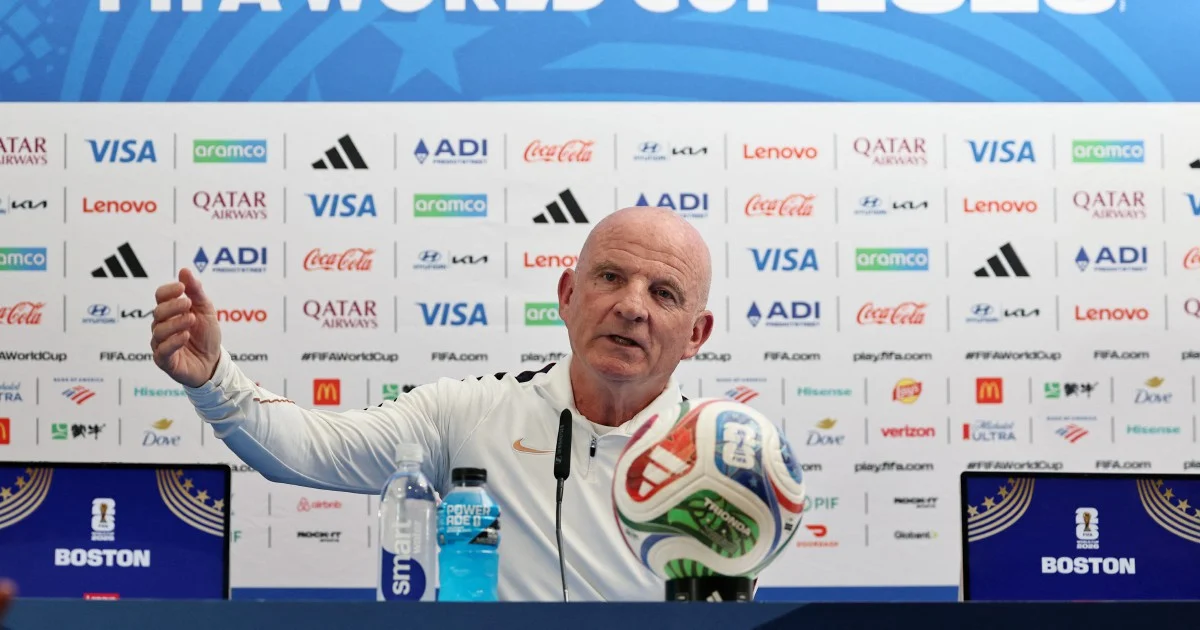
France's pursuit of top spot in World Cup Group I against Norway carries implications far beyond the ninety minutes of football scheduled for Friday. The match represents a strategic imperative for the defending champions, whose positioning determines not merely their advancement but the logistical architecture of their entire campaign. Assistant coach Guy Stephan, addressing reporters in Boston on Thursday in the absence of manager Didier Deschamps, emphasised that finishing first would fundamentally reshape the team's operational efficiency and physical demands during the tournament's later stages.
Deschamps returned to France following his mother's death, placing Stephan at the helm for pre-match duties. Despite this significant personal circumstance affecting the coaching staff, Stephan conveyed the collective determination within the squad to secure the group's lead. The mathematician's advantage belongs to France; they require merely a draw against Norway to finish atop the group because their goal difference exceeds Norway's. This mathematical buffer offers flexibility in approach, yet the coaching staff views an outright victory as the prudent path forward.
The logistical calculus underpinning France's ambition reveals the tournament's geographic realities. Should France finish second, they would face extensive travel across the sprawling continental United States, with journeys to Dallas, Miami, and Atlanta becoming inevitable. These long-distance journeys would demand significant recovery time between matches during a compressed knockout phase when every marginal gain matters. Conversely, winning the group permits France to remain based near Boston, maintaining their established infrastructure, training facilities, and accommodation until the quarter-final stage.
Beyond distance, environmental factors compound the preference for remaining in the Northeastern region. Stephan identified temperature variation as a subordinate but legitimate consideration. Boston's climate differs markedly from the oppressive heat expected in southern American cities, and acclimatisation to varied conditions imposes physiological stress on players already navigating fixture congestion. Maintaining a stable environment reduces additional adaptation burdens when conditioning and recovery prove equally crucial.
Both nations have demonstrated formidable form entering Friday's encounter. France and Norway each accumulated six points from their opening two matches, establishing themselves as group favourites before this decisive fixture. France's superior goal difference reflects their more dominant performances thus far, suggesting tactical control and offensive potency throughout the group stage. Norway's matching points tally, however, indicates they possess sufficient quality to present legitimate opposition, though France enters as marginal favourites given their experience and tournament pedigree.
France's squad sheet carries notable absences that Stephan confirmed during Thursday's briefing. Central defender William Saliba remains unavailable for selection, forcing tactical adjustments in defensive organisation. Additionally, striker Marcus Thuram carries a calf concern that places his participation in doubt. These injuries necessitate contingency planning, yet France's depth permits coverage across key positions. The specific impact of Thuram's fitness remains fluid, and the coaching staff would likely assess his condition closer to kickoff before determining whether to risk playing a compromised striker.
Stephan acknowledged Deschamps' involvement through telephone communication despite his physical absence in Boston. The manager's commitment to maintaining contact with his assistant and the tactical framework he established demonstrates the institutional continuity pervading French football. However, Stephan anticipated minimal communication on Friday itself, as Deschamps would be attending his mother's funeral in France. This personal circumstance, while demanding respect and sensitivity, reflects the human dimension underlying international sport and the competing obligations players and staff navigate during tournaments.
France's earlier qualification after two matches removes immediate pressure regarding group progression, yet the psychological framework shifts dramatically when considering knockout consequences. The team has already secured advancement alongside Norway, meaning Friday's match determines merely the group's hierarchy. This distinction matters profoundly because tournament infrastructure accommodates qualified teams accordingly, with first-place finishers positioned more favourably geographically and logistically.
For Malaysian and Southeast Asian observers, France's World Cup campaign carries significance beyond their performance alone. As defending champions navigating tournament pressures with evident professionalism, their approach to optimising operational efficiency offers insights into how elite international teams leverage every available advantage. The strategic thinking underpinning group-stage positioning demonstrates that World Cup football involves calculations extending beyond individual match outcomes into broader tournament management.
Norway presents an intriguing counter-narrative, having matched France's early results through their own tactical discipline and clinical finishing. Should Norway upset expectations and surpass France on Friday, they would become group winners despite being perceived as lesser challengers historically. This potential outcome underscores the competitive levelling occurring within international football, where preparation and collective commitment occasionally outweigh reputation and experience.
The New England Patriots' stadium, hosting this fixture near Boston, becomes an unlikely stage for consequential international football. American venues accommodating professional sports franchises increasingly host World Cup matches, reflecting the tournament's expansion and the United States' infrastructural capacity. For regional audiences, these matches represent growing opportunities to witness elite competition without crossing oceans, though the geographic spread across the continent demands extensive travel from supporters and participating nations alike.

