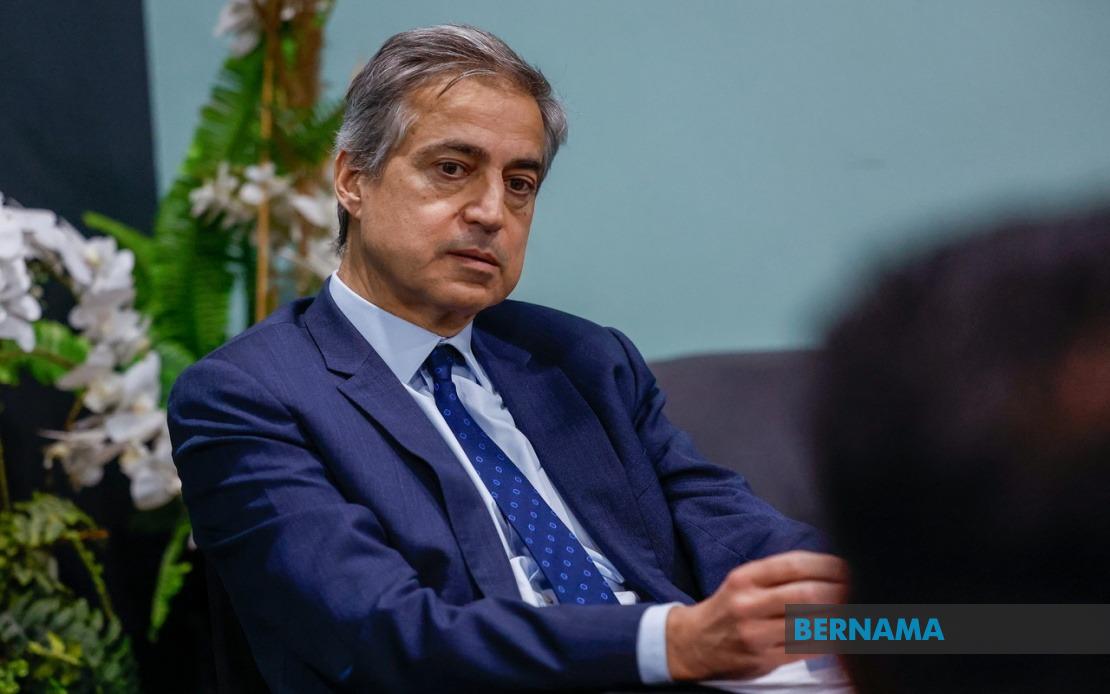
France and Malaysia are moving to strengthen their bilateral relationship at a time when many nations are retreating into protectionism and narrower national interests. Speaking at the French National Day reception in Kuala Lumpur on Tuesday evening, French Ambassador to Malaysia Marc Abensour framed the deepening partnership as a deliberate effort to counter fragmentation in the international system. He emphasised that in an increasingly divided world, both countries recognise the imperative to construct bridges rather than barriers, positioning themselves as advocates for multilateral cooperation and shared prosperity.
The foundation of this strengthened partnership rests on tangible economic gains that benefit both nations. Bilateral trade between France and Malaysia expanded by 11 per cent in the previous year, demonstrating robust commercial momentum despite global economic headwinds. This growth trajectory reflects confidence from French businesses in Malaysia's market, with approximately 600 French companies maintaining operations throughout the country. These enterprises collectively generate employment for more than 30,000 Malaysian workers, creating a substantial stake in the relationship's continuity and expansion. The breadth of French commercial presence across Malaysia extends to multiple sectors, indicating diversification beyond traditional trade relationships.
Malaysia's significance within France's broader Asian investment strategy has grown considerably. The country now ranks as the 10th-largest destination globally for French foreign direct investment, a position that underscores both Malaysia's appeal as an investment hub and France's strategic interest in maintaining and expanding its economic footprint in Southeast Asia. This ranking reflects years of accumulated capital flows and business development, suggesting confidence in Malaysia's economic governance, skilled workforce, and market potential. For Malaysian policymakers, this status represents validation of the nation's efforts to attract premium foreign investment while also highlighting opportunities to deepen sectoral partnerships beyond current levels.
Beyond commerce, the relationship flourishes through educational and cultural channels that create lasting people-to-people connections. More than 3,700 Malaysian candidates are currently pursuing French-language certification, positioning Malaysia as the third-largest centre for French language study in Asia, trailing only India and China. This linguistic engagement serves multiple purposes: it facilitates business communication, enables cultural understanding, and creates networks of francophone professionals across Malaysia's economy. The prominence of French language learning reflects both historical ties and contemporary recognition that French fluency remains valuable in international diplomacy, business, and cultural sectors. Language proficiency often catalyses deeper engagement with French institutions and values, extending influence beyond formal diplomatic channels.
The reception itself, held at the ambassador's residence, showcased the multicultural character of the partnership. Federal Territories Minister Hannah Yeoh attended as guest of honour, signalling the Malaysian government's priority accorded to the France relationship at the ministerial level. Approximately 800 attendees—comprising senior government officials, diplomatic corps members, and ambassadors from numerous countries—demonstrated the event's significance within Kuala Lumpur's diplomatic calendar. The deliberate blending of French cuisine with a Malaysian durian-tasting station exemplified how contemporary bilateral relationships navigate cultural exchange: neither nation subordinating its identity but rather celebrating complementarity and mutual appreciation.
Ambassador Abensour's characterisation of the partnership as bridge-building carries particular relevance for Southeast Asia at a moment of strategic competition between major powers. Malaysia, like other ASEAN members, maintains relationships with multiple global powers while seeking to preserve strategic autonomy. France's emphasis on partnership and mutual respect aligns with ASEAN's preference for non-aligned positioning and pragmatic engagement across ideological divides. By framing the France-Malaysia relationship within a narrative of global bridge-building, Abensour implicitly positions France as a power willing to engage Southeast Asia on terms that respect regional agency rather than demanding exclusive alignment.
The timing of this diplomatic emphasis merits consideration. Global fragmentation—whether understood as geopolitical rivalry between Washington and Beijing, disruption of multilateral institutions, or fractures within traditional Western alliances—creates both challenges and opportunities for middle powers like Malaysia. Nations that can credibly position themselves as bridges between competing blocs enjoy diplomatic leverage and economic benefits from reduced pressure to choose absolute allegiances. France's message that Malaysia occupies such a position validates Malaysian strategic preferences and potentially encourages deeper engagement with French institutions and frameworks.
French National Day's commemoration of the Storming of the Bastille and the values of liberty, equality and fraternity carries symbolic weight in the contemporary context. These Enlightenment principles—universalist rather than culturally specific—provide frameworks for international cooperation that transcend national interest calculations. When French officials invoke these values in diplomatic contexts, they present French foreign policy as rooted in philosophy rather than mere power projection. For Malaysian audiences, this framing offers an alternative narrative to great power competition framed solely through strategic advantage and market competition.
Looking forward, the stated commitment to deepening ties suggests multiple avenues for expansion. Economic cooperation may broaden into sectors beyond current French investment concentrations, potentially encompassing renewable energy, technology, and green industries where both nations claim expertise and interest. Educational partnerships could expand beyond language instruction to encompass university linkages, research collaboration, and professional development programmes. Cultural initiatives might deepen through expanded artistic exchanges, heritage preservation partnerships, and tourism promotion. The infrastructure for such expansion already exists through chambers of commerce, government-to-government committees, and established academic networks.
For Malaysia specifically, the France partnership offers strategic value within ASEAN's collective positioning. As Southeast Asian nations collectively seek to strengthen relationships with non-regional powers that respect their preferences for strategic flexibility, France presents an alternative to the dominant bilateral relationships many ASEAN members maintain with Asia-Pacific powers. French advocacy for multilateralism and opposition to unilateral action align with ASEAN's principled positions on international law and collective decision-making. This alignment creates space for Malaysian policymakers to deepen engagement with France without triggering concerns about exclusive alignment or vulnerability to great power pressure.

