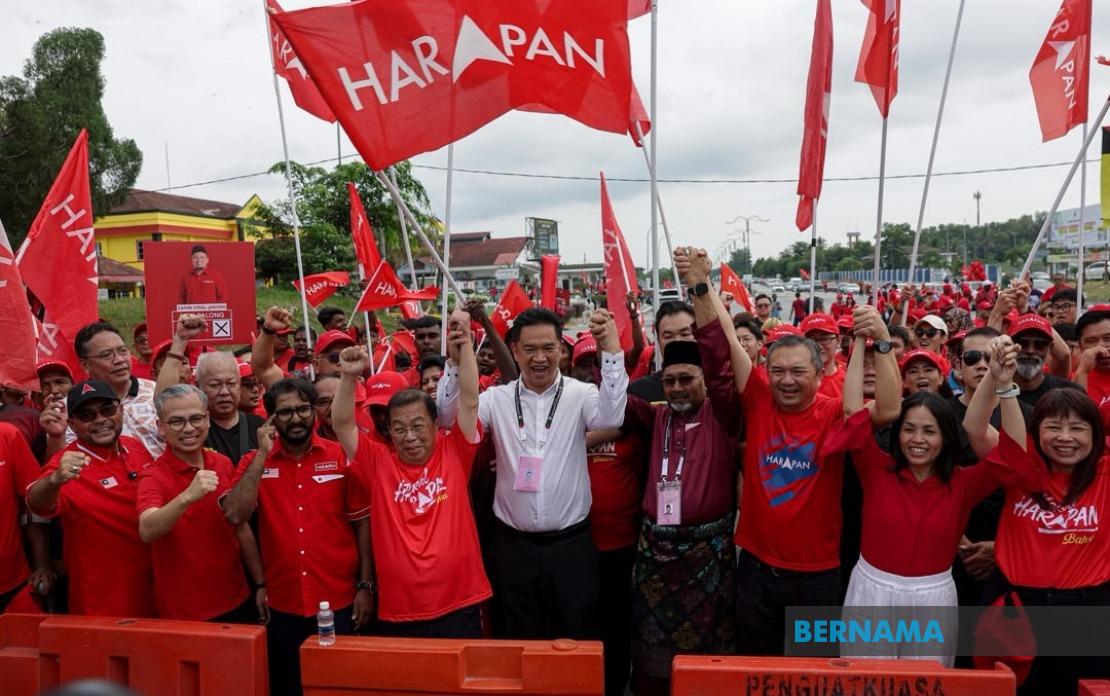
The Jeram Padang state seat in Jempol will stage the only four-cornered contest among the four seats up for grabs in this constituency during the 16th Negeri Sembilan State Election, according to the returning officer Amino Agos Suyub, who made the announcement after nominations closed at the Jempol District and Land Office Hall this morning. The result sets the stage for a fragmented contest that could produce unpredictable outcomes, particularly if support remains scattered across four competing camps without a clear frontrunner emerging.
Competing for the Jeram Padang seat are G. Manivannan representing Pakatan Harapan, incumbent Datuk Mohd Zaidy Abdul Kadir from Barisan Nasional, R. Sri Sanjeevan fielded by Parti Pribumi Bersatu Malaysia, and Dayana Dal contesting under Parti Orang Asli Malaysia. The inclusion of Dayana Dal marks a notable development, as she stands as the sole Orang Asli candidate pursuing this particular seat, potentially adding a distinctive dimension to local campaigning efforts and representation issues.
The nomination filing process revealed the sequence in which candidates submitted their papers, with Sri Sanjeevan and Dayana Dal arriving earliest at 9.09 am and 9.12 am respectively. Manivannan, accompanied by Pakatan Harapan Communications Director Datuk Seri Fahmi Fadzil, filed his nomination at 9.17 am, followed by the incumbent Mohd Zaidy at 9.20 am. The presence of senior coalition figures supporting candidate nominations underscores the significance parties attach to individual constituencies within this state-level competition.
Beyond Jeram Padang, the broader electoral landscape in Jempol presents varying levels of competition. The Serting seat will feature a three-cornered contest pitting Pakatan Harapan's Yaacob Mahmood against the incumbent Mohd Fairuz Mohd Isa from Perikatan Nasional and Muhammad Noraffendy Mohd Salleh, known as Affendy Salleh, representing Bersatu. This configuration reflects the continued fragmentation of Malaysia's political landscape, where multiple coalitions and parties compete simultaneously rather than consolidating around two dominant blocs.
Similarly, Palong will witness a three-way battle between incumbent Datuk Mustapha Nagoor of Barisan Nasional, Muhammad Zahin Zinal Abidin campaigning for Pakatan Harapan, and Rebin Birham from Bersatu. The persistence of Bersatu candidates across multiple seats demonstrates the party's determination to maintain electoral presence in Negeri Sembilan despite ongoing coalition shifts and internal party dynamics at the national level.
In contrast, the Bahau state seat offers a relatively clearer contest between two major forces. The incumbent Teo Kok Seong, a Democratic Action Party representative aligned with Pakatan Harapan, faces a direct challenge from Chong Fui Ming of the Malaysian Chinese Association, the Barisan Nasional nominee. This straight fight format typically allows voters to make more straightforward choices and enables clearer mandate interpretation depending on the election outcome.
The Electoral Commission has scheduled early voting for July 28, with the actual polling day set for August 1. This timeline provides candidates and their respective campaign machinery approximately two weeks to mobilize supporters and disseminate their messages across the constituencies. For voters in Jempol and the wider Negeri Sembilan electorate, this period will involve intense campaign activities, public forums, and media engagement as different political coalitions attempt to articulate their policy platforms and attract electoral support.
The four-cornered contest in Jeram Padang presents particular analytical interest for Malaysian electoral observers studying voting patterns and coalition dynamics. When multiple candidates compete without a clear two-way preference structure, voter behavior becomes less predictable, and outcomes may hinge on localized issues, candidate recognition, and the effectiveness of ground-level campaign organization rather than broad state or national political currents. The presence of an Orang Asli candidate may also influence community participation rates and mobilization efforts specific to indigenous voter concerns.
The variation in contest formats across Jempol's four seats—ranging from four candidates to a straight fight—reflects the uneven distribution of political strength across different constituencies within the district. Such variations frequently occur in Malaysian state elections, where certain seats attract multiple challengers while others remain effectively two-way races. Understanding these micro-level electoral dynamics proves important for political analysts assessing both regional power bases and the viability of different political actors seeking to expand or consolidate their influence in Negeri Sembilan.
For the broader Southeast Asian context, Negeri Sembilan elections serve as important indicators of political sentiment within Malaysia's federal system. State-level contests often function as testing grounds for policy approaches and gauge public response to both state and federal government performance. The coming August 1 election will provide insights into voter preferences regarding representation and governance priorities as articulated by competing coalitions and individual candidates across these four constituencies.

