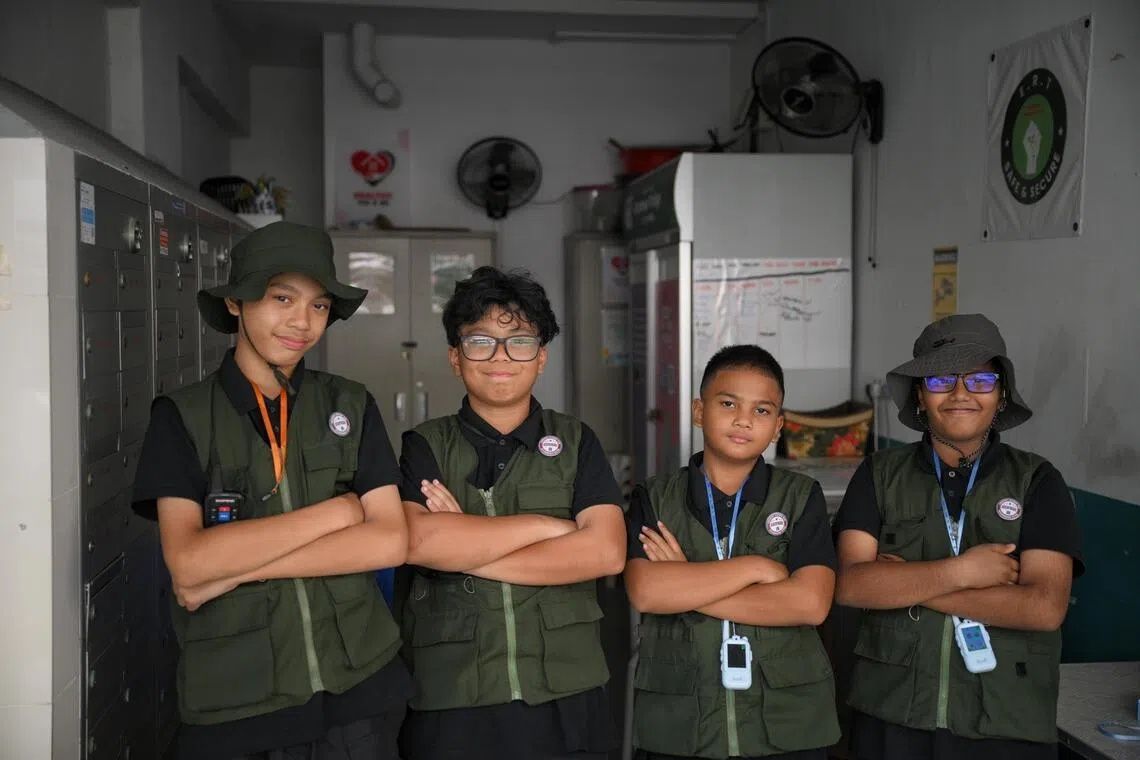
A 12-year-old student in Singapore became so frustrated watching strangers raid a community fridge meant to provide free milk and drinks to disadvantaged children that he resolved to take action. Rather than stand guard at the fridge himself, Rafieq Sahin Rafizal channelled his concern into something more ambitious: a neighbourhood patrol that would address wider safety and cleanliness issues affecting his entire housing estate. His initiative has blossomed into a youth-led community security operation that exemplifies how young people, when given structure and guidance, can meaningfully contribute to their residential areas.
Today, Rafieq works alongside three companions—Aaron Sarandev (11), Al-Mirza Danish (12), and Didie Andiqa Muhaimin (14)—as the Emergency Response Team LB, named after Singapore's police Emergency Response Team. Operating from Gan Eng Seng Primary School, the four students have established a daily patrol routine covering their Lengkok Bahru block, a low-income housing area where their efforts address practical neighbourhood concerns that municipal authorities might otherwise overlook. The initiative demonstrates a growing appetite among Singapore's younger generation to engage in civic responsibility, moving beyond passive consumption of community services towards active participation in maintaining their living environment.
The patrols, which began in August 2025, focus on identifying and documenting problems that plague many public housing estates across Southeast Asia. The boys scan their surroundings for indiscriminate dumping of bulky items, acts of vandalism, and illegally charged personal mobility devices left in common areas—a genuine fire hazard in densely populated residential blocks. When they spot issues, they photograph the evidence and alert Rafieq's mother, Marlina Yased, a 48-year-old homemaker who serves as their coordinator. Marlina then ensures the relevant estate management staff receive notice, creating a feedback loop between young observers and institutional bodies responsible for maintenance.
Beyond infrastructure monitoring, the team has become an informal social safety net for vulnerable residents. Since commencing operations, they have assisted an elderly resident struggling with mobility by carrying her groceries home and intervened to resolve conflicts between neighbourhood children before they escalated. Their role transcends security theatre; they have become genuine community connectors. Most significantly, in early 2026, the boys' vigilance uncovered a tragedy: detecting an unusual odour emanating from a flat, they alerted Marlina and local authorities. Cleaners and police discovered the decomposed body of an elderly man inside. This incident underscores how consistent neighbourhood presence, even among young residents, can serve protective functions that benefit vulnerable populations often isolated from regular human contact.
The origins of the patrol squad trace to Marlina's community fridge initiative, launched in 2023 with sponsorship support. The fridge occupies the void deck of her two-room rental flat at Block 59 Lengkok Bahru, with staple groceries secured behind locked doors whilst an separate, unlocked refrigerator contains milk and drinks accessible to schoolchildren before lessons. The arrangement soon revealed a problem: some residents were consuming portions intended for children, with adults systematically emptying milk supplies. Rather than position her young son as a defensive sentinel, Marlina reconceived the problem as an opportunity for youth engagement in broader neighbourhood stewardship.
Operationally, the students maintain a structured approach that instils discipline and accountability. Following school each afternoon, the boys don matching vests displaying their names and team insignia before departing in pairs to cover multiple blocks. They maintain radio contact with Marlina and fellow volunteer Fahmidah Farihullah (21) using walkie-talkies, ensuring supervisory oversight during their activities. The operation originally comprised seven members but has since consolidated to four, suggesting both natural attrition common to youth initiatives and the genuine commitment required to sustain daily patrols. The boys are candid about their motivations and the demands of the work: Rafieq notes they sacrifice one daily hour that could be spent playing, whilst Aaron acknowledges the patrol has taught him responsibility and perseverance on occasions when motivation wanes.
Singapore's National Day Parade in August 2026 will feature the Emergency Response Team LB as part of a broader segment honouring Singaporeans who contribute to national improvement. For the four students, participation marks their first encounter with the island's premier civic celebration, transforming their local neighbourhood effort into national recognition. This elevation from hyper-local initiative to state-sanctioned visibility signals official acknowledgement that youth-led community safety represents a meaningful policy asset. The move reflects broader Southeast Asian trends recognising that primary school-aged children, when provided appropriate structure and adult mentorship, can meaningfully address problems that formal government mechanisms sometimes handle inefficiently.
Community reception has evolved from initial scepticism to appreciation, illustrating how visible action builds local legitimacy. Nasha Asrin, a 27-year-old Lengkok Bahru resident and mother of five, expressed relief observing the boys engaged in constructive neighbourhood activities rather than loitering aimlessly around the estate. This sentiment captures a fundamental parental and community anxiety in high-density residential areas across Singapore and broader Southeast Asia: the visibility of purposeful youth activity reassures residents that their neighbourhoods possess internal guardians. Conversely, Marlina reports observing tangible changes in the boys themselves: teachers report improved school attendance, mothers provide feedback about enhanced concentration spans, and discipline has measurably improved—suggesting the patrol experience delivers developmental benefits extending beyond neighbourhood service.
The Emergency Response Team LB exemplifies how community-based youth initiatives can address gaps between municipal capacity and neighbourhood needs. In Singapore's context, where public housing accommodates substantial populations and municipal services operate at scale, hyper-local monitoring by residents offers a supplementary mechanism for identifying problems requiring intervention. For Malaysian readers, the model carries particular relevance given comparable demographics in public housing estates across Kuala Lumpur, Selangor, and major urban centres where similar challenges emerge. The Lengkok Bahru experiment suggests that structured, supervised youth involvement in neighbourhood monitoring—leveraging residents' intimate knowledge of their spaces and regular presence—represents a scalable approach to community safety complementing rather than replacing formal authorities.

