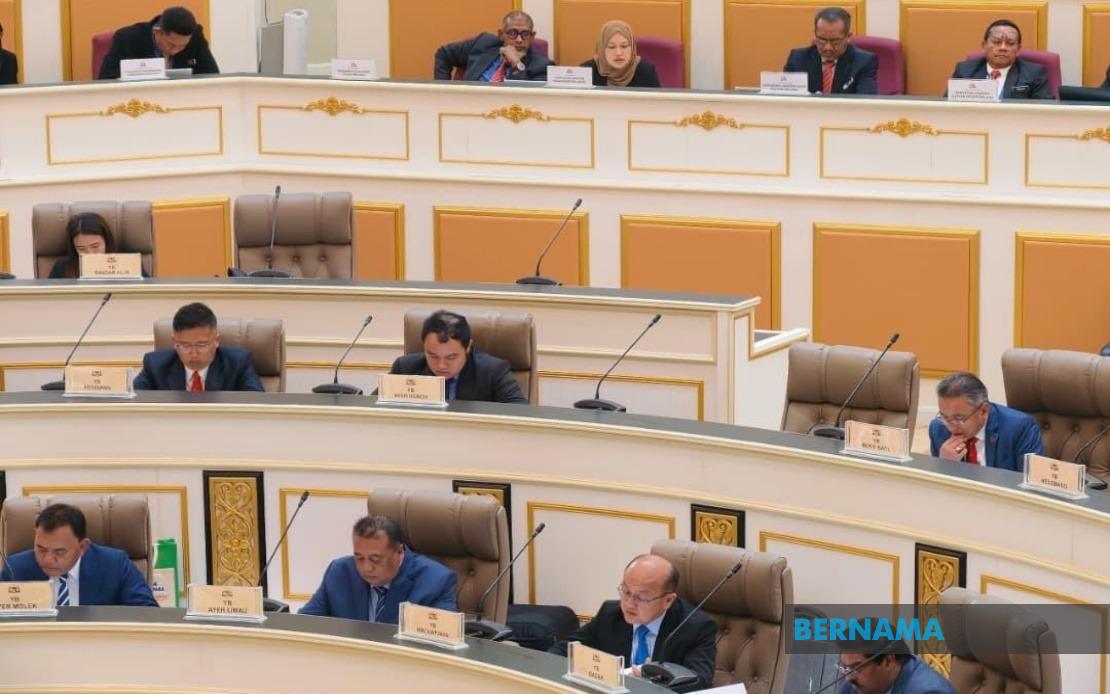
A significant political realignment unfolded in the Melaka State Legislative Assembly on July 15 when four Democratic Action Party (DAP) representatives relocated their seating to the opposition benches, marking a formal break from the ruling coalition that has governed the state since 2022. The relocation of Allex Seah Shoo Chin, Low Chee Leong, Leng Chau Yen, and Kerk Chee Yee follows their party's dramatic announcement the previous day that it was terminating its participation in the Barisan Nasional (BN) state government, fundamentally altering the political composition of the 36-member assembly.
The defection stems from DAP's opposition to constitutional amendments recently passed by the state legislature that would permit the appointment of unelected assemblymen to fill vacant seats. Party chairman Khoo Poay Tiong characterised the move as incompatible with democratic principles, arguing that it undermines the fundamental concept of elected representation and constitutes a departure from the party's core values. This institutional criticism suggests deeper ideological tensions within the coalition regarding governance structures and the legitimacy of appointed versus elected representatives in state affairs.
Interestingly, the Melaka Pakatan Harapan coalition fractured along party lines, with the sole Amanah representative, Adly Zahari, opting to remain seated with the government bloc despite holding the position of PH chairman in the state. This decision by Zahari creates an unusual scenario where the formal opposition bloc now comprises the four DAP members alongside Perikatan Nasional and Independent assemblymen, while the coalition nominally retains representation through Amanah's continued support. The split reflects divergent strategic calculations between the two parties regarding their future political trajectories in Melaka.
Prime Minister Datuk Seri Anwar Ibrahim had previously appealed to Melaka DAP to reconsider the timing of their withdrawal, requesting a postponement to prevent disruption to state development initiatives and public welfare programmes. His intervention underscored the federal government's concern about the ramifications of the split, particularly given that a weakened state administration could impede economic projects and service delivery that depend on legislative stability. However, DAP's leadership prioritised their principled stand against the constitutional amendments over maintaining coalition harmony.
The constitutional amendments represent a significant departure from Malaysia's traditional emphasis on electoral representation in state legislatures. The provision allowing nominated assemblymen essentially creates a mechanism to reshape parliamentary majorities without requiring fresh elections, a practice that critics contend undermines the democratic mandate granted by voters. In the Melaka context, where support for various coalitions has shifted markedly since 2018, such appointments could theoretically allow the government to neutralise opposition strength or solidify governing control independent of electoral outcomes.
This development carries implications for how Pakatan Harapan manages coalition partnerships across Malaysia's fragmented political landscape. The DAP-Amanah division in Melaka demonstrates that component parties within electoral alliances do not always respond uniformly to government decisions, even when those decisions originate from shared coalition partners. For Malaysian observers, it illustrates the delicate balance required to maintain multi-party coalitions when constituent members hold different ideological positions on institutional matters.
The relocation of the four DAP assemblymen was formally processed on the final day of the assembly sitting, with Speaker Datuk Ibrahim Durum encouraging all members to observe parliamentary conduct standards and procedural rules during the session. The technical aspects of the chamber's physical reconfiguration underscored the permanence of the political shift, transforming the spatial geography of opposition and government representation in the assembly hall itself. Such symbolic repositioning typically signals to constituents and political observers that a meaningful realignment has occurred.
For Melaka's development trajectory, the departure of DAP from the government coalition introduces uncertainty regarding the state's ability to advance major infrastructure and economic initiatives that typically require broad legislative consensus. The four assemblymen previously held responsibility for various portfolio matters, and their transition to opposition status means their constituencies may experience altered access to government resources and attention. This practical dimension of coalition politics often affects service delivery more directly than the ideological dimensions that prompted the initial split.
The broader Southeast Asian context reveals increasing tensions between traditional coalition governance models and emerging demands for more flexible, issue-based parliamentary alignments. Malaysia's experience with coalition mathematics mirrors similar challenges across the region, where stable majorities have become harder to maintain as voter preferences fragment and component parties within alliances develop competing priorities. The Melaka situation exemplifies how institutional decisions, particularly those perceived as anti-democratic, can rapidly destabilise previously functional political arrangements.

