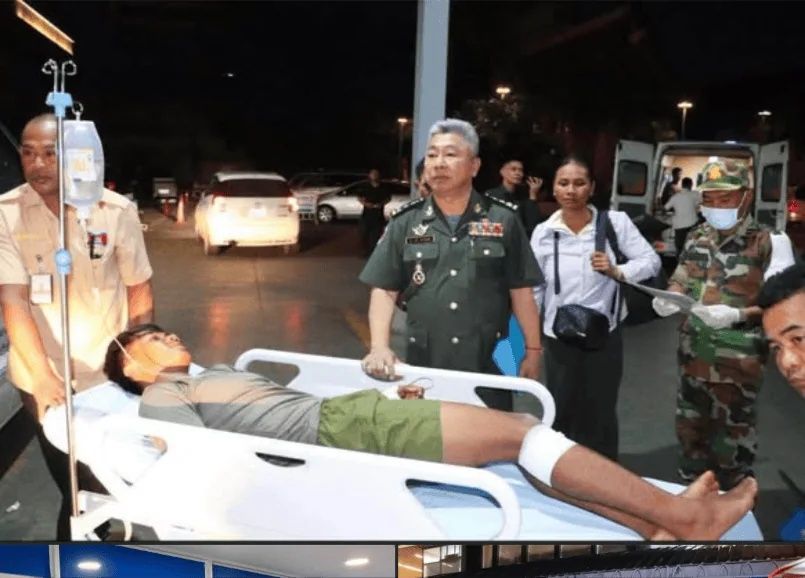
A blast along the Cambodia-Thailand frontier has left four Cambodian military personnel requiring medical attention, marking the latest security incident in a region historically prone to border tensions and unexploded ordnance complications. The explosion occurred on Sunday afternoon in a cashew farming region straddling Chouk Kruos and Thma Don villages in Oddar Meanchey province, according to an official announcement released by Phnom Penh on Monday.
Lieutenant General Maly Socheata, serving as undersecretary of state and spokeswoman for Cambodia's Ministry of National Defence, provided details of the incident, which happened at 12:35 p.m. during routine military activities in the plantation area. She confirmed that the four injured soldiers were being treated by medical personnel at appropriate facilities. The spokesperson did not immediately specify the nature of the explosive device or whether it was a legacy landmine, booby trap, or ordnance-related incident—a distinction crucial for understanding border security dynamics in this part of Southeast Asia.
The Cambodian-Thai border has long been vulnerable to unexploded ordnance dating back decades of regional conflict, including the legacy of the Khmer Rouge regime and subsequent civil disturbances. Oddar Meanchey province, in particular, sits along disputed terrain that has occasionally generated diplomatic friction between Phnom Penh and Bangkok. The cashew plantation setting suggests a civilian-adjacent operational zone where military patrols must balance security concerns with economic activity and civilian safety.
Thailand's military establishment moved swiftly to clarify its position regarding the explosion. Winthai Suvaree, speaking for the Royal Thai Army, stated that Thai forces were simultaneously conducting standard patrols on the Thai side of the demarcation line when personnel heard the blast originating from Cambodian territory. The Thai Army issued an explicit denial that its troops discharged any weapons or lobbed grenades across the border.
A subsequent rapid investigation involving relevant Thai military units corroborated this account, determining that the explosion took place exclusively within Cambodian jurisdiction and bore no connection to Thai operations or involvement. This swift investigation and public statement reflect Thailand's apparent interest in preventing the incident from escalating into bilateral recriminations or broader diplomatic friction—a prudent approach given the sensitivity surrounding border security in the region.
The nature of explosions in border areas near Cambodia often reflects the enduring contamination of the landscape by remnants of past conflicts. Unexploded ordnance buried decades ago frequently emerges during agricultural work, construction, or military operations, creating persistent hazards. Military patrols operating in such zones face inherent dangers independent of cross-border hostilities, yet public attention to such incidents frequently triggers concerns about boundary disputes or deliberate provocations.
For Malaysia and other ASEAN members observing Cambodia-Thai relations, such incidents carry implications for regional stability frameworks. The prompt clarification by both countries—Cambodia confirming the explosion and Thailand denying involvement—demonstrates a functioning (if minimal) mechanism for preventing misunderstandings from snowballing into broader conflict. This contrasts sharply with scenarios where boundary incidents trigger defensive escalation or nationalist posturing.
The Oddar Meanchey region has witnessed recurring disputes over demarcation, with historical disagreements over precisely where the border lies. Military operations in such ambiguous zones inherently carry elevated risks, whether from legacy ordnance, navigational uncertainty, or the potential for misidentification during joint operations. The fact that casualties resulted from what appears to be an environmental hazard rather than hostile action underscores the multifaceted security challenges facing militaries in post-conflict territories.
Medical infrastructure for treating blast injuries in Cambodia remains variable across provinces, though Oddar Meanchey's proximity to Thailand potentially enables access to cross-border medical cooperation if needed. The Cambodian defence ministry's assurance that the injured soldiers were receiving appropriate care suggests confidence in available treatment capacity, yet the absence of details regarding injury severity or prognosis leaves questions about long-term outcomes unresolved.
The incident illustrates how border security extends beyond traditional military confrontation to encompass environmental hazards, infrastructure challenges, and the lasting consequences of historical conflict. As Southeast Asian nations continue developing their defence capabilities and border management protocols, incidents like this one remind policymakers that comprehensive security frameworks must address explosive contamination, civilian-military coordination in shared economic zones, and transparent communication mechanisms to prevent misinterpretation.
Looking forward, the handling of this particular event—with neither Cambodia nor Thailand escalating rhetoric or suggesting deliberate provocation—suggests both nations remain committed to managing their border relationship through established diplomatic channels rather than military grandstanding. For the region broadly, this measured response offers a constructive model for addressing the inevitable friction points that emerge along shared frontiers.

