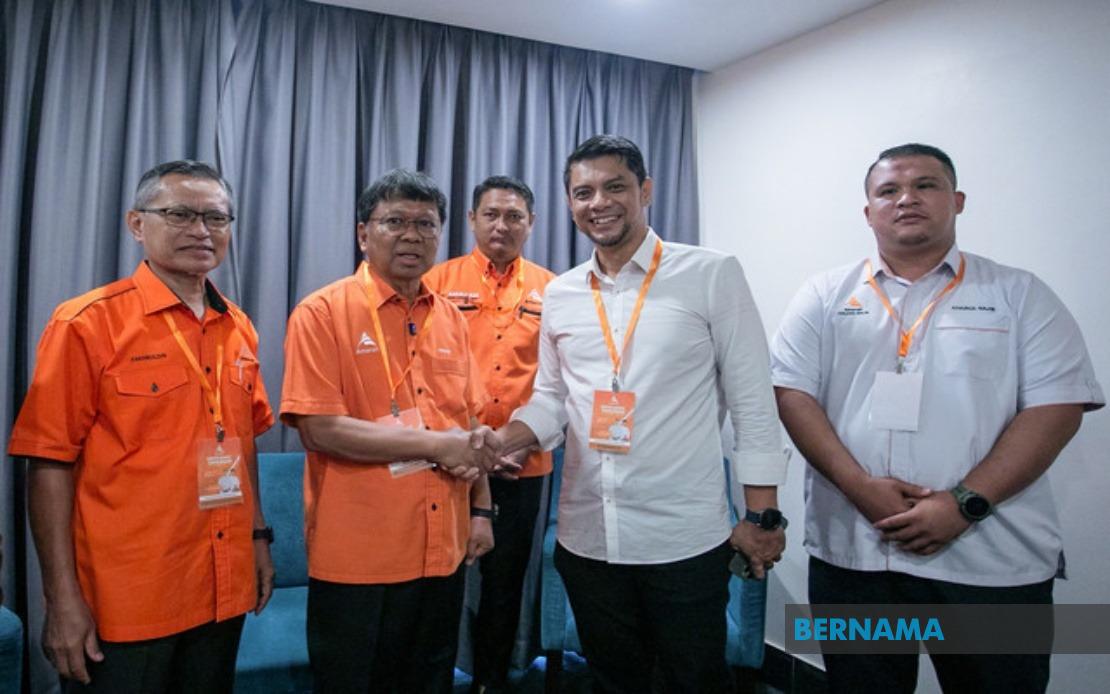
Hasnul Zulkarnain Abd Munaim, who once represented Titi Serong in the Perak state assembly, has officially returned to Parti Amanah Negara after an absence of nearly six years, marking a significant moment in his political career and potentially signalling broader shifts within the party's approach to membership. The readmission, approved during Amanah's National Management Meeting and National Leadership Meeting held on June 18, comes at a time when Malaysia's political landscape continues to experience considerable realignment and strategic repositioning among coalition partners and individual politicians.
Perak Amanah chairman Datuk Asmuni Awi confirmed the decision during an address at the party's Tambun annual meeting in Ipoh, emphasising that Hasnul Zulkarnain's return had been under consideration for some time. According to Asmuni, the former assemblyman had repeatedly signalled his desire to rejoin the party, but the political environment and party circumstances had not previously aligned to facilitate such a discussion. The timing of this readmission reflects a deliberate strategic choice by Amanah's leadership to evaluate applications from former members who wish to return, positioning the party as open to reconciliation with those who may have departed during different political configurations.
The broader context of Hasnul Zulkarnain's departure reveals the tumultuous political upheaval that Perak experienced in 2020. In March of that year, following the dramatic formation of the Perikatan Nasional government, Hasnul Zulkarnain announced his exit from Amanah simultaneously with two other state assemblymen: Yong Choo Kiong from Tronoh and A. Sivasubramaniam from Buntong, both from the Democratic Action Party. This coordinated exit reflected the seismic shifts that characterised that period, when the collapse of the Pakatan Harapan federal government triggered cascading defections and realignments at state level. By July 2020, just months after leaving Amanah, Hasnul Zulkarnain joined Parti Pribumi Bersatu Malaysia, indicating a deliberate pivot toward the newly ascendant Perikatan Nasional framework.
Asmuni's commentary on the readmission carries significance beyond the individual case. His observation that many former members who departed Amanah retain loyalty to the party's ideological platform and political struggle suggests that departures during crisis periods may not necessarily reflect fundamental philosophical disagreements. Instead, they often represent pragmatic responses to shifting political arithmetic and the calculation that remaining with a sinking ship would be counterproductive. This insight implies that Amanah views former members not as permanent defectors but as individuals whose political choices must be understood within specific temporal and contextual parameters.
The decision to welcome back former members aligns with strategies adopted by other Malaysian political parties, according to Asmuni's remarks. This normalisation of re-entry procedures reflects a maturation in how political parties view member transitions. Rather than treating departure as betrayal warranting permanent ostracism, sophisticated parties recognise that political careers involve navigating fluid circumstances. The Malaysian political system's tendency toward coalition-building and realignment means that yesterday's opponents may become today's allies, and former members may bring valuable experience, networks, and credibility upon return.
Hasnul Zulkarnain's expression of gratitude to the party leadership framed his readmission as validation of his potential contributions. This articulation suggests he views the return not as a second chance contingent on probationary status, but as a recognition that his skills and commitment remain valuable to Amanah's project. His prior role as Amanah Youth chief indicates he held significant responsibility within party structures, making his departure a loss of institutional capacity that the party may now seek to recover.
For Amanah specifically, this readmission addresses a broader challenge facing the party in Perak. As one component of the Pakatan Harapan coalition, Amanah struggles for prominence alongside stronger players like the Democratic Action Party and Parti Keadilan Rakyat. Recovering experienced assemblymen and former office-holders helps build the party's bench strength and demonstrates internal vitality. In a state where Amanah's representation has been modest, accumulating seasoned political operators sends signals of stability and growth trajectory to both party members and potential voters.
The timing of this announcement, coming months after Malaysia's 2023 general election and amid ongoing coalition recalibrations, positions Amanah as a party making strategic moves ahead of potential future electoral contests. The 2026 state elections in Perak will provide the first significant test of whether readmitting former members strengthens the party's electoral appeal. If Hasnul Zulkarnain emerges as a candidate, his previous experience representing Titi Serong gives him name recognition and existing networks that could translate into votes.
This development also reflects patterns observable across Malaysian political parties. The fluidity of political affiliation, while often criticised as lacking principle, has become a pragmatic feature of the system. Politicians move between parties based on assessments of viability, ministerial prospects, and resource availability. Parties, for their part, have learned that rigid membership policies that permanently exclude returning members limit their flexibility in competitive environments. The normalisation of readmission procedures creates space for political actors to correct course without permanent career damage.
Looking forward, Hasnul Zulkarnain's readmission may establish a template for other Amanah members who departed during the Perikatan Nasional period to consider return. The party's demonstrated willingness to reconsider former members, contingent on appropriate circumstances, sends a message that political realignment does not necessarily mean permanent rupture. For members who may feel uncomfortable in their current party homes or who wish to return to ideological alignment, this development presents an option previously unavailable.
The significance of this case extends beyond individual reinstatement. It illustrates how Malaysian political parties navigate the tension between maintaining coherent organisational identity and responding to the realities of fluid political alignment. Amanah's approach suggests that identity and values, while important, need not mean permanent exclusion of those whose career trajectories led them elsewhere. This pragmatic flexibility may ultimately serve the party better than rigid adherence to permanent banishment, particularly in a competitive multi-party system where experienced operators are valuable assets regardless of previous affiliation.

