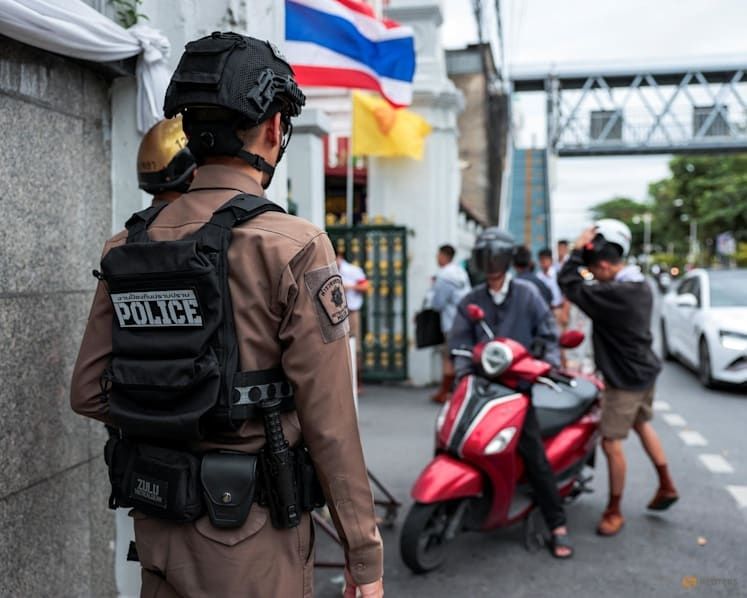
Thai police have arrested former parliamentarian Chalong Riewrang, who previously served in Prime Minister Anutin Charnvirakul's political party, following an alleged shooting incident in Nonthaburi province that left a local official and his driver wounded. The arrest came as investigators began examining the circumstances surrounding the incident, which occurred just days after a catastrophic school shooting in the same region prompted renewed calls for stricter firearm regulations across the kingdom.
Nonthaburi police chief Dejrapee Kongdee confirmed the arrest on Monday and indicated that detectives were still determining the motive behind the alleged attack. Both victims were receiving treatment at a medical facility, with the chairman of the Nonthaburi local government administration sustaining injuries described as serious. The condition of the driver, the second victim of the alleged shooting, remained unclear at the time authorities provided initial details to the media.
While local news outlets reported that a private dispute may have triggered the shooting, official investigators have remained cautious about publicly discussing potential motives. Police chief Kongdee declined to elaborate on the nature of any disagreement that might have preceded the incident, suggesting that a thorough investigation remains ongoing to establish the full facts of the case.
The timing of this incident underscores a deepening crisis with firearm violence in Thailand. On Friday of the previous week, a 14-year-old boy carried out a mass shooting rampage in the same Nonthaburi region that shocked the nation. The teenager first shot and killed his grandparents—the couple who had raised him—before proceeding to a local school where he opened fire, killing six additional people at the institution. The youth then turned the weapon on himself, taking his own life and concluding one of the country's deadliest shooting incidents in recent memory.
Thailand's relationship with firearms remains distinctive within Southeast Asia, with an estimated 10 million guns currently in private circulation throughout the nation. This figure translates roughly to one firearm for every seven inhabitants, positioning the country among the most armed societies in the region by population ratio. The prevalence of gun ownership reflects a complex mix of legal and illegal weapons, ranging from properly registered firearms to illegally smuggled arms that have entered the country through various channels.
The convergence of these two serious incidents within days has intensified pressure on Thailand's government to implement meaningful reforms to its gun control framework. Government officials have publicly committed to pursuing stricter regulations and tighter oversight of firearm ownership and sales in response to Friday's school shooting. However, such pledges must be viewed against the backdrop of Thailand's troubled track record in this area—previous promises to strengthen gun laws have repeatedly failed to translate into effective measures or lasting reductions in firearm-related violence.
For regional observers and policymakers across Southeast Asia, Thailand's recurring gun violence presents a cautionary tale about the challenges of managing private weapons in societies with established gun ownership cultures. The ease with which individuals appear able to access firearms, combined with apparent gaps in mental health interventions and family support systems, creates conditions where personal crises can rapidly escalate into deadly incidents. Malaysia and other neighbouring countries closely monitor such developments, recognising that transnational trafficking in weapons and the adoption of harmful practices by organised criminal networks pose shared regional security challenges.
The arrest of Chalong Riewrang adds a political dimension to the current debate, given his prior status as a member of parliament and his affiliation with the ruling coalition. This aspect may influence how aggressively authorities pursue the investigation and whether it catalyses broader political pressure for legislative action on firearms. Previous shooting incidents in Thailand have occasionally generated momentum for reform, yet implementation has typically remained slow and inconsistent, hampered by competing interests and bureaucratic inertia.
As Thailand's security apparatus investigates both the recent school shooting and this alleged shooting by a former legislator, the country faces a critical juncture. Citizens and international observers will be watching whether the government follows through on its latest pledges to strengthen gun laws or whether the incident fades from public attention without substantive policy changes. The psychological impact on communities in Nonthaburi, already reeling from Friday's tragedy, compounds the urgency of finding effective solutions to prevent future occurrences of armed violence.

