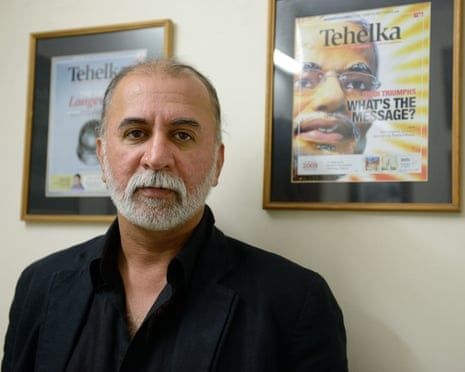
The Bombay High Court in India has delivered a conviction against Tarun Tejpal, the 63-year-old founder and former editor of Tehelka magazine, in a high-profile rape case that has captivated public attention across the country. The verdict represents a dramatic reversal of a 2021 trial court decision that had acquitted Tejpal of all charges, including rape, sexual harassment and wrongful restraint. The case centres on accusations that Tejpal sexually assaulted a young journalist inside a hotel lift during a media event held in Goa in November 2013, an incident that would ultimately reshape discussions about power dynamics and accountability within India's news industry.
Tejpal's initial arrest in late 2013 and subsequent seven-month detention marked a significant moment in Indian jurisprudence, though the Supreme Court's decision to grant him bail generated considerable public debate about the treatment of accused individuals versus the rights of complainants. The trial court's 2021 acquittal appeared to suggest the case might fade from public memory, but the Goa government's challenge of that verdict before the higher court ensured the matter remained scrutinised by legal authorities. The High Court's decision to set aside the acquittal and impose conviction demonstrates the Indian judicial system's willingness to revisit complex cases where lower courts' findings are questioned by prosecuting authorities.
The significance of this conviction extends beyond the individual defendant to touch upon broader questions about institutional accountability within India's media landscape. Tehelka magazine had positioned itself as a champion of investigative journalism, exposing corruption and advocating for marginalised communities, particularly women facing injustice. The revelation that the publication's own leadership stood accused of the very crimes the magazine claimed to expose created a profound credibility crisis that the organisation has never fully overcome. This contradiction between institutional values and leadership conduct strikes at the heart of trust in media establishments, raising uncomfortable questions about whether editorial independence can coexist with internal misconduct.
The timing of this case within India's broader reckoning with sexual violence is particularly instructive. The conviction arrives more than a decade after the December 2012 gang rape of a 23-year-old student on a New Delhi bus, an atrocity that triggered nationwide protests and international condemnation. That horrific incident galvanised the Indian government to strengthen rape laws and introduce more stringent penalties, signalling a shift in how the nation's legal system approached sexual assault cases. The Tejpal case, unfolding against this backdrop of heightened awareness and reformed legislation, demonstrates how changing legal frameworks and social consciousness can eventually lead to accountability even when initial court proceedings appear to exonerate the accused.
The investigator leading the original probe, Goa Police's Sunita Sawant, emphasised the judgment's broader implications for women in professional environments across India. Sawant's comments framed the conviction not merely as a legal outcome affecting one individual but as validation for women who have sought justice through India's courts. This perspective highlights how high-profile cases involving powerful figures serve as reference points for lesser-known complainants navigating complex institutional systems. The visibility of Tejpal's conviction may embolden other women in journalism and related fields to come forward with their own accounts of harassment and assault, potentially reshaping workplace cultures that have historically protected accused men through institutional silence.
Tejpal's ability to appeal the verdict to higher courts ensures the case will likely extend further, prolonging both legal proceedings and public discourse around the incident. The accused editor has consistently maintained his innocence throughout the legal process, and his legal team will presumably use appeal mechanisms available within India's judicial hierarchy to challenge the High Court's findings. This extension of the case through multiple court levels reflects the complexity of sexual assault litigation in India, where evidentiary standards, witness credibility assessments, and judicial interpretation of testimony can produce dramatically different outcomes depending on which court hears the matter.
The institutional damage to Tehelka magazine has proved enduring and substantial. Once regarded as India's foremost investigative publication, capable of breaking major corruption stories and challenging powerful interests, the magazine's credibility suffered immeasurably following the 2013 allegations. Subsequent leadership changes and operational shifts have failed to restore the publication's former influence or prestige within India's media ecosystem. Current and prospective readers remain cognisant of the scandal, and the publication's attempts to distance itself from Tejpal's tenure have proven insufficient to fully rehabilitate its image. The case illustrates how institutional reputation, once damaged by internal misconduct at the highest levels, resists complete restoration regardless of structural reforms.
For Malaysian and Southeast Asian observers, the Tejpal case offers several instructive lessons about accountability mechanisms, judicial processes, and the vulnerabilities of women within professional settings. India's journalism sector, while robust and diverse, shares structural similarities with Southeast Asian media industries, where hierarchical workplace cultures and unequal power dynamics can facilitate abuse. The protracted legal battle surrounding Tejpal's case—spanning from 2013 through the 2021 acquittal and now the 2024 conviction—underscores how sexual assault allegations against powerful figures demand sustained institutional commitment to justice, extending well beyond initial investigations and trials.
The High Court's reversal of the trial court's acquittal also raises questions about the quality and thoroughness of evidence presentation and examination across different judicial levels in India. Identical factual circumstances produced opposite legal conclusions when reviewed by courts at different hierarchical positions, suggesting that questions of interpretation, evidentiary weight, and judicial philosophy significantly influenced outcomes. This pattern is not unique to India but reflects challenges endemic to sexual assault adjudication globally, where witness testimony, credibility assessments, and forensic evidence often require careful weighing by judicial authorities.
The conviction also arrives amid broader global movements addressing sexual misconduct within news organisations and media institutions. Journalism associations and industry bodies worldwide have grappled with creating safer workplace environments and establishing more robust complaint mechanisms to prevent abuse of power. India's handling of the Tejpal case, despite its lengthy duration and initial acquittal, ultimately produced a conviction that aligns with evolving global standards for accountability. The case demonstrates that even entrenched power structures within prestigious institutions can eventually face judicial consequences, though the extended timeline required to achieve such outcomes remains deeply problematic for complainants seeking timely justice.

