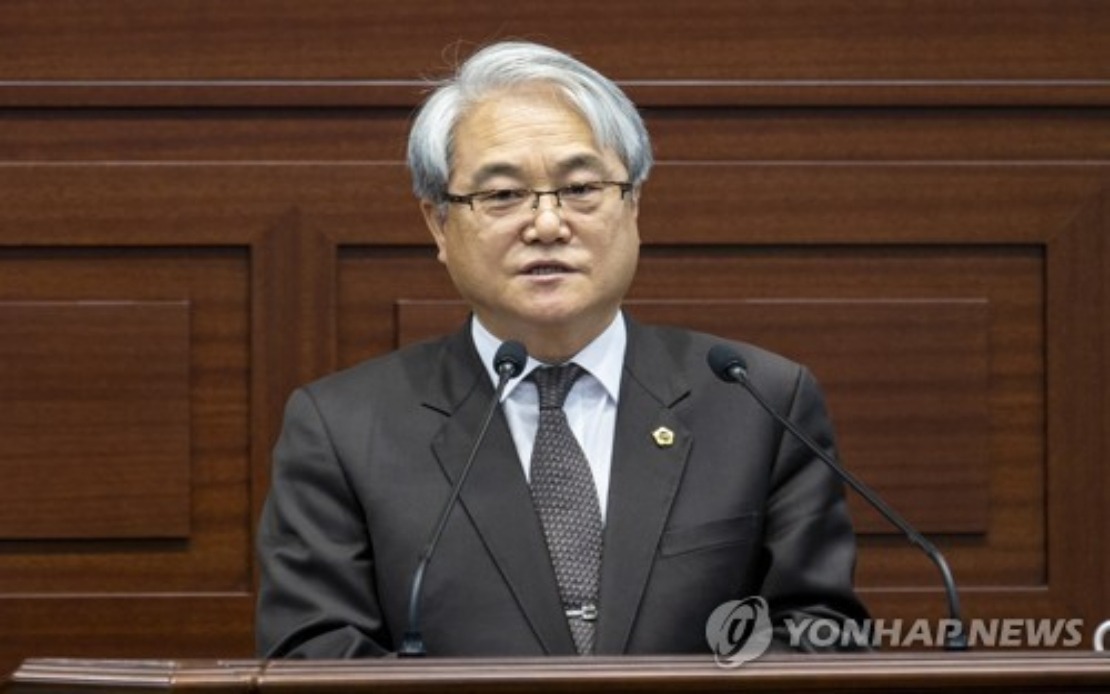
The body of Kim Ha-soo, who previously served as chief administrator of Cheongdo county in South Korea's southeastern region, was discovered on a mountainside early Monday morning by rescue personnel. According to police statements, the discovery was made around 7 a.m., with a handwritten note recovered at the scene. Authorities did not release specific details regarding the circumstances or contents of the note, though the timing and location suggest circumstances that prompted a formal investigation into the death.
Kim's death arrives at a particularly sensitive juncture for the former official, who had been the subject of multiple serious allegations spanning his tenure and beyond. The primary investigation centred on accusations that he had accepted illegal payments while holding office between 2022 and the beginning of this year in exchange for facilitating promotions for a public sector employee. This pattern of alleged corrupt conduct suggests systematic misuse of administrative authority, a serious breach of public trust that typically attracts severe penalties under South Korean law.
The circumstances surrounding the bribery allegation became more complex following the earlier death of the man believed to have delivered the illicit funds. The involvement of a second deceased individual connected to the case raises questions about the scope and nature of the corruption network under examination. South Korean authorities treat such interconnected deaths involving corruption cases with particular scrutiny, as patterns may suggest broader institutional problems or individuals under mounting pressure from multiple directions.
Beyond the bribery allegations, Kim faced a separate but equally serious charge involving a breaking and entering incident. According to prosecutors, the former county chief was referred for prosecution for allegedly breaking into the residence of a nursing home director in January. This allegation suggests conduct extending beyond financial corruption into violent or aggressive actions, potentially indicating a pattern of behaviour that became increasingly erratic or coercive as legal scrutiny mounted.
The convergence of these investigations against Kim reflects a broader pattern in South Korean governance where officials face mounting accountability for misconduct. Over recent years, Seoul has intensified anti-corruption efforts, with high-profile cases involving former presidents, governors, and local administrators facing criminal prosecution. The public sector in South Korea maintains relatively strong institutional oversight mechanisms, including dedicated anti-corruption agencies and an independent prosecution service, which have successfully exposed numerous cases of administrative misconduct.
For Malaysian observers, the case underscores the importance of robust institutional checks on local government authority. South Korea's experience demonstrates that even in developed democracies with strong institutions, local officials can exploit their positions for personal gain. The existence of multiple investigative tracks—financial corruption and violent crime—suggests that comprehensive oversight frameworks are essential to catch various forms of misconduct.
The apparent connection between pressure from multiple investigations and Kim's death also highlights the psychological toll of corruption probes on accused individuals. While suicide cannot be confirmed without official statements, the pattern observed in such cases often involves individuals facing both criminal liability and public humiliation, with limited prospects for rehabilitation of reputation or career. This tragic outcome, while serving as a cautionary tale, also raises questions about how societies balance accountability with the welfare of accused persons pending legal determination.
The investigation into Kim's tenure raises implications for local governance standards across the region. Southeast Asian nations, including Malaysia, operate local government systems where county or district chiefs wield considerable administrative power over resource allocation, licensing, and personnel decisions. The mechanisms available to curb corruption at this level vary significantly across the region, with some jurisdictions possessing more independent oversight agencies than others.
South Korea's approach, combining prosecution-led investigation with police involvement and transparent public reporting, contrasts with varying practices elsewhere in Asia. The willingness of authorities to proceed against sitting and former officials, regardless of political connections, represents a dimension of institutional maturity that regional governments continue developing. Malaysia's own anti-corruption efforts through bodies like the Malaysian Anti-Corruption Commission (MACC) reflect similar institutional commitments, though challenges in ensuring consistent application and public confidence remain ongoing.
The Cheongdo case also illustrates how bribery schemes often operate within public administration systems. The exchange of illegal payments for promotions undermines merit-based advancement, poisoning the professional environment and incentivising corrupt behaviour throughout the system. When junior officials observe that advancement depends on illicit transactions rather than competence, institutional culture deteriorates across the entire organisation.
Moving forward, the investigation into Kim's death will likely proceed in two parallel directions: determining the circumstances and cause of death, and potentially continuing the substantive corruption investigation through the prosecution process. South Korean legal procedure typically allows posthumous investigation and charging, meaning the allegations against Kim may continue being examined even in his absence. This ensures that public understanding of the corrupt conduct is preserved and institutional lessons extracted.
For regional governance observers, the Cheongdo case reinforces critical lessons about maintaining ethical standards in local administration, ensuring independent investigative capacity, and fostering institutional cultures where misconduct faces genuine consequences. As Southeast Asian nations continue strengthening democratic institutions and anti-corruption frameworks, cases from more established democracies like South Korea provide valuable reference points for policy development and institutional design.

