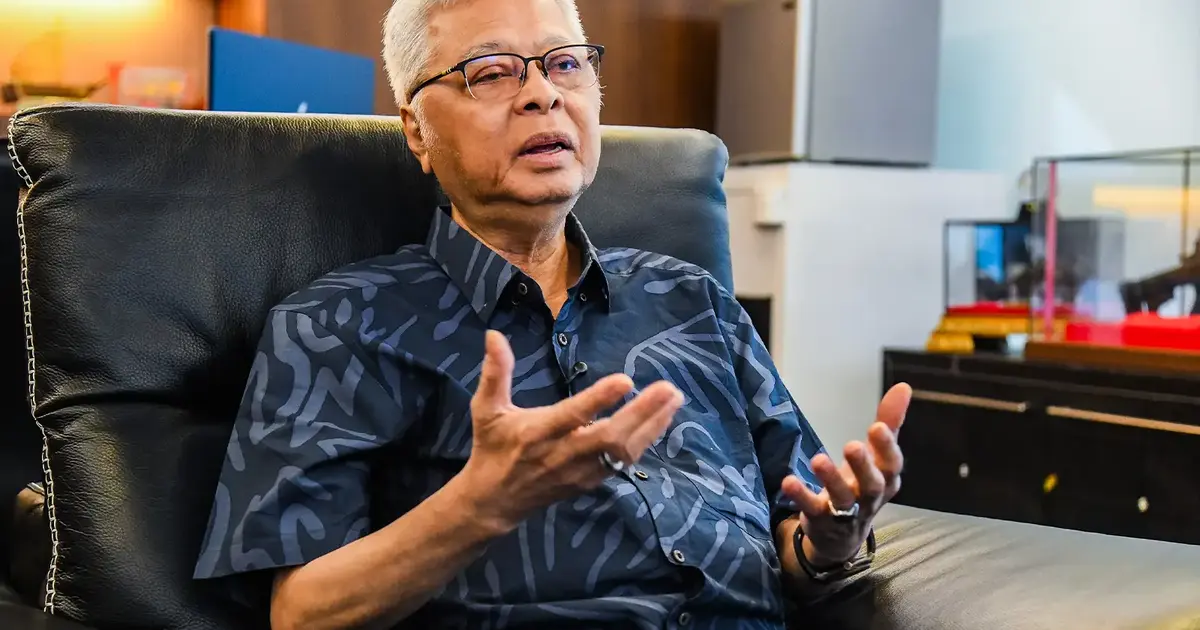
Former Prime Minister Ismail Sabri Yaakob is expected to appear in court tomorrow morning to face corruption-related charges, marking a significant moment in Malaysia's continuing reckoning with high-level political misconduct. The ex-Umno vice-president will stand before Sessions Court judge Suzana Hussin at 9am to answer charges that are anticipated to centre on alleged financial impropriety during his time in high office.
Ismail Sabri's appearance represents another chapter in the series of legal proceedings targeting prominent Malaysian political figures in recent years. His tenure as Prime Minister, which ran from August 2021 to August 2022, was relatively brief but occurred during a turbulent period of Malaysian politics characterised by coalition instability and competing claims of legitimacy. The charges he now faces suggest that the Malaysian Anti-Corruption Commission (MACC) and the Attorney-General's office have concluded their investigations into his conduct and are now ready to pursue the matter through the courts.
The timing of these charges carries broader implications for Umno's standing within the current political landscape. As one of Malaysia's oldest and most influential political parties, Umno has faced repeated corruption allegations against its senior figures, straining its credibility among voters and complicating its position within the ruling coalition. The prosecution of a former vice-president and recent Prime Minister underscores the scale of the party's governance challenges and may influence internal power dynamics as party leadership grapples with member discipline and public perception.
Sessions Court represents the initial venue for these proceedings, though corruption charges of significant complexity often move through multiple court levels depending on their severity. The choice of judge Suzana Hussin for tomorrow's appearance suggests the case has been assigned through normal judicial rotation procedures, though every aspect of the proceedings will likely attract intense scrutiny from legal observers and political commentators.
For Malaysian readers following developments in high-level political accountability, this case illustrates the functioning of anti-corruption institutions that have investigated several former senior figures in recent years. The MACC's willingness to press charges against someone of Ismail Sabri's stature demonstrates that no political position provides immunity from investigation, a principle that has been tested multiple times in Malaysia's recent political history. Whether the court system will ultimately sustain these charges to conviction remains to be determined through the judicial process ahead.
Ismail Sabri's premiership itself was notable for the circumstances of his appointment rather than any substantial policy achievements during his twelve-month tenure. He came to office following mounting defections from rival coalitions and internal political manoeuvrings that reflected the fragmentation of Malaysian politics following the 2018 election cycle. His relatively swift departure from the office, giving way to Anwar Ibrahim's leadership in August 2022, reflected the continuing instability of the period.
The graft charges now being pursued against him represent a separate accountability mechanism from the political judgements voters and party members have already rendered regarding his leadership. However, they do raise questions about the governance standards that should apply to those holding the nation's highest office. Multiple corruption-related cases involving senior figures have created a perception, whether justified or not, that Malaysia's highest levels of political leadership have been subject to varying degrees of financial scrutiny and legal challenge.
Observers of Malaysian politics will be watching closely for indications of how aggressively the prosecution intends to pursue these charges and what evidence it believes it can present before the court. The complexity of white-collar crime prosecution, particularly when it involves figures with access to sophisticated financial structures and advisory networks, means that such cases often turn on documentary evidence and witness testimony rather than more straightforward proof.
Beyond the immediate legal outcome for Ismail Sabri himself, this prosecution contributes to ongoing debates about institutional independence and the rule of law in Malaysia. The extent to which these corruption cases are pursued with consistency, regardless of political affiliation or current status, remains a matter of concern to civil society organisations and governance watchdogs. Umno's internal response to the prosecution of its senior figures may also influence party dynamics and its strategic positioning within the broader coalition government.

