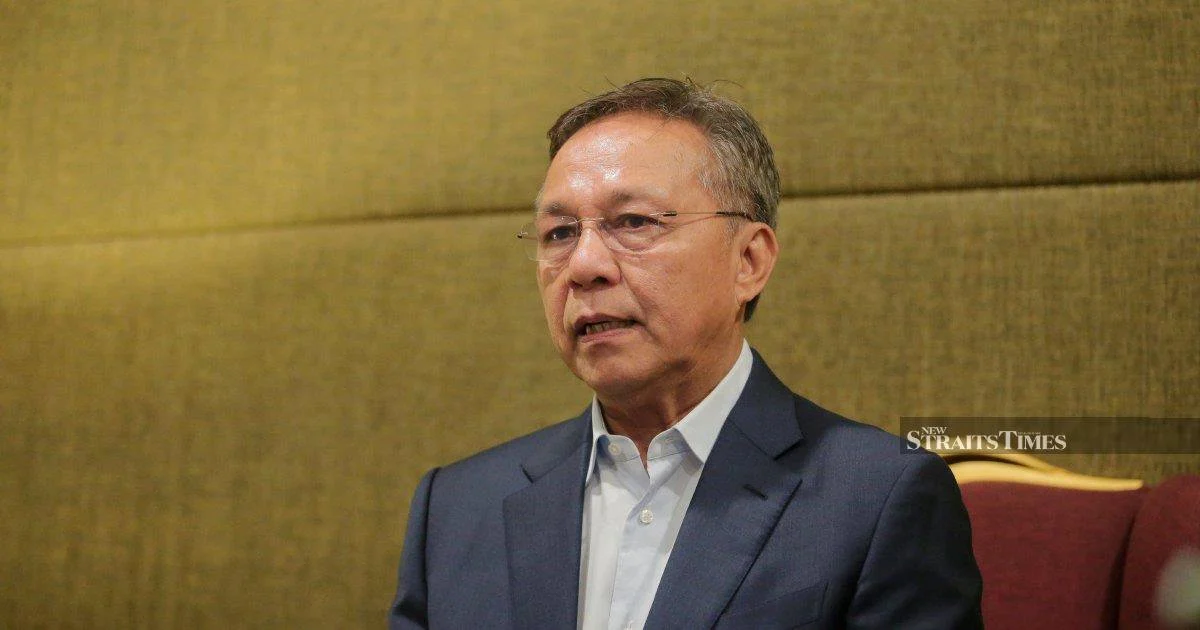
Datuk Seri Hasni Mohammad, who previously served as Johor's chief minister, has been removed from the Barisan Nasional candidate list for the forthcoming state elections in the southern state, a development that has sparked considerable speculation about his future political trajectory. The exclusion of the veteran politician from the state-level race has drawn attention from observers who are now considering whether he might be positioning himself for a federal parliamentary contest in the next general election instead.
Hashni Mohammad's departure from the state election slate represents a notable shift in Johor politics, where the former menteri besar held considerable influence during his tenure. His removal from the Barisan Nasional lineup for state constituencies suggests a deliberate strategic recalibration within the coalition's leadership structure in the peninsula's southernmost state. The move has immediately sparked debate within political circles about whether the seasoned administrator intends to contest at the parliamentary level, where his experience and seniority might carry greater weight.
For Malaysian political observers, the exclusion of a former chief minister from a state election candidate list is not merely an administrative decision but carries substantial implications for how Barisan Nasional is organizing its personnel and resources. In Johor, where the coalition maintains significant influence despite mounting challenges from opposition parties, such roster adjustments often reflect broader calculations about resource allocation and seat competitiveness. The decision to drop Hasni Mohammad raises questions about the coalition's assessment of which constituencies offer the most viable victory prospects and where veteran candidates can be deployed most effectively.
The timing of this announcement coincides with ongoing preparations for Malaysia's political cycle, where the next general election looms on the horizon. Political analysts in the region have noted that senior figures from established coalitions sometimes transition from state to federal politics when their presence is deemed more strategically valuable at the national level. Hasni Mohammad's profile as a former chief minister certainly positions him as a candidate capable of contesting competitive parliamentary seats where name recognition and governing experience could prove decisive.
Within Johor specifically, the coalition faces a complex political landscape where demographic shifts and evolving voter preferences have altered traditional support patterns. The decision to field a different slate of candidates for state elections may reflect Barisan Nasional's efforts to refresh its image and address concerns about political continuity. By potentially redirecting established figures like Hasni Mohammad toward federal contests, the coalition might be attempting to strengthen its parliamentary contingent while simultaneously introducing new faces at the state level to appeal to constituencies seeking change.
Hashni Mohammad's track record as menteri besar gives him substantial credentials for higher-level political ambitions. During his tenure as the state's chief executive, he navigated complex governance challenges and managed Johor's development agenda. Such experience is typically valued when parties evaluate candidates for parliamentary seats, particularly in competitive constituencies where administrative experience might distinguish a candidate from rivals. His potential entry into the parliamentary race would therefore represent a strategic deployment of proven political talent.
The broader implications for Barisan Nasional's organizational strategy in Johor remain significant. The coalition has sustained electoral dominance in the state, but increasingly faces pressure from opposition parties that have strengthened their organizational capacity. By adjusting its candidate selections and potentially promoting experienced figures to the federal level, the coalition appears to be making calculated decisions about where to concentrate its resources and leadership strength. Such moves often foreshadow broader electoral preparations at both state and national levels.
From a Malaysian electoral perspective, the exclusion of former chief ministers from state election lineups is relatively uncommon and frequently generates political speculation. Voters and analysts alike tend to interpret such decisions as indicators of either internal coalition disagreements or deliberate strategic repositioning. In Hasni Mohammad's case, the absence of any public statement suggesting departure from electoral politics makes it reasonable to assume he remains politically active, with his energies potentially being redirected toward a different arena.
Looking forward, the political community in Johor and across Malaysia will be watching for further clarity about Hasni Mohammad's intentions. Should he indeed contest a parliamentary seat in the next general election, his campaign would likely emphasize his executive experience and knowledge of national-level governance. Simultaneously, Barisan Nasional's slate for Johor's state elections will reveal much about the coalition's confidence in particular constituencies and its willingness to introduce fresh political talent at the regional level.
The move also reflects the intricate calculations that Malaysian political parties undertake when positioning their human capital. A former chief minister represents valuable political real estate, and decisions about whether to deploy such figures in state or federal contests depend on party assessments of electoral competitiveness, voter preferences, and succession planning. Hasni Mohammad's removal from the state candidate list thus represents not merely a tactical adjustment but potentially a significant statement about Barisan Nasional's confidence in its ability to contest Johor state elections while preserving its most experienced voices for battles at the federal level.