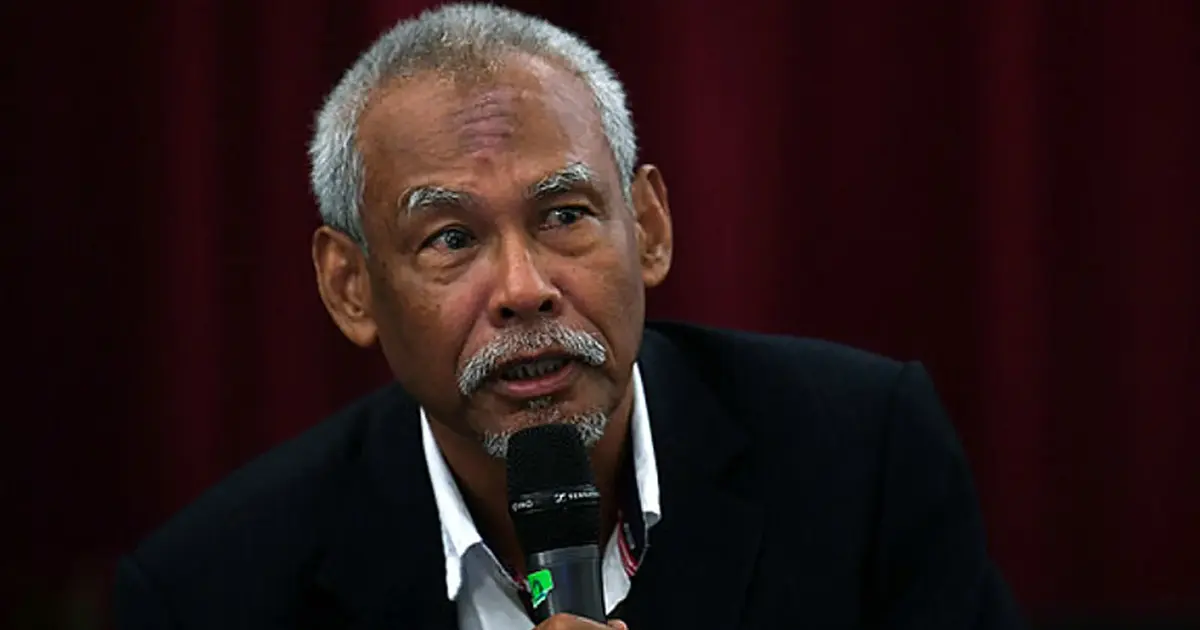
Malaysia's apex court has dealt a significant blow to former Inspector-General of Police Musa Hassan by rejecting his request to review a defamation lawsuit brought against him by Democratic Action Party lawmaker Hannah Yeoh. The court's decision closes one avenue of legal recourse for the retired law enforcement chief, whose case has centred on contentious questions about the rights of public officials to pursue defamation claims.
The apex court determination that Musa Hassan's nine legal questions do not merit judicial reconsideration marks a pivotal moment in Malaysian defamation jurisprudence. The questions he sought to revisit fundamentally challenged the balance between public officials' ability to protect their reputation and the public's interest in scrutinising government conduct. By declining to hear these arguments, the court signalled that existing legal frameworks governing such disputes are adequate and do not require recalibration through appellate intervention.
Musa Hassan's legal strategy hinged on persuading the court that novel constitutional questions were at stake—specifically regarding whether government servants should enjoy the same defamation protections as ordinary citizens, and whether restrictions on their ability to sue served the broader principle of freedom of speech. These arguments reflected a broader tension in common-law jurisdictions between protecting individuals' reputations and preserving robust public debate about governance and official conduct. The rejection of his appeal suggests Malaysia's judiciary believes this equilibrium is appropriately struck in current law.
The case originated from statements made by Hannah Yeoh concerning Musa Hassan's tenure as IGP, a period marked by considerable public controversy. The defamation action itself became emblematic of deeper questions about accountability and transparency in Malaysia's law enforcement institutions. When public figures pursue litigation against critics, it often triggers broader societal conversations about whether such suits serve as legitimate protection of reputation or as mechanisms to silence legitimate discourse about official performance.
For Malaysian legal precedent, this ruling reinforces the principle that public officials cannot easily sidestep conventional defamation standards simply by claiming special status. The court's refusal to reopen settled legal questions demonstrates judicial reluctance to create categorical exceptions for government servants, which could paradoxically insulate official conduct from public scrutiny. This approach aligns with Commonwealth jurisprudence emphasising that transparency and accountability in public administration outweigh individual dignitary interests of officials.
The implications for Malaysia's political and legal landscape are substantial. Opposition politicians and civil society groups have long expressed concern that defamation law could be weaponised to suppress legitimate criticism of government actions and policies. The apex court's decision implicitly acknowledges these concerns by refusing to expand the legal protections available to public officials pursuing such claims. For Hannah Yeoh and similar political figures, the ruling validates their space to engage in critical commentary without excessive fear of defamation liability for statements addressing official conduct.
However, the ruling does not eliminate defamation as a legal remedy. The original judgment against Musa Hassan presumably remains enforceable, meaning he still faces potential damages and associated costs. This outcome reflects a nuanced judicial position: while the court will not create new legal doctrines favouring public officials in defamation cases, it still permits traditional defamation actions to proceed when statements prove demonstrably false and harmful. The distinction matters considerably for Malaysian politics, where the line between protected speech and actionable defamation remains contested terrain.
The rejected appeal also raises questions about the broader political economy of litigation in Malaysia. High-profile defamation suits involving former officials and current politicians consume substantial judicial resources and command media attention, often drowning out substantive policy discussions. By declining to entertain Musa Hassan's appeal, the court sends a message that such cases should be resolved at trial level through existing rules, rather than generating new appellate jurisprudence. This reflects judicial efficiency concerns and perhaps also an implicit preference for finalising such disputes rather than prolonging them through multiple appellate rounds.
For Southeast Asian observers, Malaysia's handling of this dispute offers instructive contrasts. Some regional jurisdictions have moved toward stronger protections for public officials in defamation cases, treating government servants differently from ordinary citizens. Others have expanded qualified privilege defences for statements addressing public interest. Malaysia's approach, as evidenced by this ruling, remains grounded in traditional defamation principles applied uniformly across society, though the practical application in cases involving high-ranking officials inevitably raises complexities about power imbalances and access to resources required for litigation.
The practical consequences for Musa Hassan remain substantial. Exhausting appellate remedies in Malaysia means he would need to pursue international legal avenues or accept the verdict, a situation faced by few former senior officials. The financial burden of protracted litigation, combined with the reputational damage from unfavourable judicial determinations, represents a significant price for his unsuccessful legal challenge. Whether this discourages other former officials from pursuing similar defamation cases remains to be seen.
Looking forward, this ruling establishes clear parameters for future defamation disputes involving public figures in Malaysia. Litigants cannot expect the apex court to revisit fundamental principles governing such cases merely because officials rather than ordinary citizens are involved. The decision reinforces that Malaysian law maintains a relatively balanced approach: defamation protection exists for all citizens, but public officials enjoy no categorical advantages. This framework, while potentially vulnerable to abuse by those with substantial litigation resources, theoretically preserves space for political criticism while maintaining minimal standards of truthfulness in public discourse.

